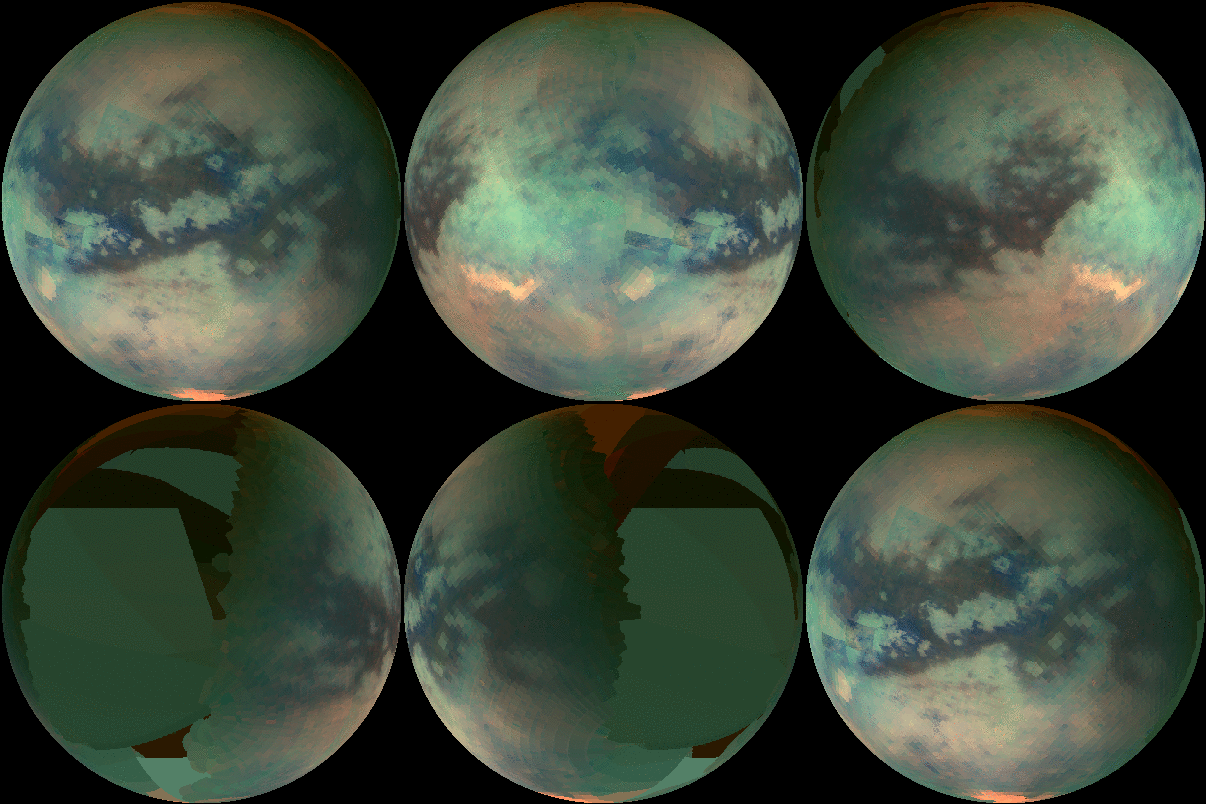
Titan has liquid lakes!
This week, scientists reported in Nature the definitive evidence of the presence of lakes filled with liquid methane on Saturn’s moon Titan.
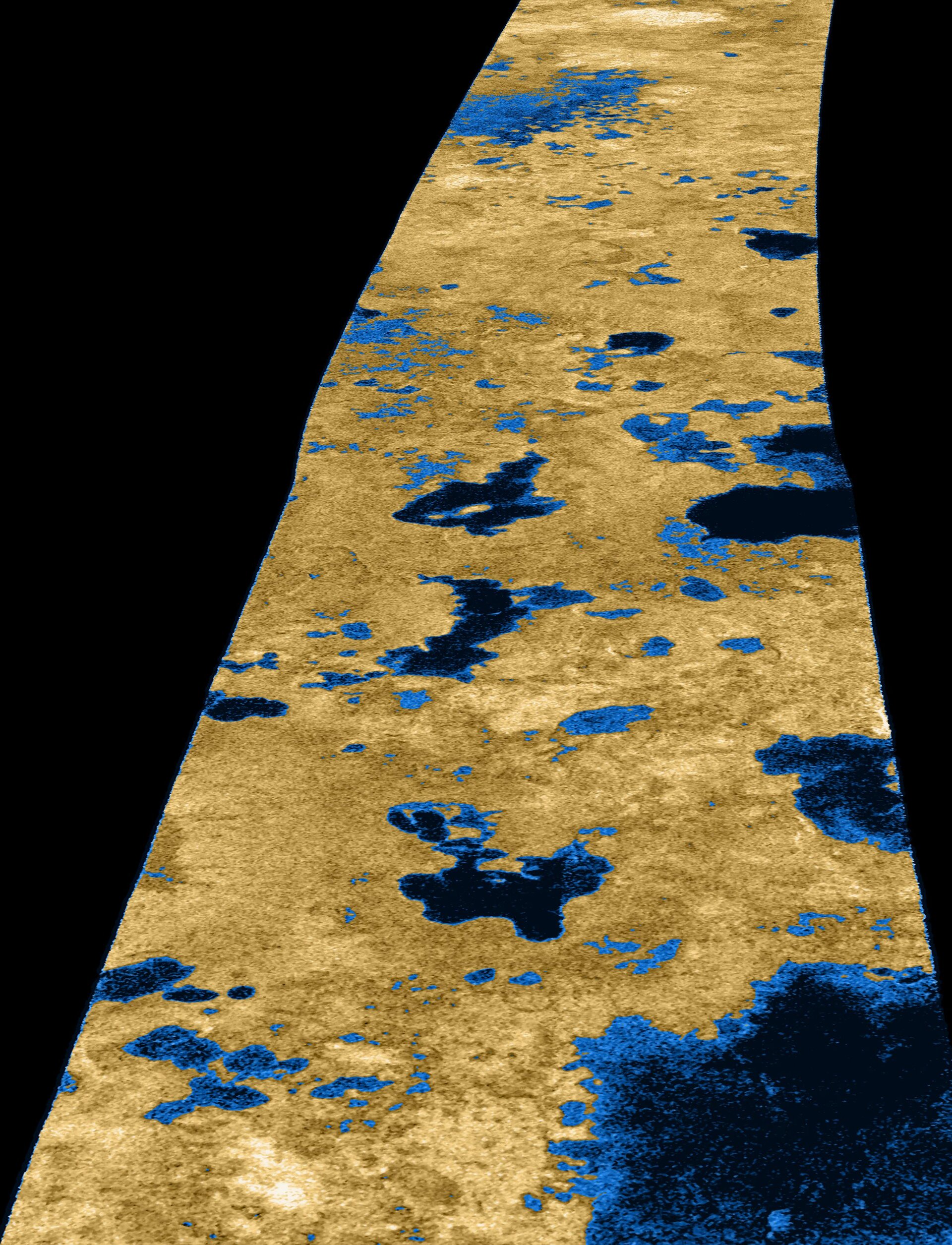
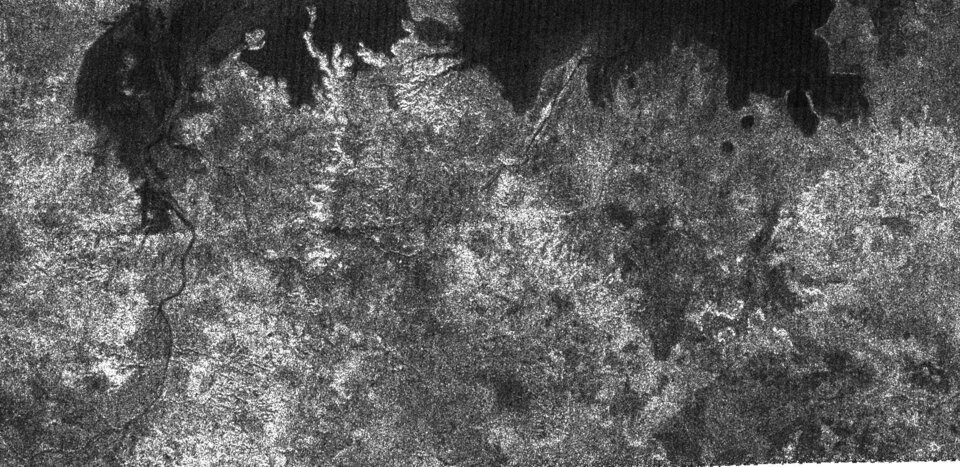
Radar images taken on 22 July 2006, during a Cassini fly-by of Titan, provided convincing evidence for large bodies of liquid on Saturn’s largest moon today. A new false-color radar view gives a taste of what Cassini saw.
Lake characteristics
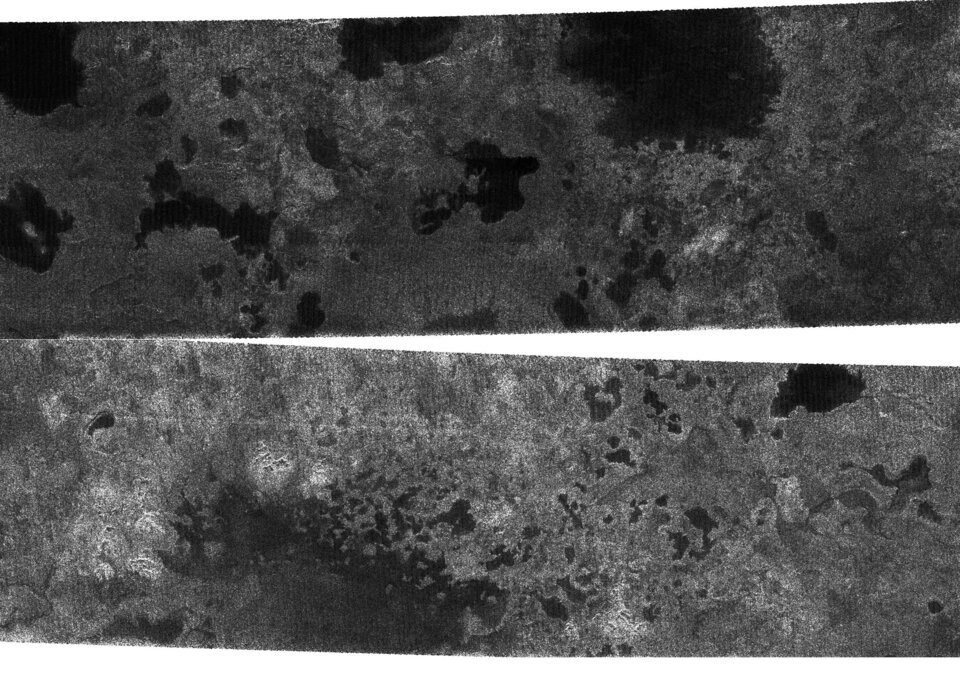
Radar-dark patches are interpreted as lakes based on their very low radar reflectivity and morphological similarities to lakes, including associated channels and location in topographic depressions.
Radar-dark surfaces are smooth and most likely liquid, rock, ice or organics. More than 75 radar-dark patches or lakes were seen, ranging from 3 kilometres to more than 70 kilometres across.
Some lakes appear partly dry, while others seem liquid-filled. Some of the partly filled lakes may never have filled fully, or may have partly evaporated at some point in the past. The dry lakes have margins or rims and a radar brightness similar to the rest of the surrounding terrain, making them appear devoid of liquid.
The varying states of how full the lakes are suggest that lakes in this region of Titan might be temporary on some unknown timescale.
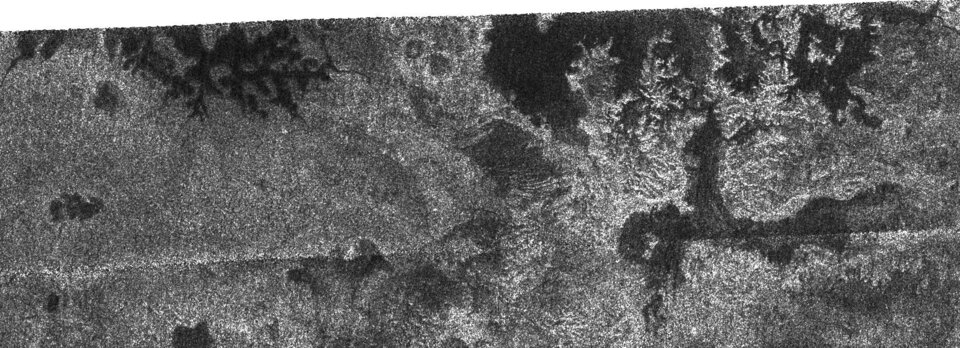
Approximately 15 of the dark patches seem filled and show no clear evidence of erosion. These dark patches resemble terrestrial lakes confined within impact basins (for example, Clearwater Lakes in Canada) or within volcanic calderas (for example, Crater Lake, Oregon). The nest-like nature of these lakes and their limited range of sizes make it unlikely that they originated from an impact. A volcanic origin for the depressions is possible, given their appearance.
Some lakes have steep margins and very distinct edges, suggesting a topographic rim. These lakes are consistent with seepage or groundwater drainage lakes. Other lakes have diffuse, more scalloped edges, with a gradual decrease in radar brightness towards the center of the lake. These lakes are more likely to be associated with channels, and may be either drainage lakes or groundwater drainage lakes. Yet other lakes have curvy channel-like extensions, similar in appearance to terrestrial flooded river valleys.
Bright patches near the lake edges could be small islands peeking through the surface. Floating 'icebergs' are unlikely because most materials would not float in liquid hydrocarbons.
Other observations
Based on the lake characteristics, Cassini scientists believe they are actually observing liquid-filled lakes on Titan today. Another possibility is that these depressions and channels formed in the past and have now been filled by a low-density deposit that is darker than any observed elsewhere on Titan. However, the absence of wind-blown features in this area makes the low-density hypothesis unlikely.
These northern hemisphere lakes are the strongest evidence yet that Titan’s surface and atmosphere have an active hydrological cycle, though with a condensable liquid other than water. In this cycle, lakes are filled through methane rainfall or intersect with a subsurface layer saturated with liquid methane.
As Titan's seasons progress over the 29-year cycle of Saturn’s orbit around the sun, lakes in the winter hemisphere should expand by steady methane rain, while summer hemisphere lakes shrink or dry up entirely.
For more information
Jean-Pierre Lebreton, ESA Huygens Project Scientist
Email : jean-pierre.lebreton @ esa.int