

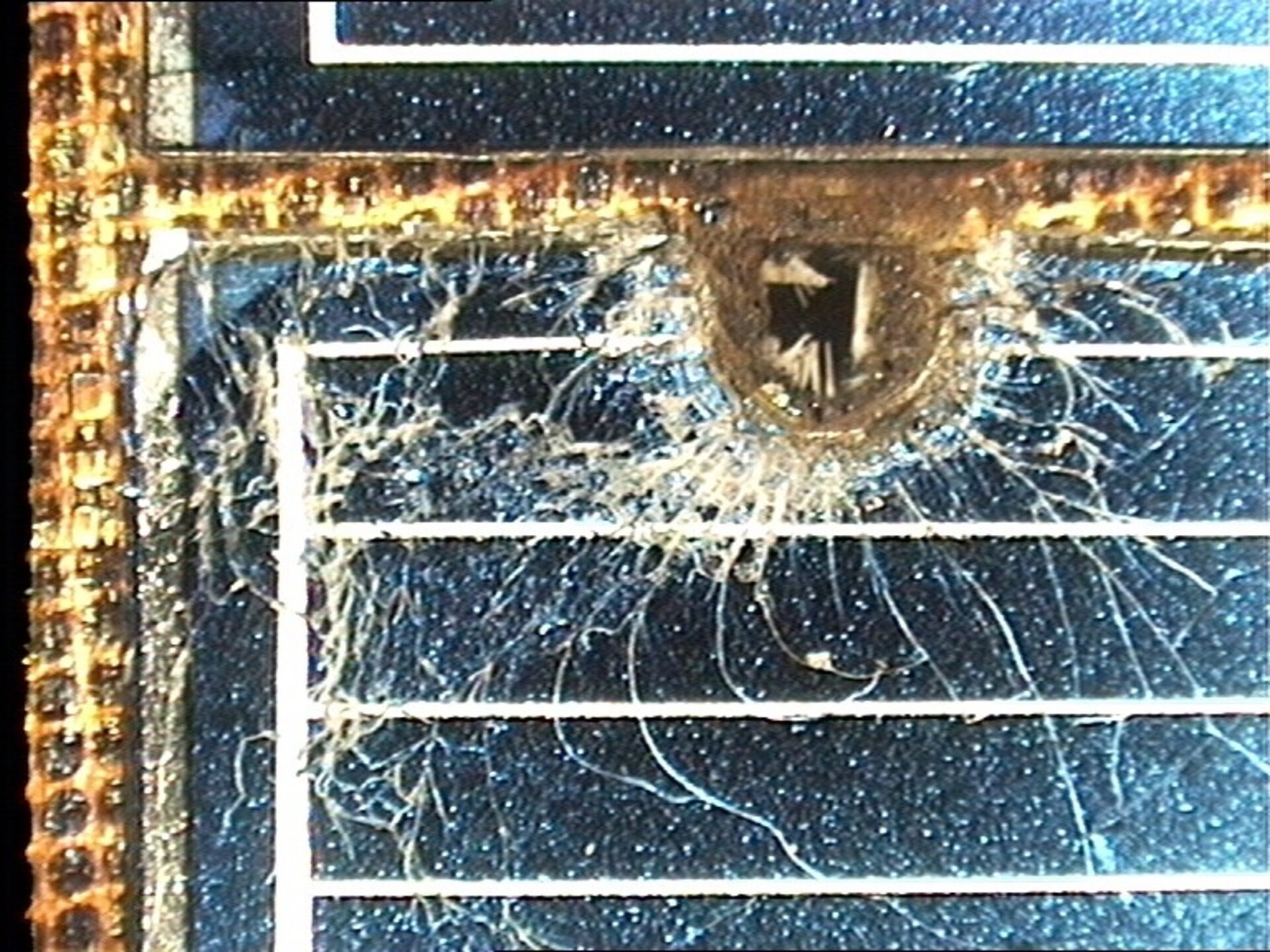
Space debris: assessing the risk
The threat posed by small, untracked space debris is significant, precisely because their exact number (a lot) and dispersion (almost everywhere) are tough to quantify. (Part 2 of a 3-part series.)
Assessing the risk that space debris pose to operational spacecraft and satellites is a challenge and depends on whether you are worried about being hit by a known, tracked debris object or by an unknown object. At least the known objects are, well, known. These include old spacecraft, other satellites, rocket bodies and large fragments from past break-ups.
They are tracked by a number of countries, including Germany, France, the UK and the USA, as well as by ESA itself, using both optical telescopes and radar. At the end of 2003, there were some 10 000 catalogued debris objects surrounding Earth.
"Radar is most efficient for debris detection below 5000 km altitude while optical tracking is preferred for higher levels and for geostationary orbital zones used by telecommunications and broadcast satellites," said ESA's Professor Walter Flury, speaking at a seminar in Germany last October.
The resulting orbital data for large debris objects are compiled into catalogues widely available in the space community; these include the DISCOS (Database and Information System Characterising Objects in Space) database maintained by the Mission Analysis staff at ESA's Space Operations Centre (ESOC) in Darmstadt.
DISCOS can be used to generate detailed data on all known, tracked objects. ESA uses it to assess the threat to agency satellites; when the risk of a collision meets a predefined threshold, an alarm is sounded and mission controllers can order the spacecraft involved to take evasive action.
"It's now standard practice that near-Earth satellites carry an allowance of fuel simply for taking evasive manoeuvres during the craft's operational lifetime," says Dr Heiner Klinkrad, a debris specialist at ESOC in Darmstadt, Germany.
Small objects, big threat
However, assessing the risk due to smaller debris objects and meteoroids is an entirely different matter, as these are difficult or impossible to track.
Smaller debris range from microscopic particles of dust, which are relatively harmless, up to objects about 1 cm in diameter. Objects in this range are a threat, but protective shielding, including Whipple Shield technology, is sufficiently robust to defeat these. Shielding, however, can only be used on some missions, such as the International Space Station (ISS).
Whipple Shields use a multi-layer system similar to the armour employed on tanks and military vehicles to defeat armour-piercing rounds fired from high-velocity cannon. Orbital debris objects are also travelling very fast, typically tens of thousands of kilometres per hour.
Deadly objects in 1- to 10-cm range
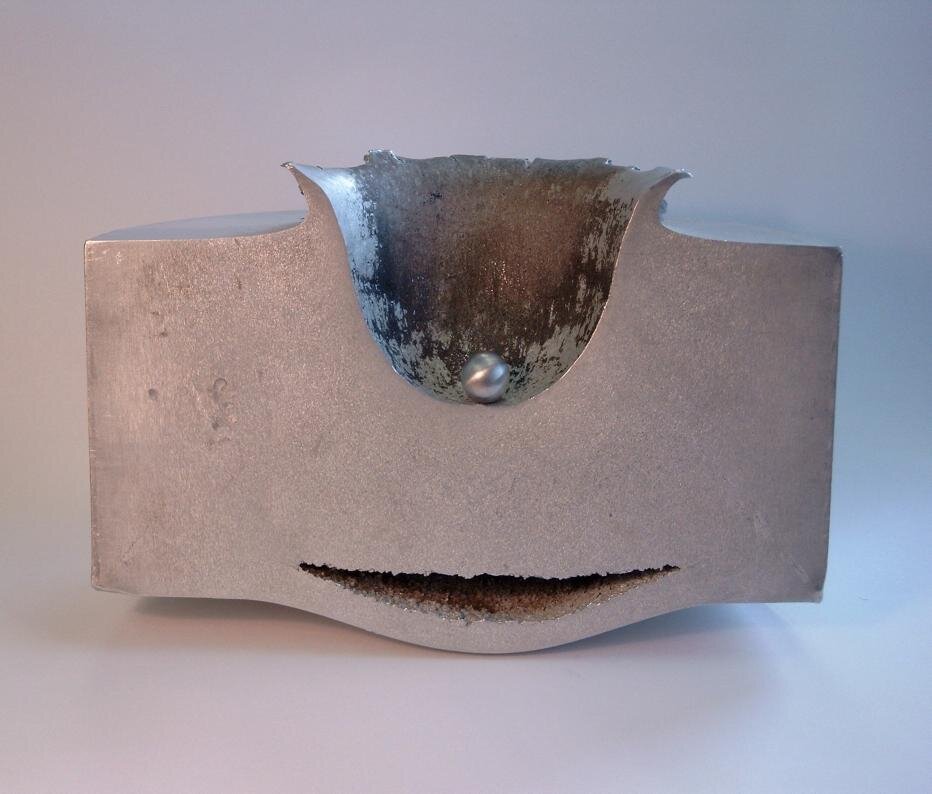
Objects from 1 to 10 cm in size — about the diameter of a salad bowl — cause the real worry. These are too small and numerous to be individually tracked but could cripple or kill any craft they hit.
To assess risk in the deadly 1- to 10-cm range, scientists at ESA and other space organizations use sophisticated probability models and software. Risk is predicted based on a spacecraft's cross-sectional area, its orbital altitude and flight path, the assumed size of debris objects, the geometry of a collision event and relative speed, among other factors.
For example, for a satellite with a 100-m2 cross-sectional area (including solar panels) orbiting at 400 km altitude, the mean time between impact with a debris object 10 cm in size has been calculated to be on the order of 15 000 years.
More specifically, for ESA's ERS Earth observation satellites, which use Synthetic Aperture Radar and other instruments to measure ocean winds and surface topography and have an area profile of about 30 m2, the mean time between collisions with an object larger than 10 cm is about 4000 years.
Collision events once per decade
While these figures may at first glance seem comfortably large for any particular satellite, there are many satellites in orbit around the Earth. "If you calculate the combined profile area of all satellites in orbit, you find that the average time between destructive collisions is about 10 years," says Klinkrad.
Considering that even a single 10-cm debris collision event could wipe out a multi-million-Euro spacecraft or hit the (manned) ISS, a risk of even one impact per decade suddenly becomes very serious.
Destructive collisions do happen
In 1993, the first servicing mission found a hole over 1 cm in diameter in a high-gain antenna mounted on the Hubble Space Telescope; a debris object completely penetrated the antenna dish (but the unit continued working).
In July 1996, France's Cerise military reconnaissance satellite was struck and severely damaged by, ironically, a catalogued Ariane upper-stage explosion fragment; a 4.2-metre portion of Cerise's gravity gradient stabilisation boom was torn off.
As of 2001, Space Shuttle windows had been replaced 80 times due to sub-millimetre object impacts.
Will there be more collisions in the current decade? Nobody can predict with certainty, but it is obvious that steps toward mitigation are required.
ESA space debris research
In addition to the debris warning system developed at ESOC, additional ESA space debris research is done at the European Space Research and Technology Centre (ESTEC), in The Netherlands, mainly focusing on the space segment. Activities include:
- Development and deployment of impact detectors
- Development of impact risk assessment tools
- Development and testing of shielding designs
- Support for shielding design verification
- Impact analysis of retrieved hardware
- Assessment of impact damage
In many cases, ESA actively shields its satellites, or at least critical areas — such as pressurized tanks, a requirement that is obligatory for human space missions. "It is a mandatory requirement for the ISS by NASA and ESA that all modules and other critical areas used for human space flight should be shielded," says Dr Gerhard Drolshagen, a debris research scientist at ESTEC.
Dr Drolshagen explains that special shielding has been developed and applied to the Columbus module, a 4.5-metre cylindrical orbiting lab expected to significantly boost research capabilities on the ISS and described as "ESA's biggest single contribution to the ISS." Protective measures have also been taken for pressurized tanks onboard XMM and Rosetta.
"Hyper velocity impact testing was performed for the Huygens heat shield to verify that it would be effective even with some impact craters suffered during the long cruise phase," he adds.
Cross-border debris research
ESA is not the only organization working on space debris. "International cooperation in the space debris field is, both qualitatively and quantitatively, very good and could be taken as exemplary in science and engineering. All major players recognise that circum-terrestrial space is a strategic resource, and all reasonable and practicable efforts must be taken to preserve it for future generations," says Dr Luciano Anselmo of the Spaceflight Dynamics Laboratory at the Institute of Information Science and Technologies, part of the Italian National Research Council (CNR).
Dr Anselmo is part of a 3-person group investigating models of the orbital debris environment, short- and long-term debris field evolution, the propagation of debris clouds, evaluation of spacecraft risk, effectiveness of mitigation measures, survivability and re-entry event predictions.
Further a field, Dr Toshiya Hanada, Associate Professor at Kyushu University's Department of Mechanical and Aerospace Engineering, located near Fukuoka, Japan, works on developing optical sensors that can scan satellite solar arrays for signs of impacts and on modelling the debris field.
Dr Hanada's research team pays particular attention to geosynchronous Earth orbit. "We have developed an orbital debris evolutionary model for geosynchronous Earth orbit and conducted low-velocity impact tests, below 1.5 km/s, to model these impacts on spacecraft in GEO," he says.
Clearly, the debris issue has grabbed global attention.
Risk assessment software on tap
Back at ESOC, Dr Klinkrad explains the risk assessment software that ESA and a contractor team have developed. It is called DRAMA, for Debris Risk Assessment and Mitigation Analysis, is freely available to the space community and can be used to assess the risk of a catastrophic impact for any specific mission.
"You can also determine how much of your spacecraft might survive re-entry and possibly pose a risk to people on the ground," says Klinkrad. The software uses global population distribution data depending on latitude and longitude to create a "swath image" showing where a piece of satellite might hit. "DRAMA allows you to estimate your mission's 'total risk' for both in-space and on-ground impacts," he adds.
Despite such tools, the space-debris situation is unlikely to improve unless concentrated, coordinated and systematic steps are taken to mitigate the risks that are now so clearly understood. "Too many objects could render space too risky and unusable in the future," emphasises Klinkrad.
Spacecraft operators must avoid deliberate and unintentional break-up of their craft including deliberate and unintentional explosions or collisions, as these are the major sources of untrackable yet deadly debris.
Editor's note
The third and final part of the space-debris series, "Mitigation and the Case for a Code of Conduct," will examine current proposals for space debris mitigation through measures that cost little yet contribute significantly to protecting the space environment for future use.
Part 3 will be published early in April, in advance of the the 4th European Conference on Space Debris, taking place at ESOC, Darmstadt, Germany, 18-20 April 2005. For registration, programme and additional information, access the conference link at right above.

