SMART-1 ion engine fired successfully
SMART-1's revolutionary propulsion system was successfully fired at 12:25 UT on 30 September, 2003, in orbit around the Earth.
Engineers at ESOC, the European Space Agency's control centre in Darmstadt, Germany, sent a command to begin the firing test, which lasted for one hour. This was similar to a trial performed on Earth before SMART-1 was launched.
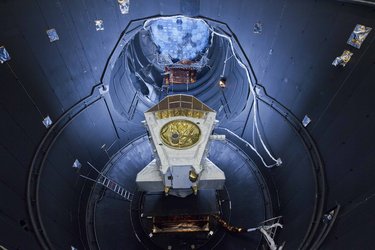
Several months ago, the ion engine, or Solar Electric Primary Propulsion (SEPP) system, had been placed in a vacuum chamber on the ground and its functions and operation were measured. Now in space and in a true vacuum, the ion engine actually worked better than in the test on ground and has nudged SMART-1 a little closer to the Moon.
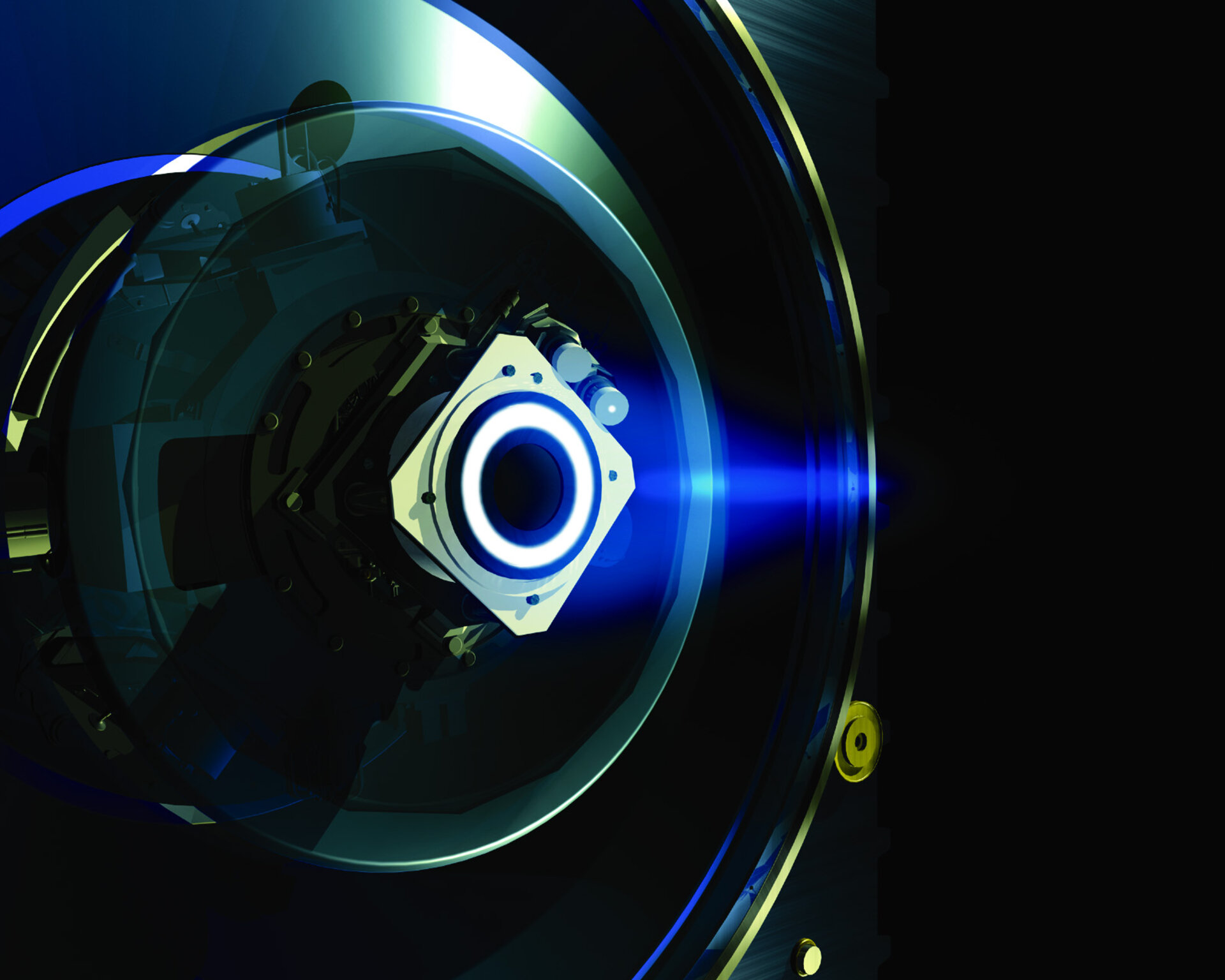
This is the first time that Europe flies an electric primary propulsion in space, and also the first European use of this particular type of ion engine, called a 'Hall-effect' thruster.
The SEPP consists of a single ion engine fuelled by xenon gas and powered by solar energy. The ion engine will accelerate SMART-1 very gradually to cause the spacecraft to travel in a series of spiralling orbits - each revolution slightly further away from the Earth - towards the Moon. Once captured by the Moon's gravity, SMART-1 will move into ever-closer orbits of the Moon.
As part of one of the overall mission objectives to test this new SEPP technology, the data will now be analysed to see how much acceleration was achieved and how smoothly the spacecraft travelled. If the ion engine is performing to expectations, ESA engineers will regularly power up the SEPP to send SMART-1 on its way.