Gemeenschappelijk 'donker' verleden voor manen van Saturnus?
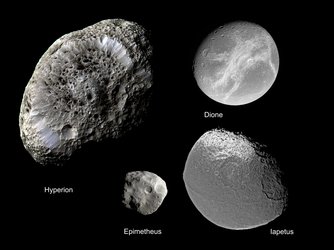
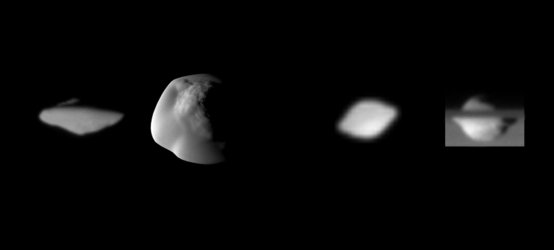
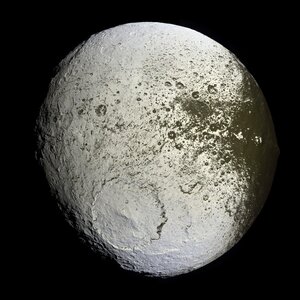
De manen van de planeet Saturnus zijn heel verschillend. Sommige zien er pokdalig uit, sommige wat vuil, andere ongerept. Eén maan ziet er als een spons uit en nog een andere toont twee verschillende 'gezichten'. Sommige zijn 'actief' en andere lijken uit verre regionen van het zonnestelsel geplukt te zijn. Maar vele manen hebben een gemeenschappelijk kenmerk: een laag van zwarte materie op hun oppervlak.
'We beginnen de mysteries van deze heel verschillende en vreemde manen te ontrafelen', aldus Rosaly Lopes, onderzoeker voor het Cassini-project in het Jet Propulsion Laboratory (JPL) van de NASA in de Verenigde Staten. Ze coördineerde een speciale reeks van 14 papers over de ijsmanen van Saturnus in het februarinummer van het tijdschrift Icarus.
Ecologie van het Saturnussysteem
De artikels brengen een idee op de voorgrond dat Cassini-onderzoeker Bonnie Buratti de ecologie van het Saturnussysteem noemt. 'Ecologie heeft te maken met een hele omgeving - niet alleen één hemellichaam, maar met de manier waarop die allemaal met elkaar in interactie staan', zegt Buratti.
'Het Saturnussysteem is bijzonder interessant. Als je naar de manen kijkt, dan lijken ze veranderd te zijn op een manier waarbij er een of ander transport van materiaal lijkt plaats te vinden.'
Hoewel het nog niet duidelijk is hoe dat 'transport' verloopt, is er steeds meer bewijs dat een of ander mechanisme het mysterieuze donkere materiaal, dat op verschillende manen is terug te vinden, van de ene naar de andere heeft verspreid.
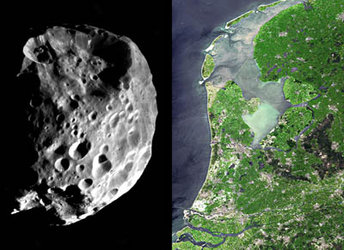
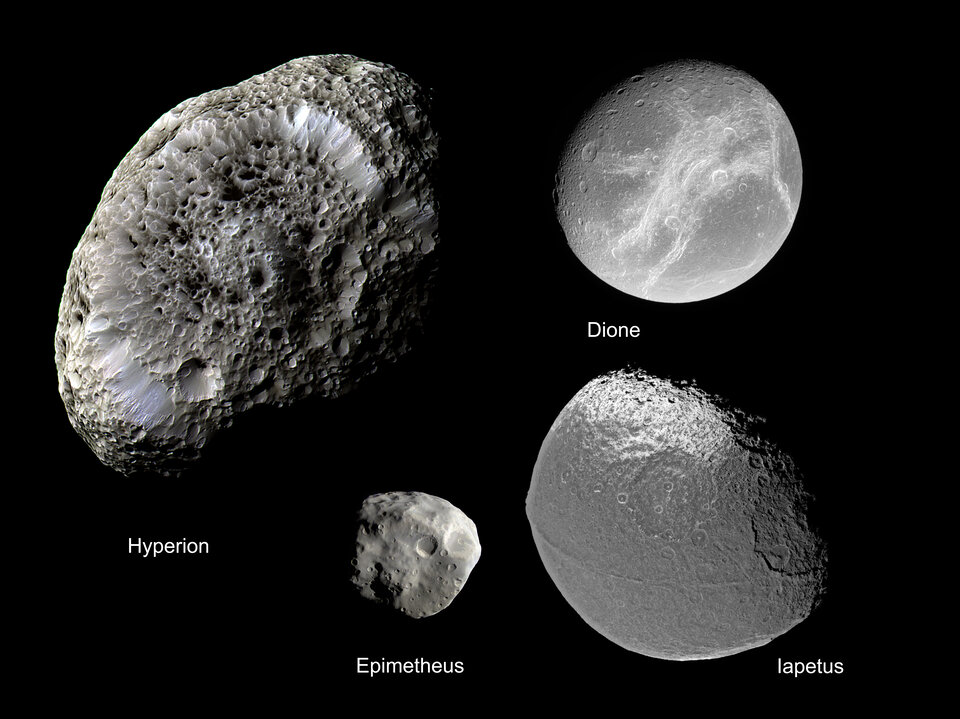
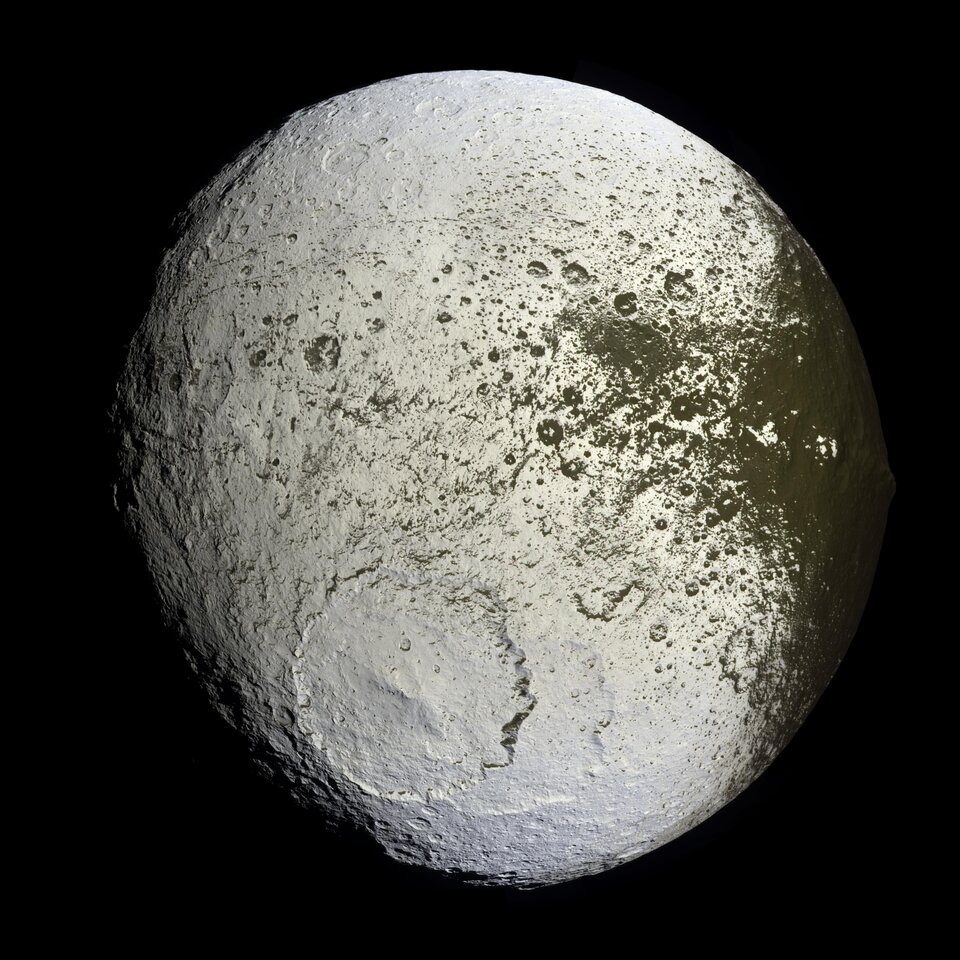
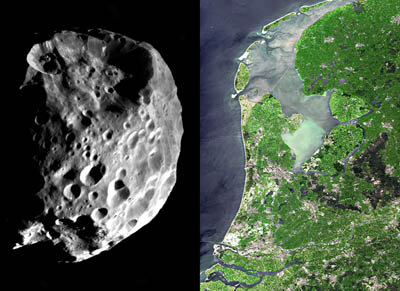
Het materiaal kan misschien afkomstig zijn van een enkele komeet. Verschillende van de nieuwe publicaties volgen deze theorie en bekijken gelijkenissen tussen donker materiaal op verschillende manen van Saturnus zoals bijvoorbeeld bij Hyperion en Iapetus of bij Phoebe en Iapetus.
Donker materiaal van elders afkomstig
Roger Clark van het United States Geological Survey in Denver (Verenigde Staten) gaat nog een stap verder. 'We zien dezelfde spectrale signatuur op alle manen die met donker materiaal bedekt zijn', zegt hij.
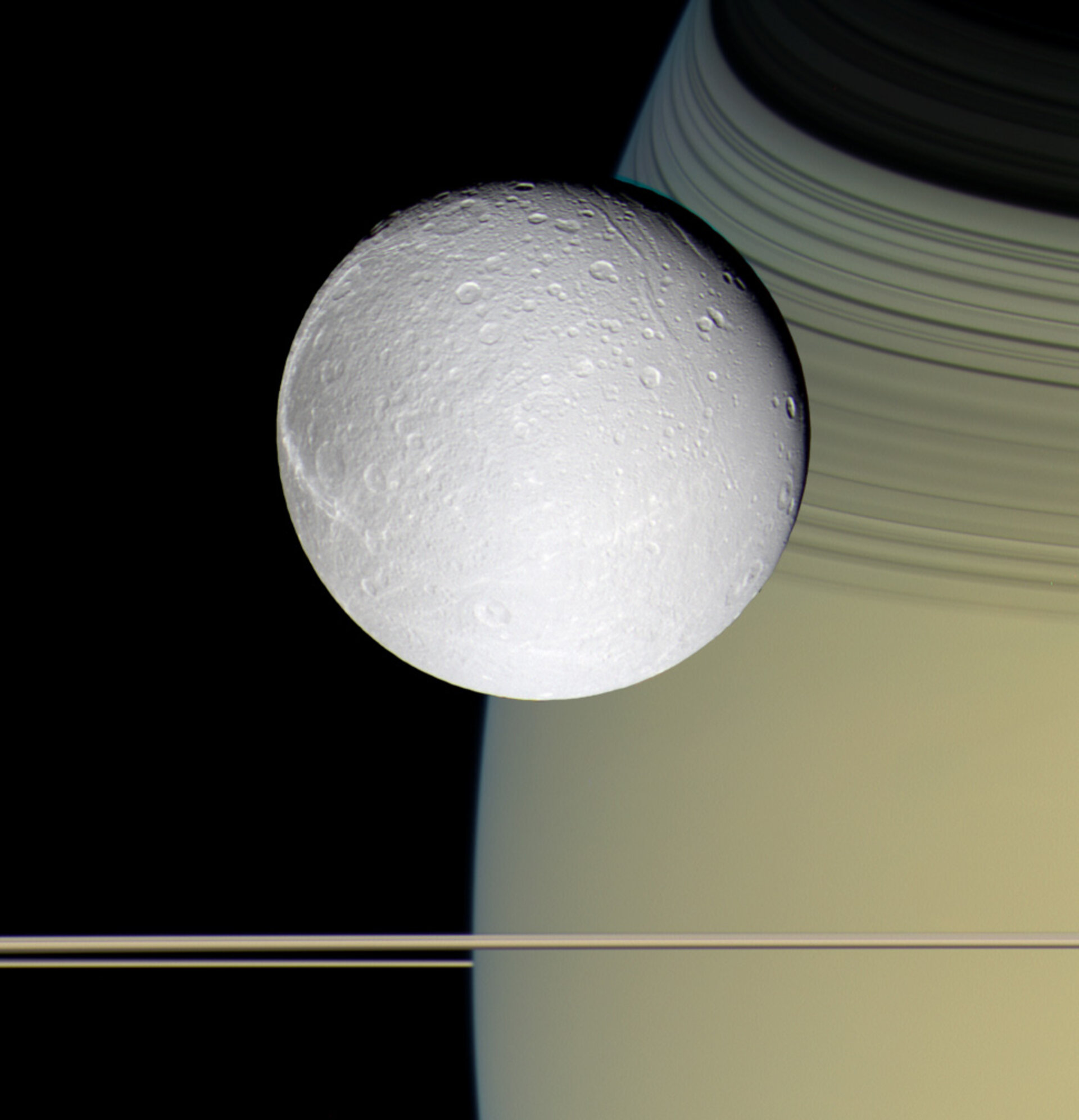
Clark is hoofdauteur van één van de artikels over Dione. Zijn team ontdekte dat het donker materiaal op deze Saturnusmaan bijzonder fijnkorrelig is en slechts een heel dun laagje vormt op de kant van de maan tegenover de richting waarin Dione in haar baan beweegt.
De verspreiding en samenstelling van dat materiaal werd gemeten door de visuele en infrarode spectrometer aan boord van Cassini. De metingen wijzen erop dat het donkere materiaal niet van Dione zelf afkomsig is.
Onderzoekers vinden er dezelfde signatuur die ook te zien is op de manen Phoebe, Iapetus, Hyperion en Epimetheus en ook in de F-ring van Saturnus.
Maar waar komt het donkere materiaal vandaan en wat is het precies? 'Dat is nog een mysterie', zegt Clark. 'En dat maakt het intrigerend. We zoeken nog het juiste stukje van de puzzel. We krijgen steeds betere gegevens binnen. We kunnen bepaalde zaken nu uitsluiten en de stukjes van de puzzel samenleggen.'
Geologische activiteit is een andere component van het ecologisch systeem van Saturnus. Sommige van de manen 'voeden' de ringen van de planeet en die beïnvloeden op hun beurt veel van de manen.
Het team van Clark heeft voorlopige bewijzen die de hypothese ondersteunen dat Dione nog altijd geologisch actief is. Bij een bepaalde reeks waarnemingen zag de infrarode spectrometer een wolk van methaan en waterijs rond Dione in haar baan binnen de buitenste delen van de E-ring van Saturnus.
De ijspluimen van Enceladus

Maar hét grote verhaal zijn de ijspluimen die vanuit het relatief warme zuidpoolgebied van de maan Enceladus de ruimte ingespuwd worden en die waarschijnlijk de E-ring 'voeden'.
Een paper onder leiding van Frank Postberg van het Max-Planck-Institut für Kernphysik in Heidelberg (Duitsland) zegt dat er sporen van organische bestanddelen of silicaten merkbaar zijn binnen de door waterijs overheerste E-ring, dicht bij Enceladus.
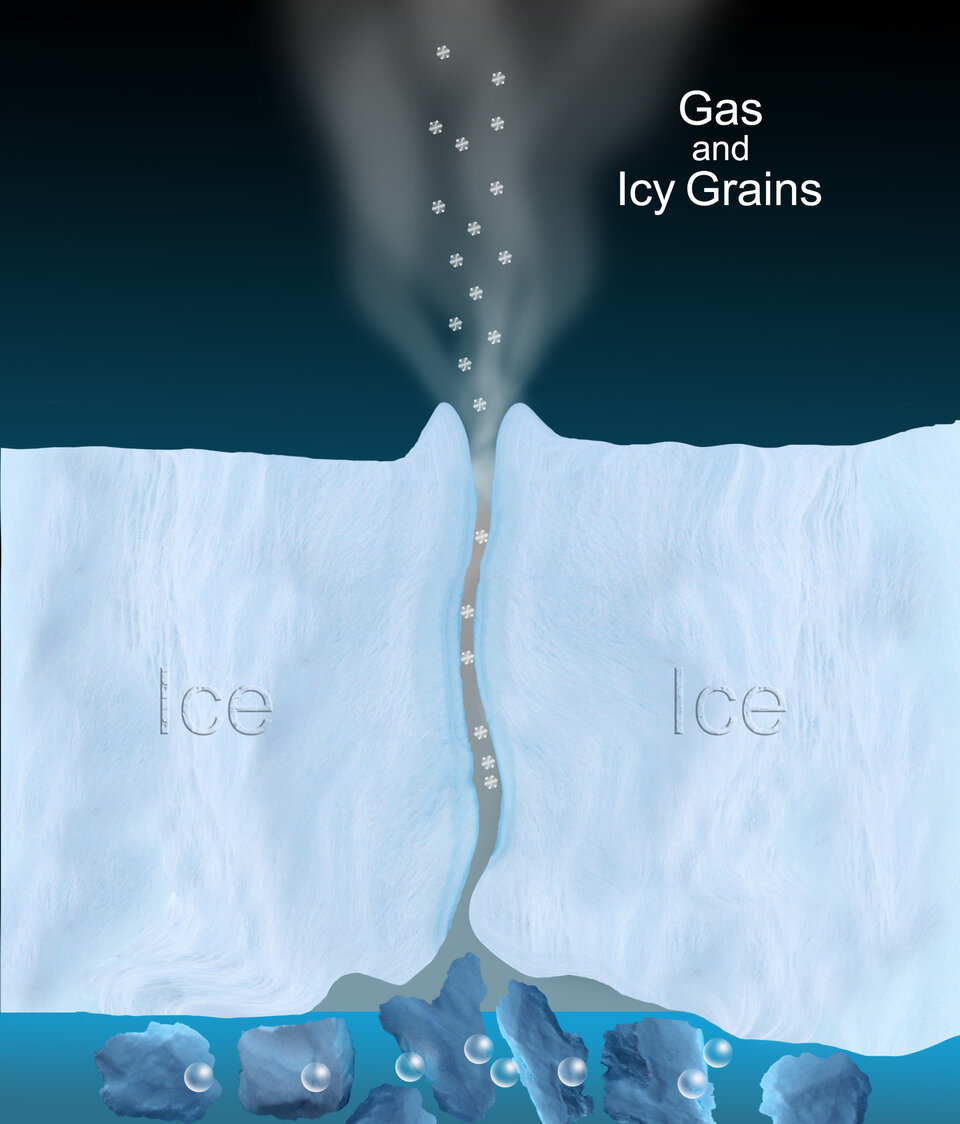
Dit betekent dat de rotsachtige kern van de maan en vloeibaar water op een dynamische manier in interactie zijn. Deze vaststelling zou een theorie kunnen ondersteunen die Dennis Matson en Julie Castillo van het JPL dit jaar vooropstelden en de stelt dat er zich juist onder het oppervlak van Enceladus een warm organisch brouwsel bevindt.
Op 12 maart vliegt Cassini Enceladus op een afstand van amper 50 kilometer voorbij. Wanneer de sonde door de pluimen vliegt zal hij 200 kilometer van de maan verwijderd zijn.
Achtergrond
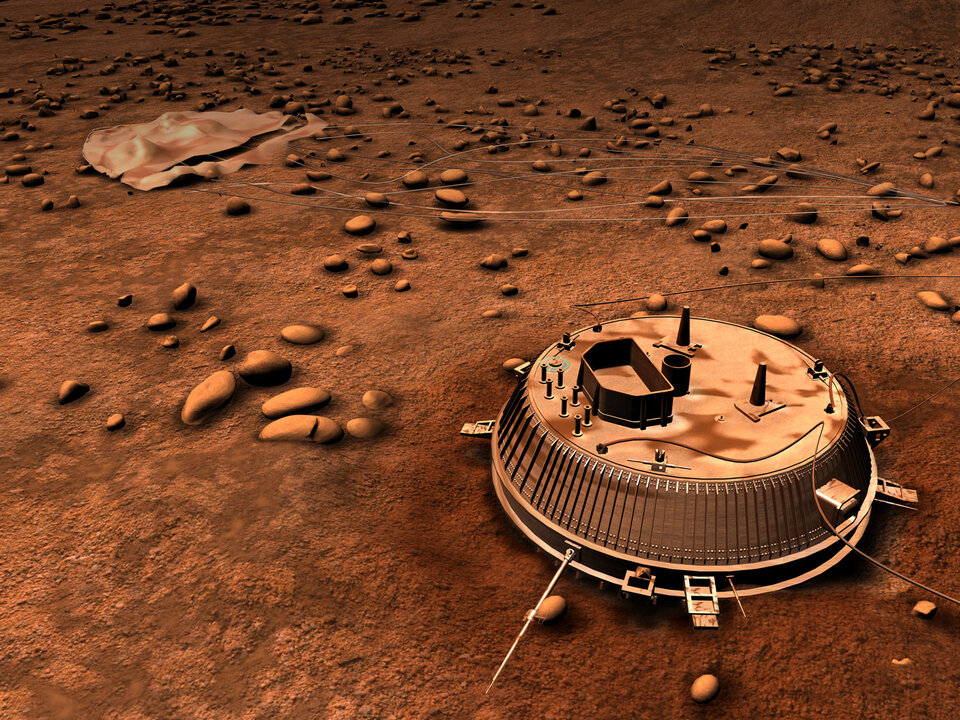
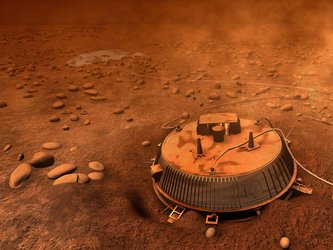
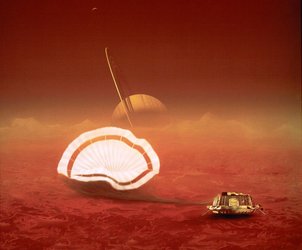
De missie Cassini-Huygens mission is een gezamenlijk project van NASA, ESA en het Italiaans ruimteagentschap ASI. JPL, een afdeling van het California Institute of Technology in Pasadena (Verenigde Staten) leidt Cassini-Huygens voor het Science Mission Directorate van de NASA in Washington. De Cassini-orbiter werd ontworpen, ontwikkeld en gebouwd door JPL. ESA ontwikkelde de lander Huygens die op 14 januari 2005 op de Saturnusmaan Titan landde.