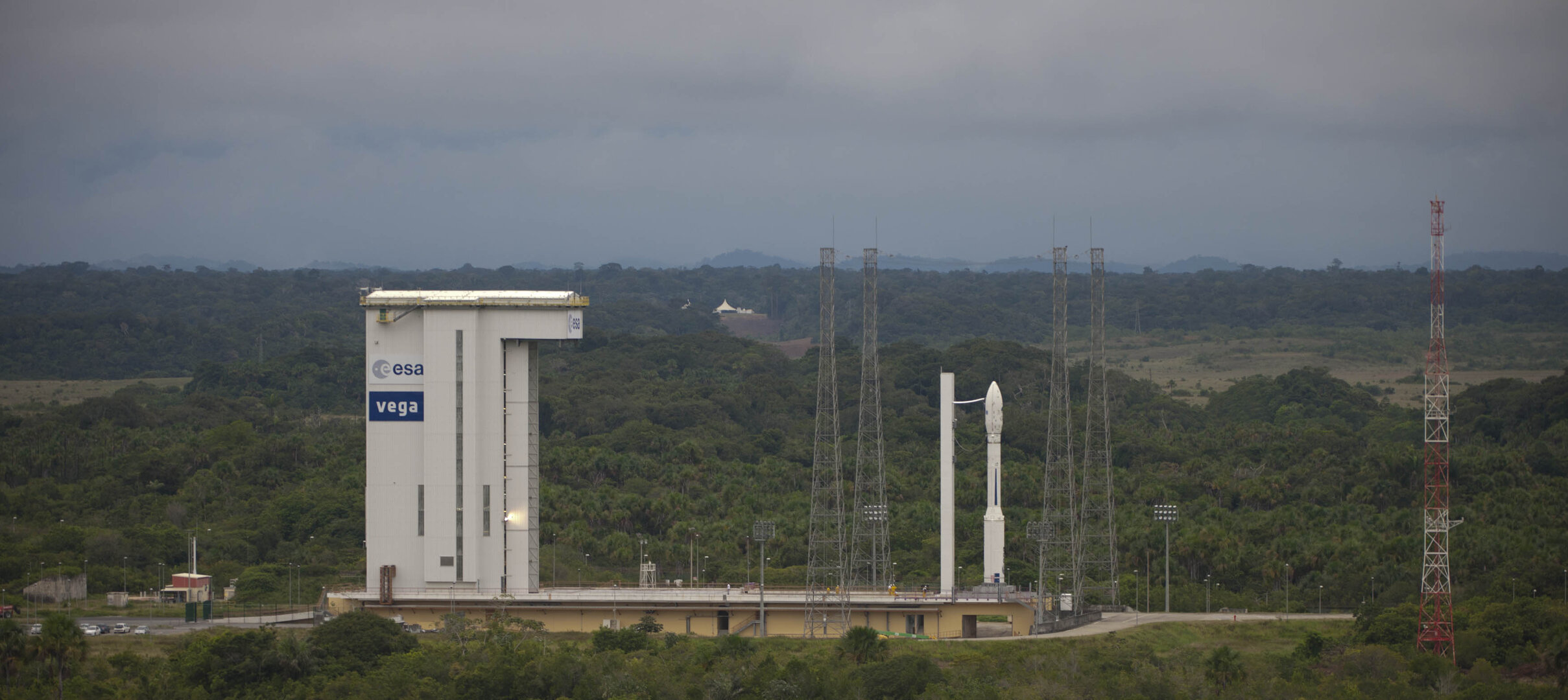
First Vega rocket assembled on launch pad
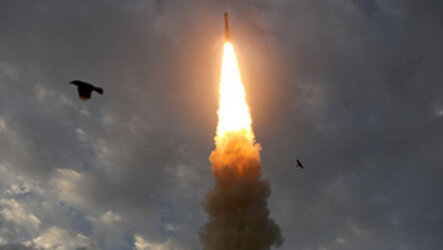
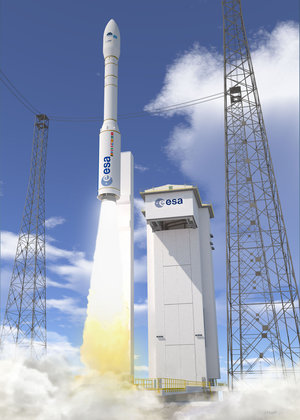
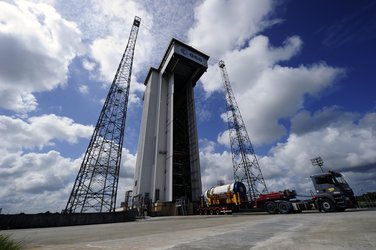
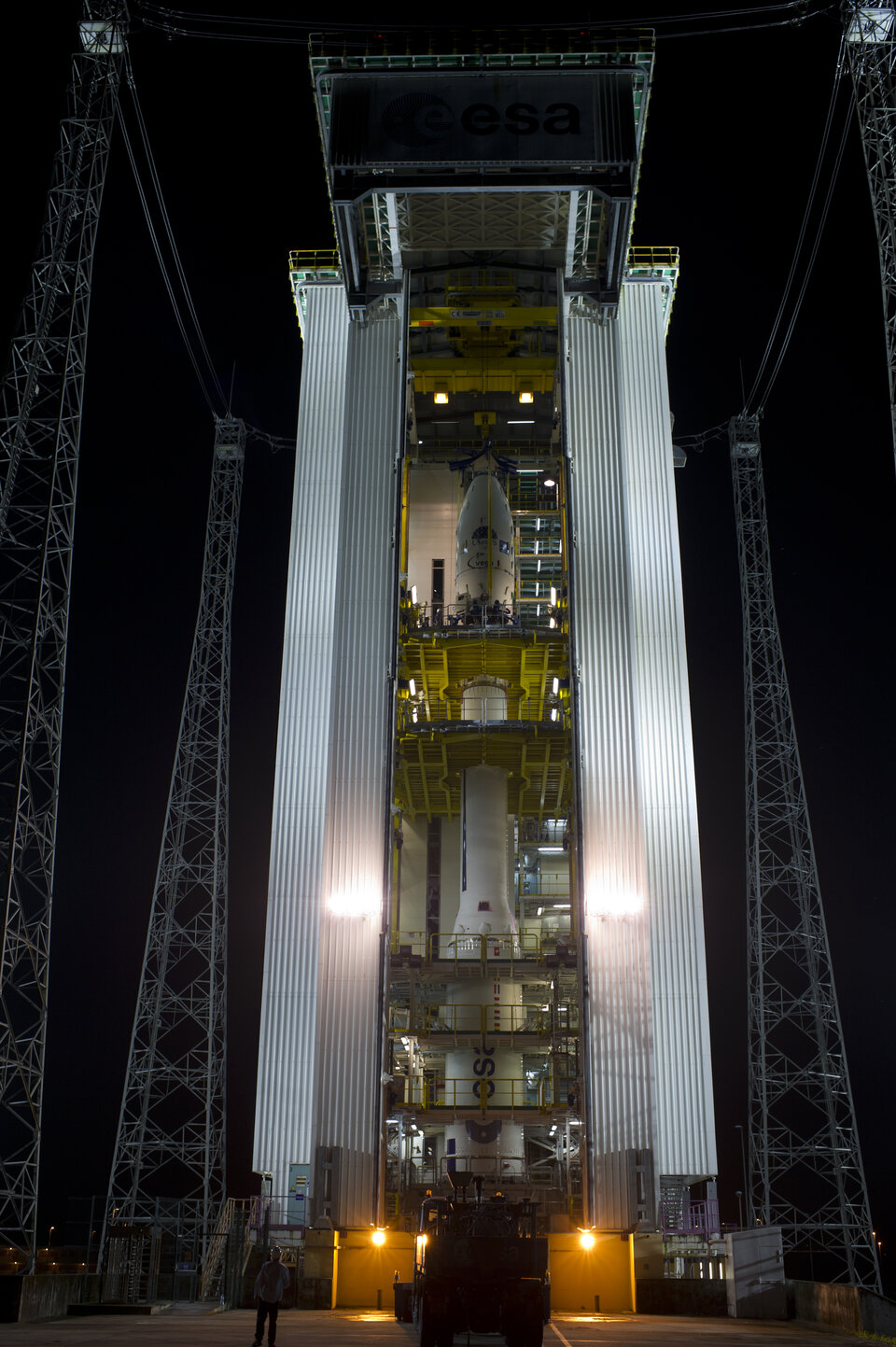
ESA’s new Vega rocket is now fully assembled on its launch pad. Final preparations are in full swing for the rocket’s inaugural flight from Europe’s Spaceport. The launch window opens on 9 February.
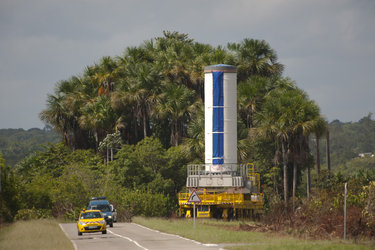
The upper composite, comprising LARES, ALMASat-1, seven CubeSats, the payload adapter and the fairing, was moved to the pad late Monday night. A night transfer is the standard practice in Kourou to avoid overheating the payloads.
The move ended early Tuesday morning with its installation on the dedicated stand inside the mobile gantry to await mating with the launcher.
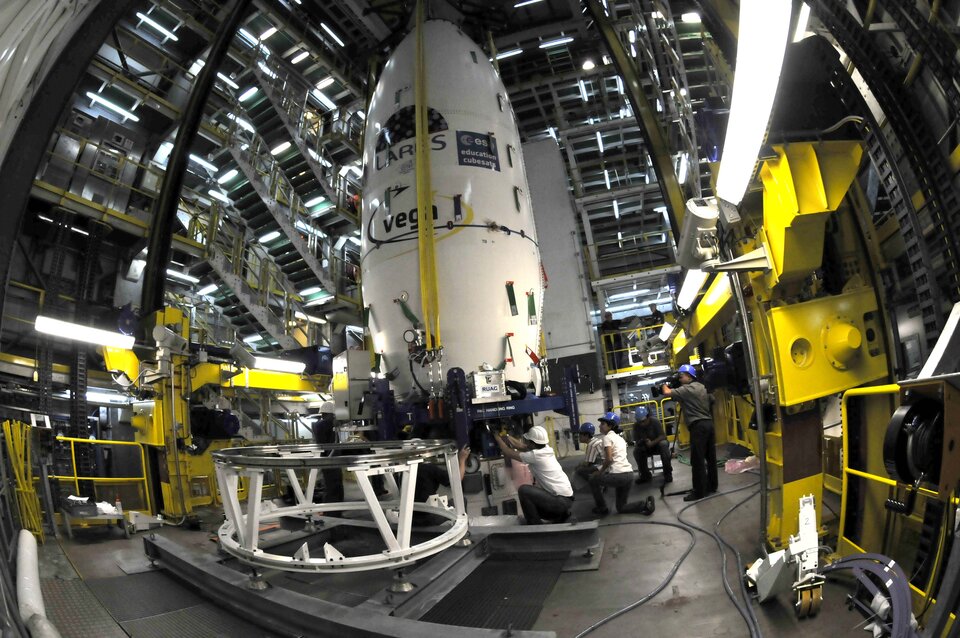
The composite was then added on top of Vega’s AVUM fourth stage to finalise electrical connections and verify links, concluding with the final mechanical connection.
The main remaining steps to the maiden flight are the final checkout of the assembled vehicle, the full launch countdown rehearsal and the fuelling of the restartable AVUM.
Vega qualification flight
This first flight, dubbed VV01, marks the end of nine years of development by ESA and its partners, Italian space agency ASI, French space agency CNES and industry.
Vega qualification flight
It will lift off from the new Vega launch site at Europe’s Spaceport in Kourou, French Guiana, carrying nine satellites into orbit. The launch window opens on 9 February and ends a few days later.
The mission will qualify the overall Vega system, including the vehicle, the ground infrastructure and operations from the launch campaign to the payload separation and disposal of the upper module.
In particular, it will demonstrate the vehicle’s performances and payload services in flight.
A flexible mission
Vega will provide Europe with a safe, reliable and competitive capacity to carry science and Earth observation satellites into orbit, while perfectly complementing the heavy Ariane 5 and medium Soyuz rockets already launched from the spaceport.
The rocket is designed to cope with a wide range of missions and payload configurations in order to respond to different market opportunities and provide great flexibility.
A flexible mission

Unlike most small launchers, Vega is able to place multiple payloads into orbit. In particular, it offers configurations able to handle payloads ranging from a single satellite up to one main satellite plus six microsatellites.
It is compatible with payload masses ranging from 300 kg to 2500 kg, depending on the type and altitude of the orbit required by the customers. The benchmark is for 1500 kg into a 700 km-altitude polar orbit.