COROT découvre sa première exoplanète et prend les scientifiques par surprise
Le satelllite COROT a réalisé sa première détection d’une planète géante en orbite autour d’une autre étoile et fourni les premiers éléments d’information “sismique” sur une étoile distante, semblable au Soleil, avec une précision surprenante.
Supérieure aux prévisions, la précision des données brutes montre que COROT sera capable de voir des planètes rocheuses – peut-être même aussi petites que la Terre – voire de fournir des indications sur leur composition chimique.
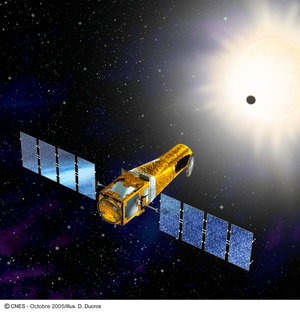
Conduite par le CNES avec une participation de l’ESA, la mission COROT poursuit un double objectif. Il s’agit de la première mission spatiale dédiée à la recherche des planètes extra-solaires. Elle effectue une recherche de planètes d’une taille supérieure ou égale à la nôtre sur un secteur du ciel, avec un degré de précision sans précédent. Dans le même temps, elle réalise l’étude la plus complète jamais entreprise de l’intérieur d’étoiles autres que le Soleil. Ces deux objectifs sont atteints par l’analyse des variations de la lumière émise par les étoiles visées.
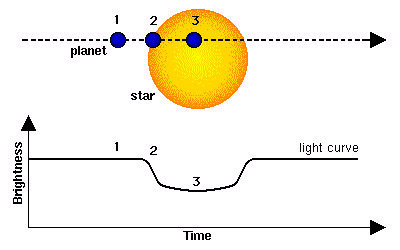
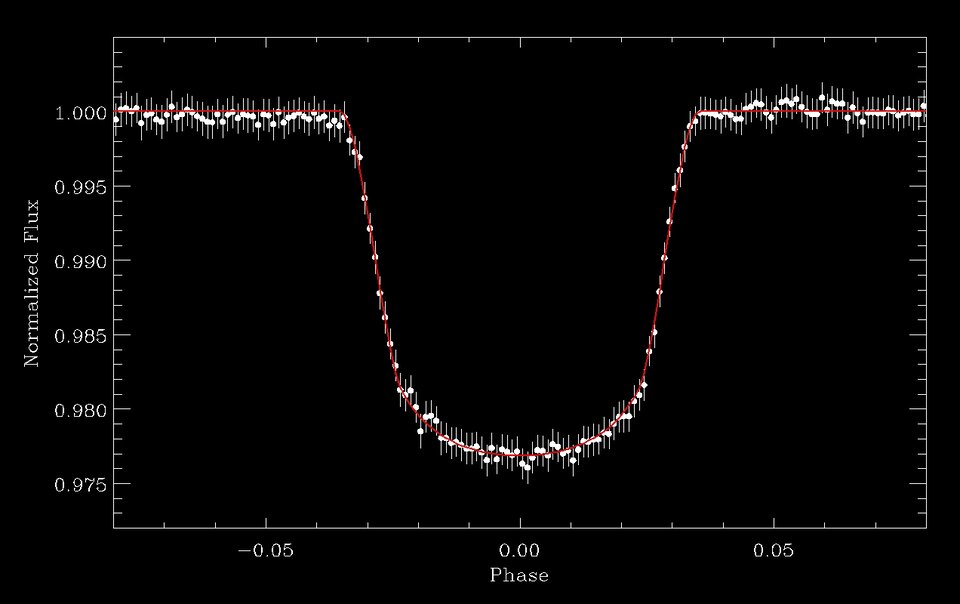
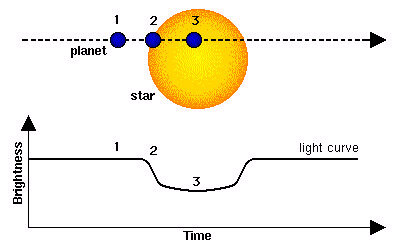
Une exoplanète est détectée par COROT lorsqu’elle passe devant son étoile et que ce transit cause une baisse soudaine de l’intensité lumineuse – la courbe de luminosité – de celle-ci.
L’étude de l’intérieur des étoiles – ou « astrosismologie » – est réalisée par l’analyse des oscillations dans leur courbe de luminosité. Ces oscillations résultent des ondes mécaniques qui se propagent à l’intérieur même de l’étoile et fournissent des informations sur sa structure interne.
La force de COROT réside dans sa capacité à observer en continu les mêmes étoiles cibles dans une région donnée du ciel. Ces observations ont été ininterrompues depuis le début des opérations scientifiques, il y a 60 jours. Un autre point fort de la mission est le niveau de précision avec lequel COROT mesure les variations de luminosité d’une étoile.
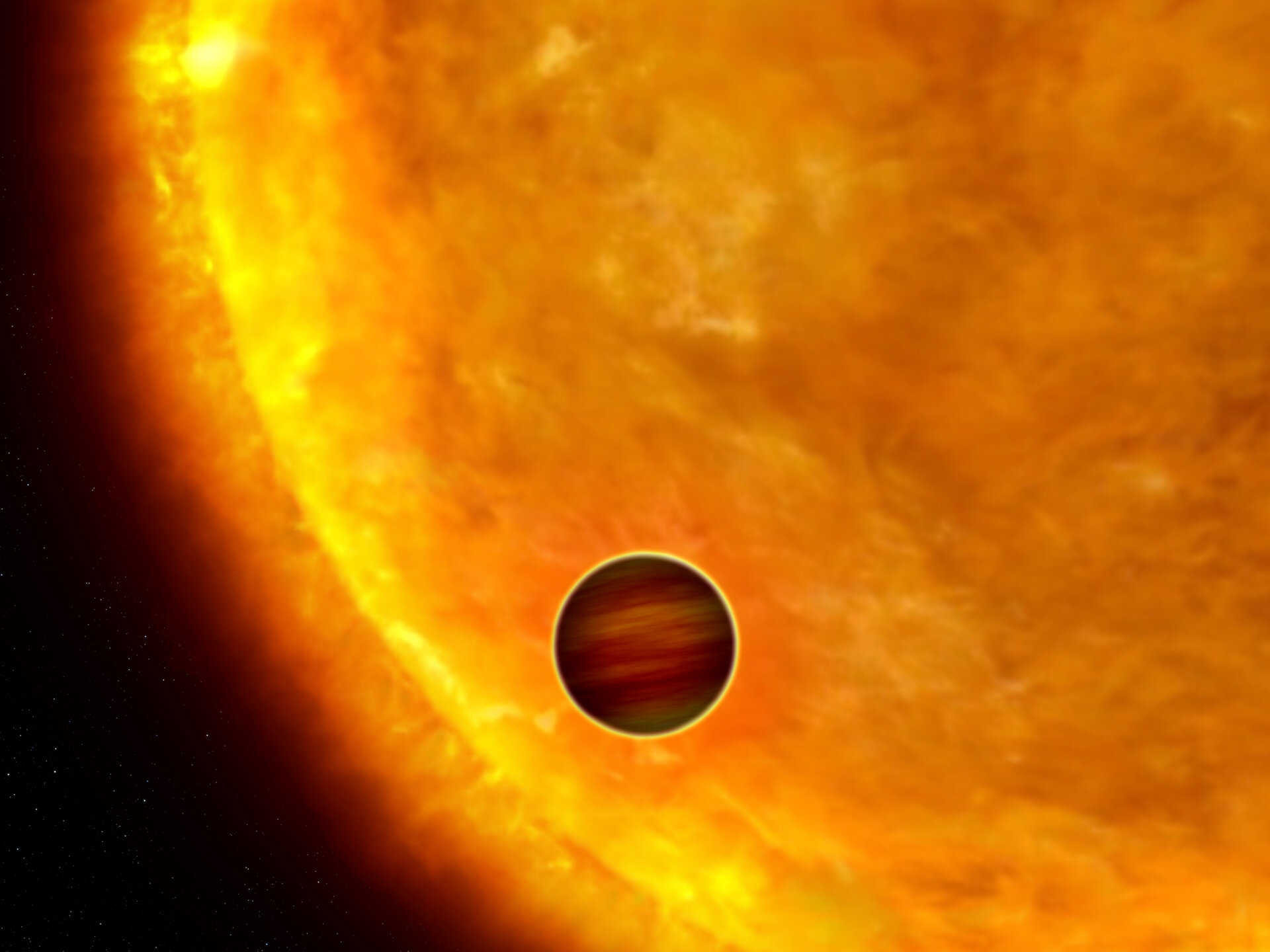
La première planète détectée par COROT – dénommée « COROT-Exo-1b » – est une géante gazeuse très chaude, dont le diamètre équivaut à 1,78 fois celui de Jupiter. Elle orbite une étoile naine jaune semblable à notre Soleil avec une périodicité d’environ un jour et demi. « COROT-Exo-1b » est située à quelque 1 500 années-lumière de nous, dans la direction de la constellation de la Licorne (Monoceros). Des observations spectroscopiques coordonnées depuis le sol ont également permis de déterminer la masse de la planète, de l’ordre de 1,3 fois celle de Jupiter.
L’évaluation scientifique des résultats qui affluent de COROT prendra quelque temps. « Les données que nous présentons aujourd’hui sont encore brutes mais elles sont exceptionnelles, » estime Malcolm Fridlund, chef de projet scientifique de COROT à l’ESA. « Cela montre que les systèmes de bord fonctionnent mieux que prévu dans certains cas – jusqu’à dix fois mieux comparativement à ce que nous attendions avant le lancement. Cela aura un énorme impact sur les résultats de la mission ».
Toutes les sources de bruit et de perturbations n’ont pas encore été prises en compte dans l’analyse des données. La première exoplanète a été détectée avec un niveau d’erreur d’à peine 5/100 000 par heure d’observation. Quand toutes les corrections auront été appliquées aux courbes de luminosité, la marge d’erreur tombera à 1/100 000.
En conséquence, des petites planètes de la taille de notre Terre – c’est-à-dire trois fois plus petites que ce que l’on croyait possible – seront à la portée de COROT. Le satellite pourrait également, dans certaines conditions spécifiques, détecter les infimes variations dans la lumière stellaire causées par sa réflexion sur la planète elle-même. Cela fournirait alors des indications sur la composition chimique de la planète.

La qualité des données astrosismologiques est également impressionnante. D’excellentes mesures de « tremblements d’étoiles » ont été obtenues au cours des premiers 60 jours d’observation, avec une marge d’erreur inférieure à un millionième.
COROT a observé une étoile brillante, semblable au Soleil, et a révélé de manière inattendue d’importantes variations de sa luminosité sur des durées d’à peine quelques jours. Ces variations pourraient être liées à l’activité magnétique de l’étoile. La précision des mesures est réellement époustouflante : avec un niveau d’erreur de 5/100 000 par minute (soit un millionième sur quatre minutes), COROT a déjà atteint la performance maximale pour un télescope de cette taille.
L’analyse préliminaire des oscillations dans la luminosité de l’étoile montre clairement la signature sismique typique d’une étoile de même type que le Soleil. Cette analyse aidera les scientifiques à comprendre la structure interne de l’étoile et son âge.
« COROT, qui est un projet conjoint de la France, de l’Europe et du Brésil, est certainement né sous une bonne étoile » conclut Malcolm Fridlund. « Après un lancement parfait, et un démarrage des opérations scientifiques plus rapide que prévu, nous attendions les données avec impatience. Maintenant que nous avons pu voir leur qualité, nous pouvons nous attendre à de grandes découvertes pour l’avenir ».
Note aux rédactions
Le satellite COROT a été mis en orbite par un lanceur Soyouz depuis le cosmodrome de Baïkonour, au Kazakhstan, le 27 décembre 2006. Placé sur une orbite polaire quasi-circulaire entre 895 et 906 km d’altitude, le satellite a été mis sous tension le 2 janvier 2007 et a débuté ses opérations scientifiques dès le 3 février.
COROT est un projet mené par le CNES avec une participation de l’ESA. Les autres partenaires principaux de la mission sont l’Allemagne, l’Autriche, la Belgique, le Brésil et l’Espagne.
Pour plus d’informations
Malcolm Fridlund
Chef de projet scientifique de COROT à l’ESA
Courriel : Malcolm.Fridlund @ esa.int