Final European crewmembers announced for human Mars mission simulation
ESA has announced the European prime and backup crewmembers for the 105-day Mars500 study. From 31 March 2009, two Europeans are set to join four Russian crewmembers on a simulated human mission to Mars.
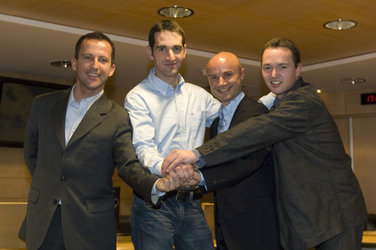
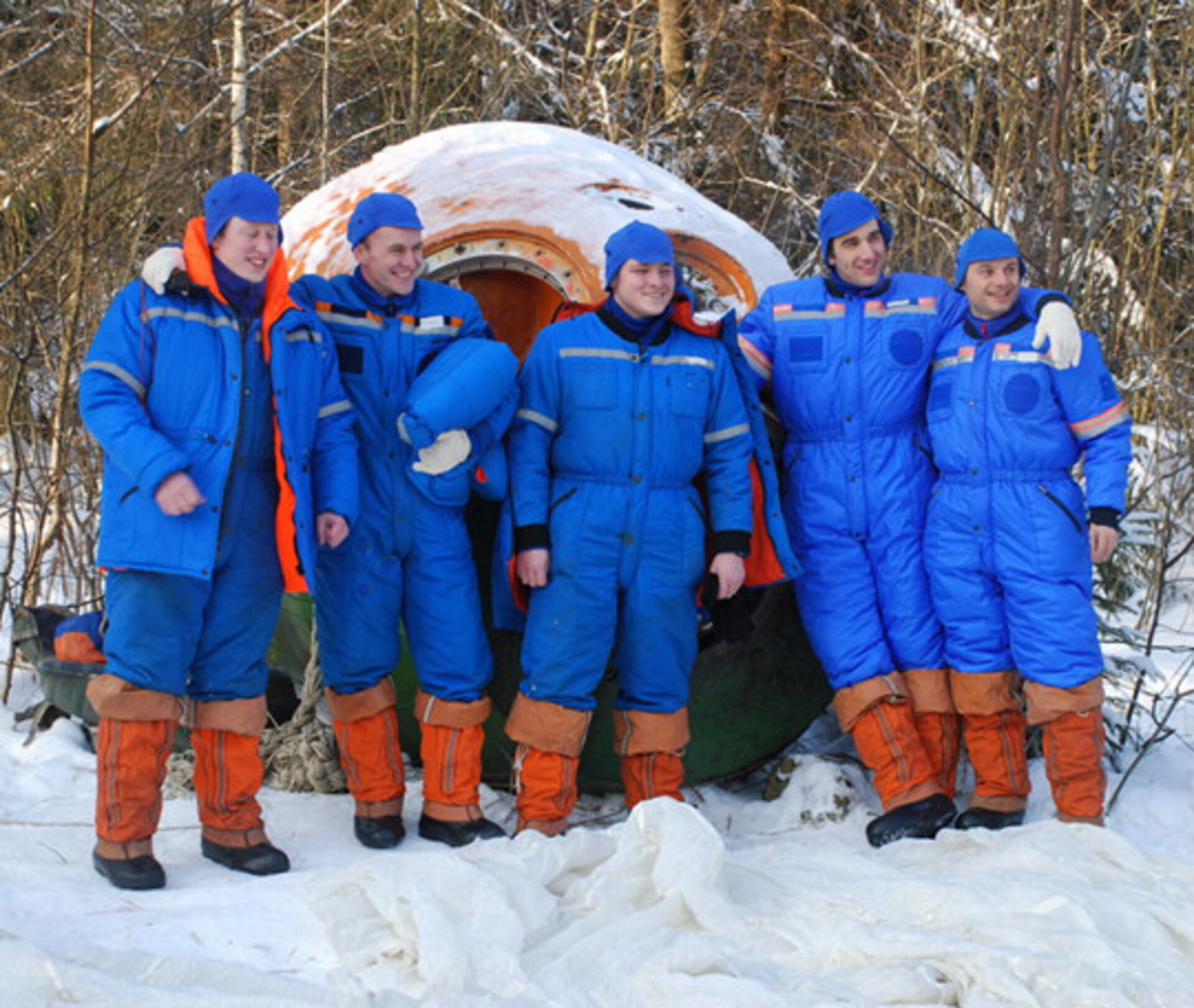
After a selection process that started with some 5600 applicants, the final four European candidates began training for the Mars mission simulation last month. From these four candidates, ESA has now selected the two who are assigned as prime crewmember and the two who will act as their backup, stepping in to replace a prime crewmember right up until the last moment if necessary.
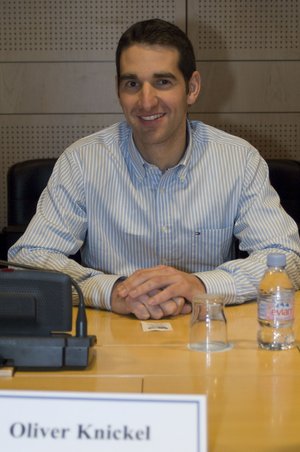
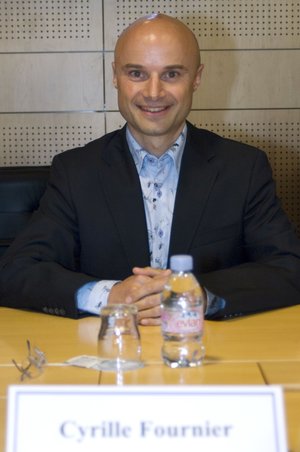
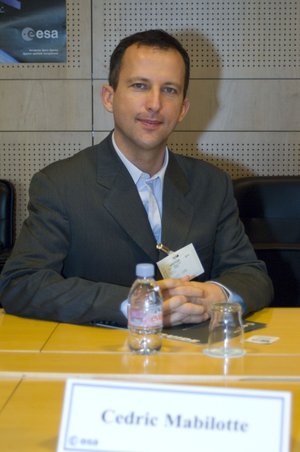
Selected for the prime crew are Oliver Knickel, a mechanical engineer in the German army, and airline pilot Cyrille Fournier from France. Cedric Mabilotte and Arc'hanmael Gaillard, both from France, are assigned as backup crewmembers.

As part of a cooperative project between ESA's Directorate of Human Spaceflight and the Russian Institute for Biomedical Problems (IBMP), Knickel and Fournier are set to join four Russian-selected crewmembers inside a special isolation facility in Moscow.
Throughout the 105-day isolation period, the six-strong crew will experience all elements of a simulated Mars mission, including travelling to Mars, orbiting the planet, landing on the martian surface and the return to Earth.
The crew will only have personal contact with each other, plus voice contact with a simulated control centre and family and friends. A 20-minute delay will be built into communications with the control centre to simulate an interplanetary mission and the crew will eat the same food as the astronauts on the International Space Station.
Their stay in the facility precedes the full Mars500 study due to start later in 2009, which will see another six-member crew sealed in the chamber to experience a complete 520-day Mars mission.
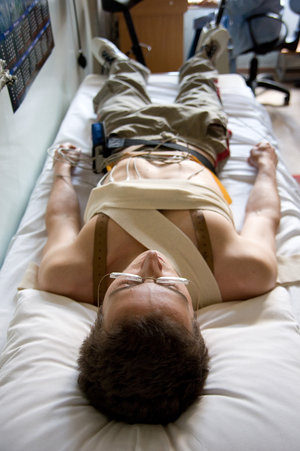
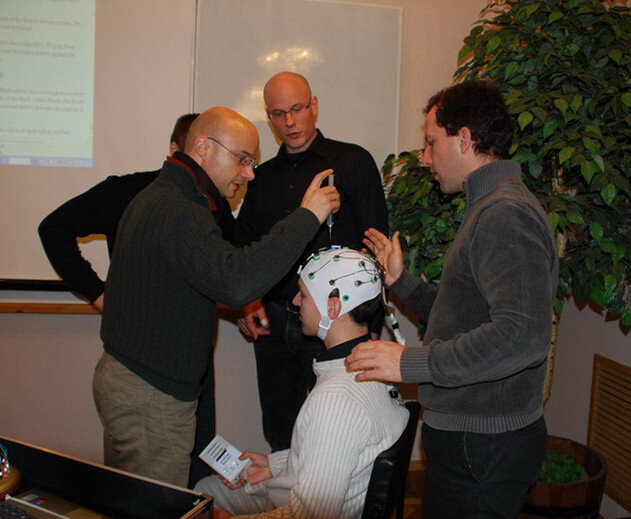
The purpose of the Mars500 study is to gather data, knowledge and experience to help prepare for a real mission to Mars one day. The participants will act as subjects in scientific investigations to assess the effect that isolation has on various psychological and physiological aspects, such as stress, hormone regulation and immunity, sleep quality, mood and the effectiveness of dietary supplements.
More information:
Jennifer Ngo-Anh
ESA Mars500 Programme Manager
Tel. +31 71 565 8609
Mars500 @ esa.int
Markus Bauer
ESA Communication Officer for the Directorate of Human Spaceflight
Tel: + 31 71 565 6799
Markus.Bauer @ esa.int