Now calling passengers for the Moon and Mars
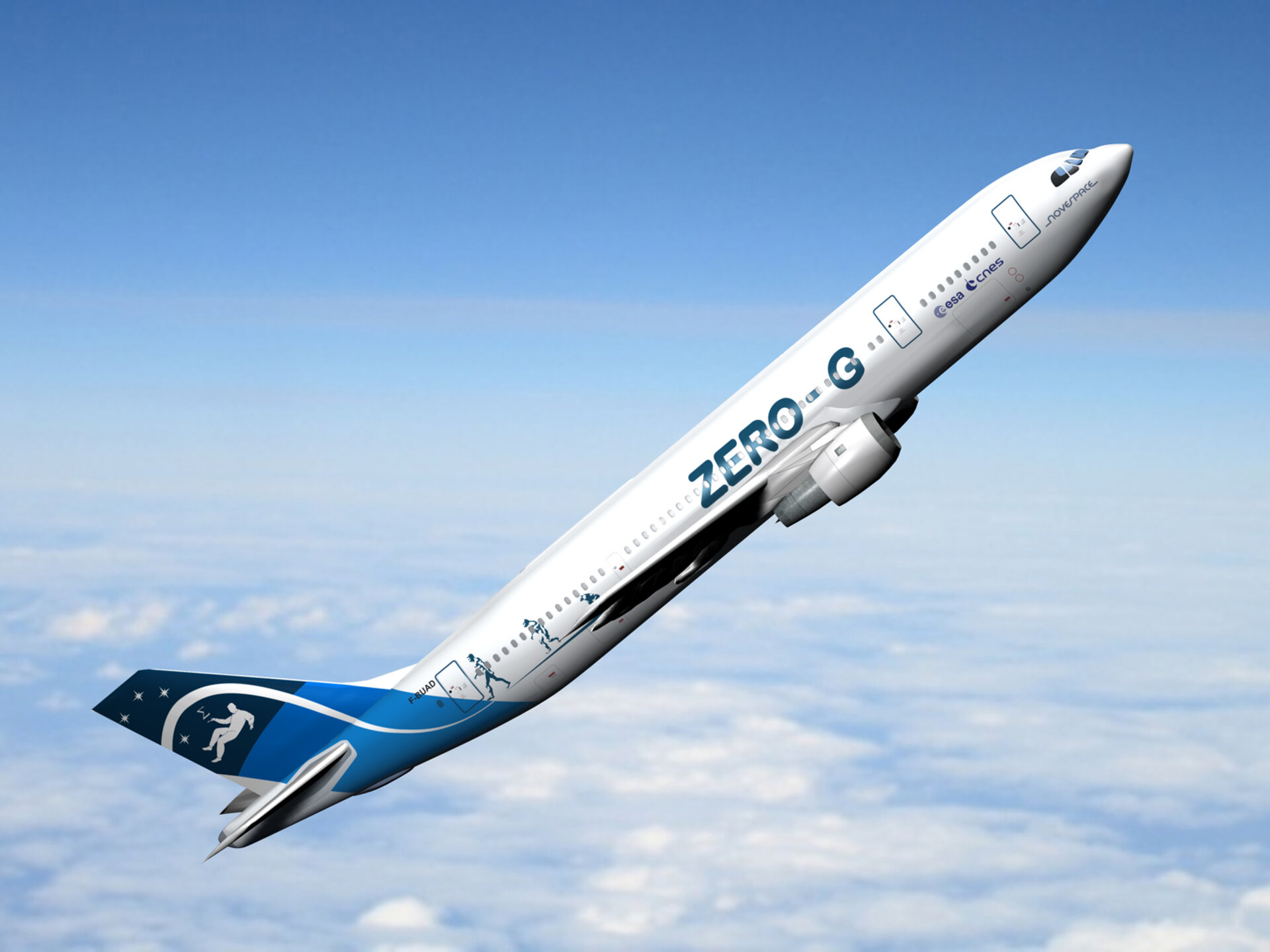
You can do a lot in 25 seconds! Like simulating weightlessness, lunar gravity or martian surface operations aboard an A300 Zero-G aircraft flying on a special trajectory. ESA is now calling for scientists to come along.
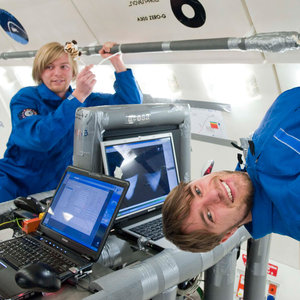
Creating ‘zero gravity’ with an aircraft is nothing new: ESA has been providing opportunities for research during parabolic flights for over 25 years. During each special parabolic flight, up to 20 seconds of weightlessness can be achieved and, by repeating the manoeuvre several times, up to 10 minutes of zero weight in total can be experienced during one flight.

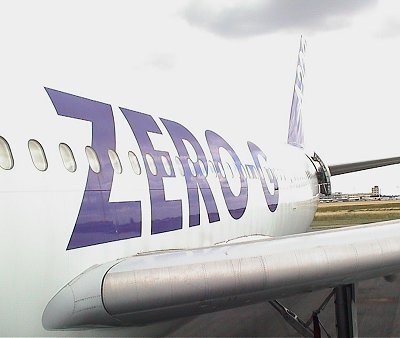
The workhorse of ESA’s parabolic flights, the A300 Zero-G wide-body airliner, has been used for more than 10 years for these flights. The plane is not only one of the most modern, but also the largest in the world used for parabolic flights.
Now this legendary aircraft has also been certified for flying parabolas that produce not only microgravity, but also reduced gravity levels of 0.16 g for approximately 23 seconds and 0.38 g for approximately 30 seconds. These gravity levels correspond to the gravity conditions on the Moon and on Mars.
When comparing with normal zero-g parabolas, these reduced-gravity parabolas are longer and less steep. Like all parabolic flights used for scientific research, they require very exact and skilful work by the pilots, provided for the flights by DGA Essais en vol, the test flight unit of the French military technology and aviation agency.
Choose your gravity level

In everyday life, 30 seconds might seem a very short time, hardly enough to send a quick SMS, but for scientists this is enough for many kinds of research in physical sciences, life sciences and technology.
The purpose of flying parabolas with lunar and martian gravity levels is to conduct gravity-related science at other gravity levels between zero and one (one g being Earth’s gravity), to get deeper knowledge of human behaviour and performances in harsh environments, hardware testing, mission operations simulations, crew training and for development of exploration strategies in preparation for future human missions.
“Many fields of the physical sciences will benefit from the partial g flights, just like life sciences, where flights can be used to better understand how humans, cells and plants are affected by low-gravity environments similar to those on the Moon and Mars,” says Christer Fuglesang, Head of Science and Applications Division at ESA’s Human Spaceflight Directorate.
“Parabolic flights are a great opportunity for many issues of relevance for the preparation of future human space exploration on the surface of planetary bodies.”
Normal zero-g parabolas yield in fact very weak gravity that corresponds to the gravity levels of asteroids or small moons around other planets. Other gravity levels are also possible: the hypergravity periods before and after the weightlessness produce gravity levels of 1.8–2 g. Longer periods or other high gravity levels are easily achievable.
Scientists: deadline approaching!

The next ESA parabolic flight campaign will be in November, but ESA is calling now for the proposals for experiments to be conducted during the 54th campaign in spring 2011. The campaign will include three flights of 31 parabolas with Moon and Mars gravity-levels (exact amount of each type of parabolas will depending on requests of investigators).
Proposals for the first campaign of reduced gravity levels of 0.16 g and 0.38 g should be received before 31 August 2010. Proposals can still be submitted after this date and will be considered or future partial-g campaigns.
Please visit www.esa.int/parabolicflight for further information on the ESA parabolic flights and on how to prepare and submit research proposals.