 |  |  |  |  |
| |  | |  | |
 |
Flight plan ATV mission conceptATV flight phasesATV cargo capacitySpacecraft ATV configuration ATV Integrated Cargo CarrierATV Service ModuleATV evolutionATV Missions ATV-1: Jules VerneATV-2: Johannes KeplerATV-3: Edoardo AmaldiATV-4: Albert EinsteinOperations Flight operationsATV Control CentreCrew roleIndustry ESA's roleEuropean industryDownloads ATV Edoardo Amaldi factsheet (pdf)ATV Edoardo Amaldi info kit English (pdf)ATV Edoardo Amaldi info kit German (pdf)ATV Edoardo Amaldi info kit French (pdf)ATV Edoardo Amaldi info kit Italian (pdf)ATV: Servicing the International Space Station (pdf)Multimedia gallery ATV image galleryATV video galleryServices
|  |  |  |  | | | ATV configuration
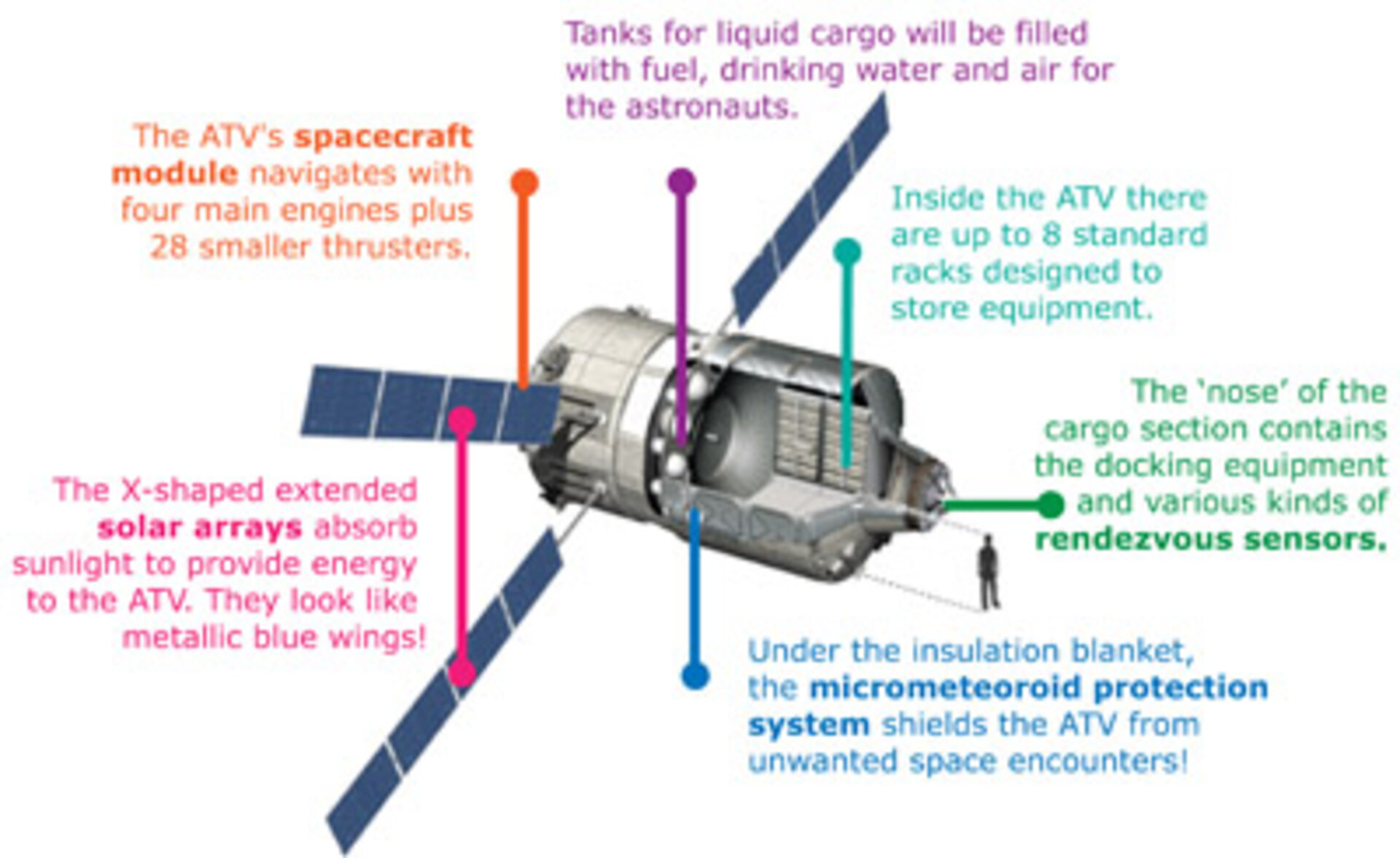
Inside the ATV
The exterior of this new generation spacecraft is a cylinder,
10.3 metres long and up to 4.5 metres in diameter. The details of the ATV's external structure are covered with a foil layer and meteorite protection panels.
Characteristic X-shaped solar arrays extend from the spacecraft. Deployed 100 minutes after lift-off, the solar arrays reach a span of 22.3 m. The four arrays are totally independent and can rotate to get the best orientation to the Sun. They are able to produce an average of 4 800 watts - providing power to rechargeable batteries which are vital for powering ATV systems when the spacecraft is in the shadow of Earth.
The ATV consists of two main modules:
Last update: 9 March 2010 | |
|  | Learn more about ATV on Space-in-bytes
|
