Ulysses' mission extended
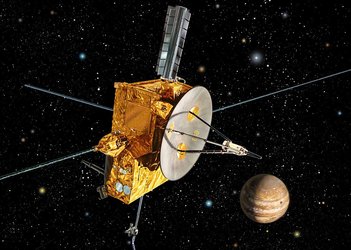
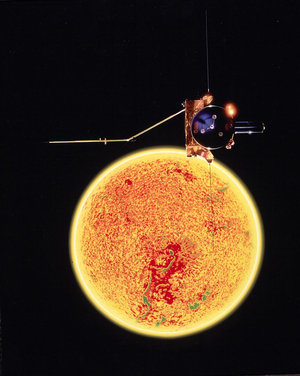
ESA’s Science Programme Committee has unanimously approved to continue the operations of the highly successful Ulysses spacecraft until March 2009. This latest extension, for a period of 12 months, is the fourth in the history of the joint NASA/ESA mission.
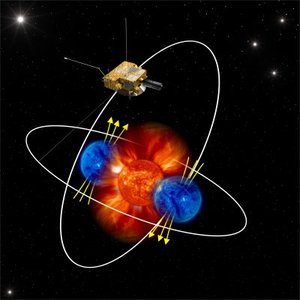
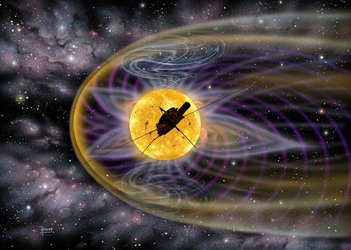
In addition to pursuing its long-term goal of exploring the heliosphere in four dimensions – 3 spatial dimensions and time - Ulysses is a key member of the Heliospheric Network, the international fleet of spacecraft presently operating at many different locations in the heliosphere and beyond.
Ulysses’ joint measurements with the twin STEREO satellites that were launched in October 2006 are high on the list of priorities for the coming months.
“This new lease of life is great news for the international heliophysics community”, said Richard Marsden, ESA’s Mission Manager and Project Scientist for Ulysses. “No other spacecraft can provide the out-of-ecliptic measurements made by Ulysses. The Sun’s activity will soon pick up again, and there are plenty of unsolved questions to tackle.”
Among these unsolved questions is an apparent asymmetry in the temperature of the Sun’s polar coronal holes, which appears to be related to the magnetic polarity. This was discovered during the first high-latitude passes in 1994 and 1995, when the magnetically positive northern polar coronal hole was found to be cooler than the southern pole. Data acquired during the coming months will hopefully shed new light on this puzzle.
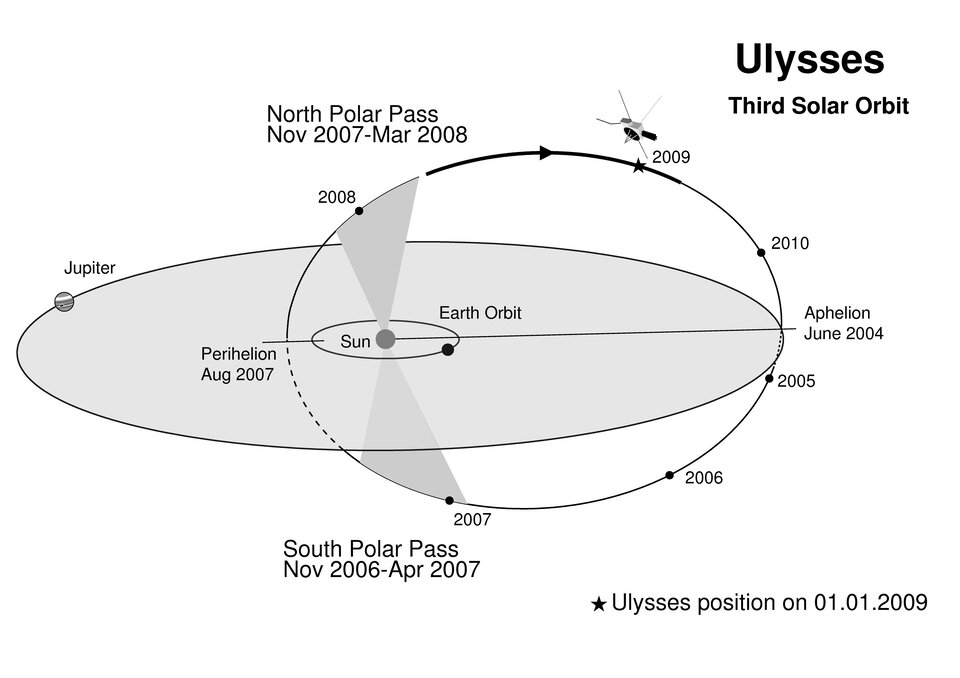
For a satellite in its eighteenth year in space, Ulysses is in remarkably good health. Nevertheless, in order to compensate for the steadily diminishing power output of the onboard radioisotope thermoelectric generator (RTG), the spacecraft operations team has had to devise a new operational strategy that will allow the majority of the scientific instruments to operate throughout the period covered by the extension without much power-sharing.
So what will the future have in store for Ulysses? “We’re all very pleased that we will still get great scientific data for another year,” said Marsden. “Beyond that, we’ll have to wait and see.”
Ulysses has a finite lifetime, determined by technical limitations. There are no limitations to the science that we can still do. We are on an exploratory mission, probing the most fundamental processes of our solar system. Every bit of new data holds the promise of a new discovery of profound importance.