Mars’s mysterious elongated crater
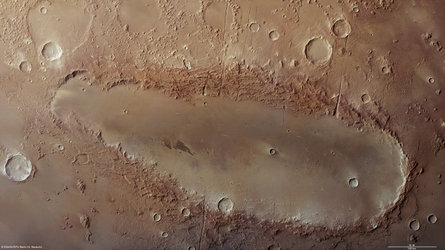
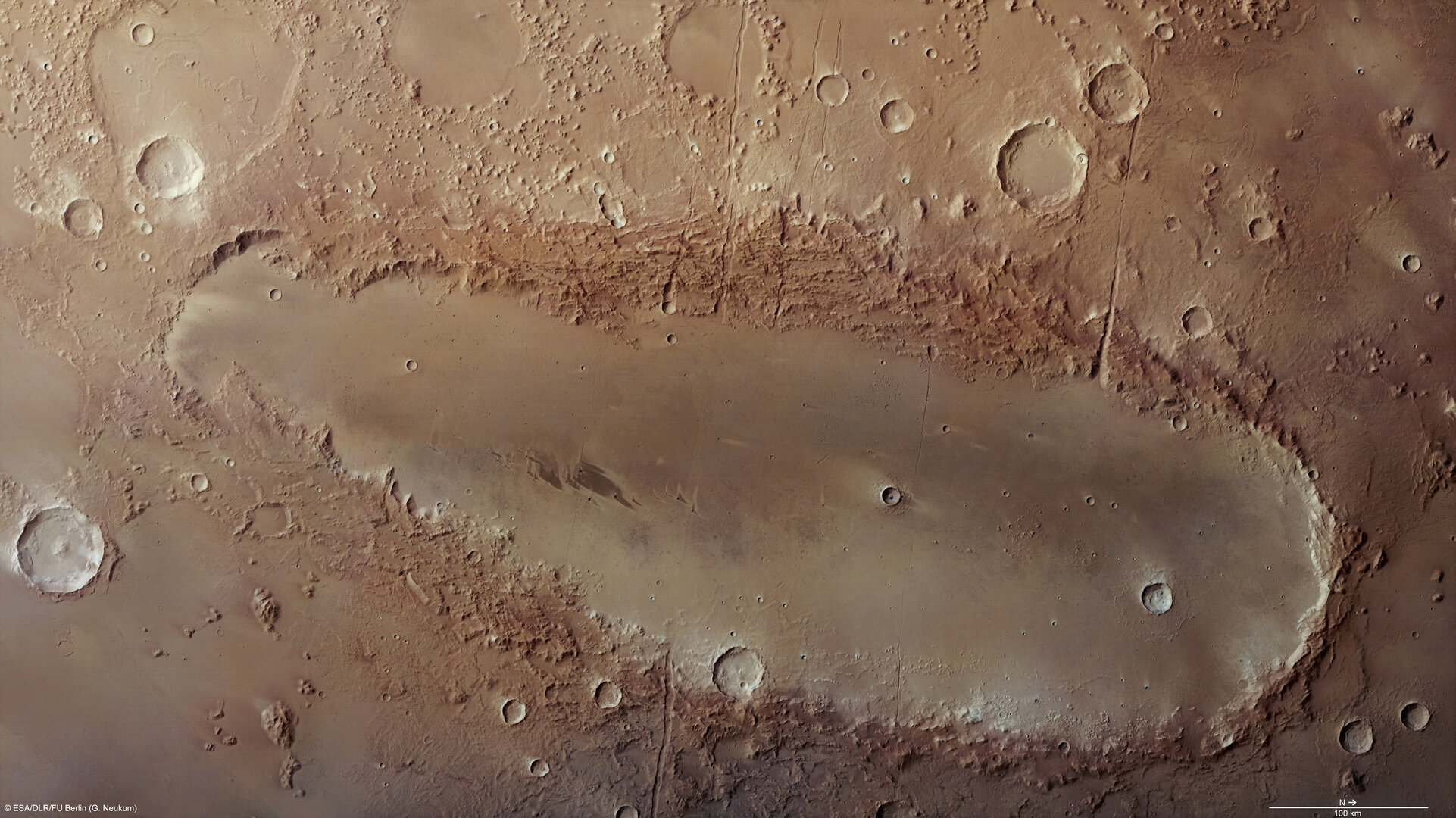
Orcus Patera is an enigmatic elliptical depression near Mars’s equator, in the eastern hemisphere of the planet. Located between the volcanoes of Elysium Mons and Olympus Mons, its formation remains a mystery.
Often overlooked, this well-defined depression extends approximately 380 km by 140 km in a NNE–SSW direction. It has a rim that rises up to 1800 m above the surrounding plains, while the floor of the depression lies 400–600 m below the surroundings.

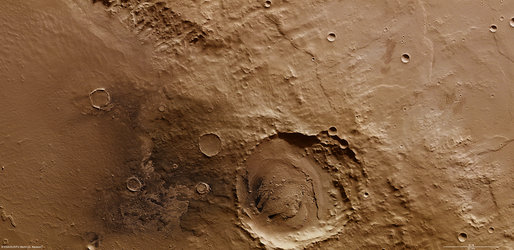
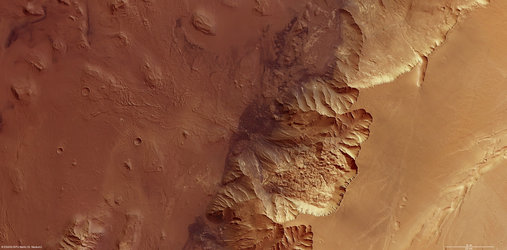
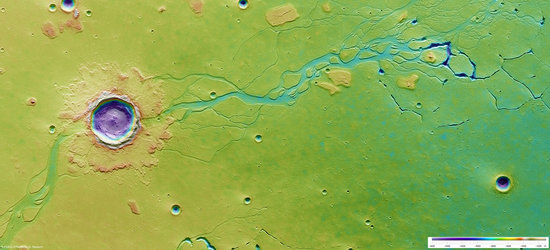
The term ‘patera’ is used for deep, complex or irregularly shaped volcanic craters such as the Hadriaca Patera and Tyrrhena Patera at the north-eastern margin of the Hellas impact basin. However, despite its name and the fact that it is positioned near volcanoes, the actual origin of Orcus Patera remains unclear

Aside from volcanism, there are a number of other possible origins. Orcus Patera may be a large and originally round impact crater, subsequently deformed by compressional forces. Alternatively, it could have formed after the erosion of aligned impact craters. However, the most likely explanation is that it was made in an oblique impact, when a small body struck the surface at a very shallow angle, perhaps less than five degrees from the horizontal.

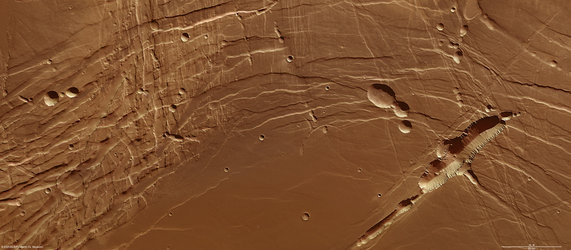
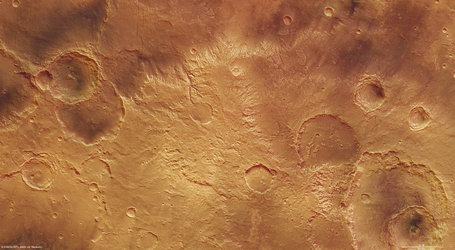
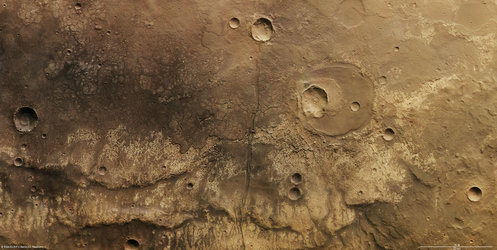
The existence of tectonic forces at Orcus Patera is evident from the presence of the numerous ‘graben’, rift-valley-like structures that cut across its rim. Up to 2.5 km wide, these graben are oriented roughly east–west and are only visible on the rim and the nearby surroundings.

Within the Orcus Patera depression itself, the large graben are not visible, probably having been covered by later deposits. But smaller graben are present, indicating that several tectonic events have occurred in this region and also suggesting that multiple episodes of deposition have taken place.
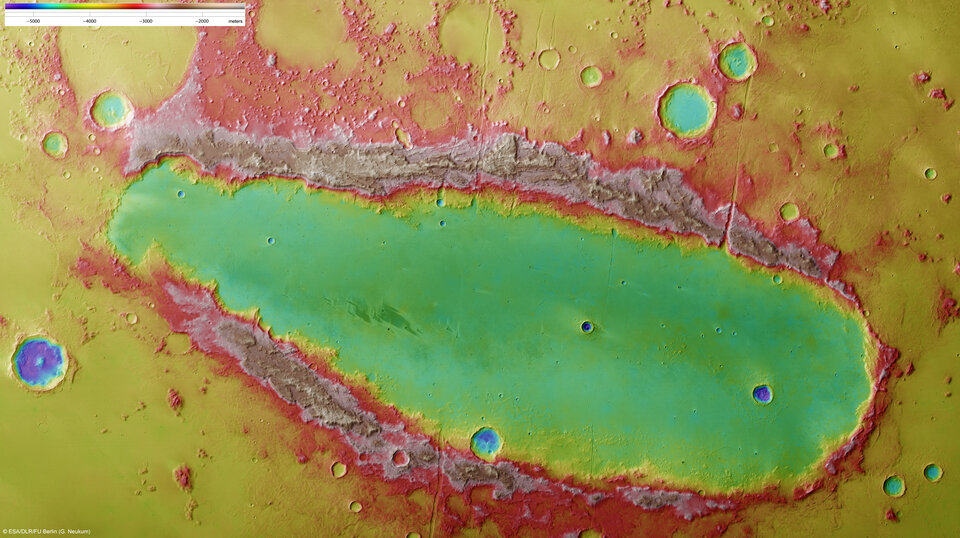
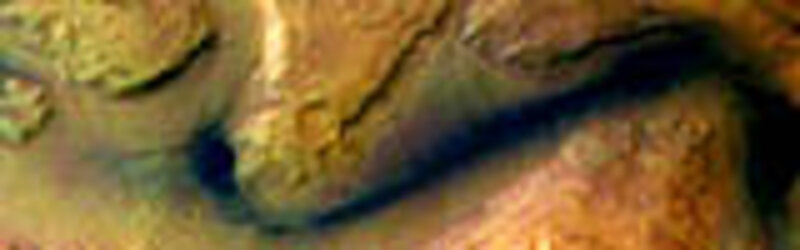
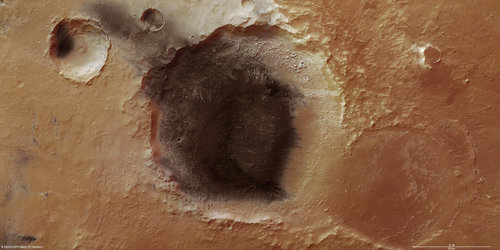
The occurrence of ‘wrinkle ridges’ within the depression proves that not only extensional forces, as would be needed to create graben, but also compressive forces shaped this region. The dark shapes near the centre of the depression were probably formed by wind-driven processes, where dark material excavated by small impact events in the depression has been redistributed.
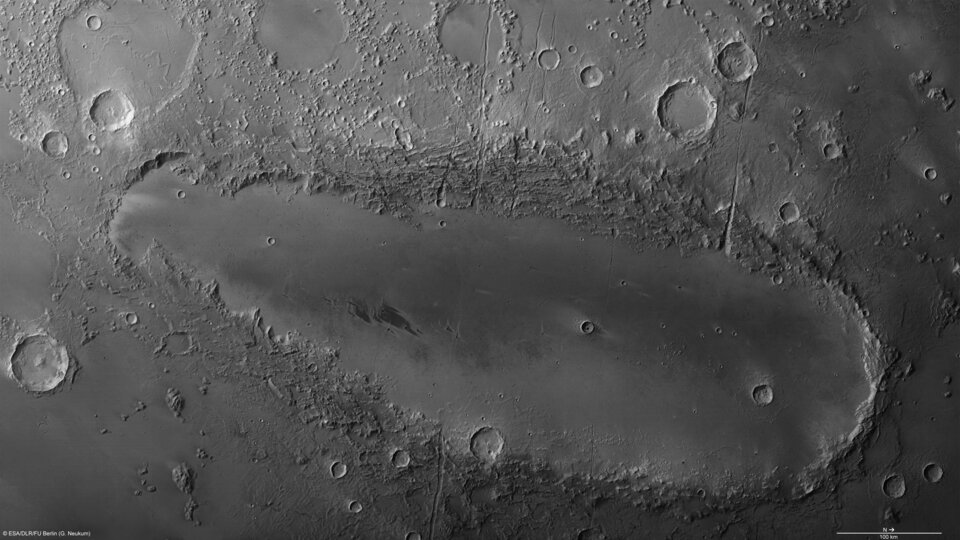
However, the presence of graben and wrinkle-ridges has no bearing on the origin of Orcus Patera, as both can be found all over Mars. The true origin of Orcus Patera remains an enigma.