Final ‘go’ for Vega launch
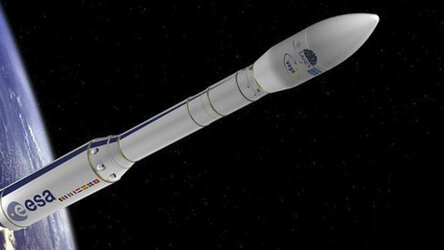
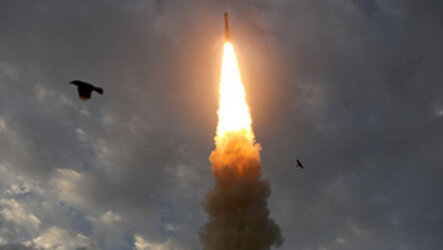
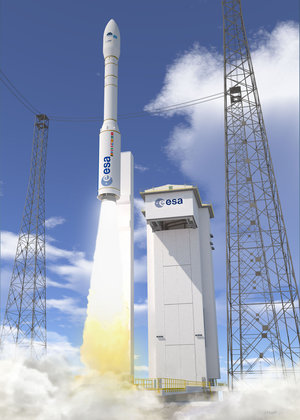
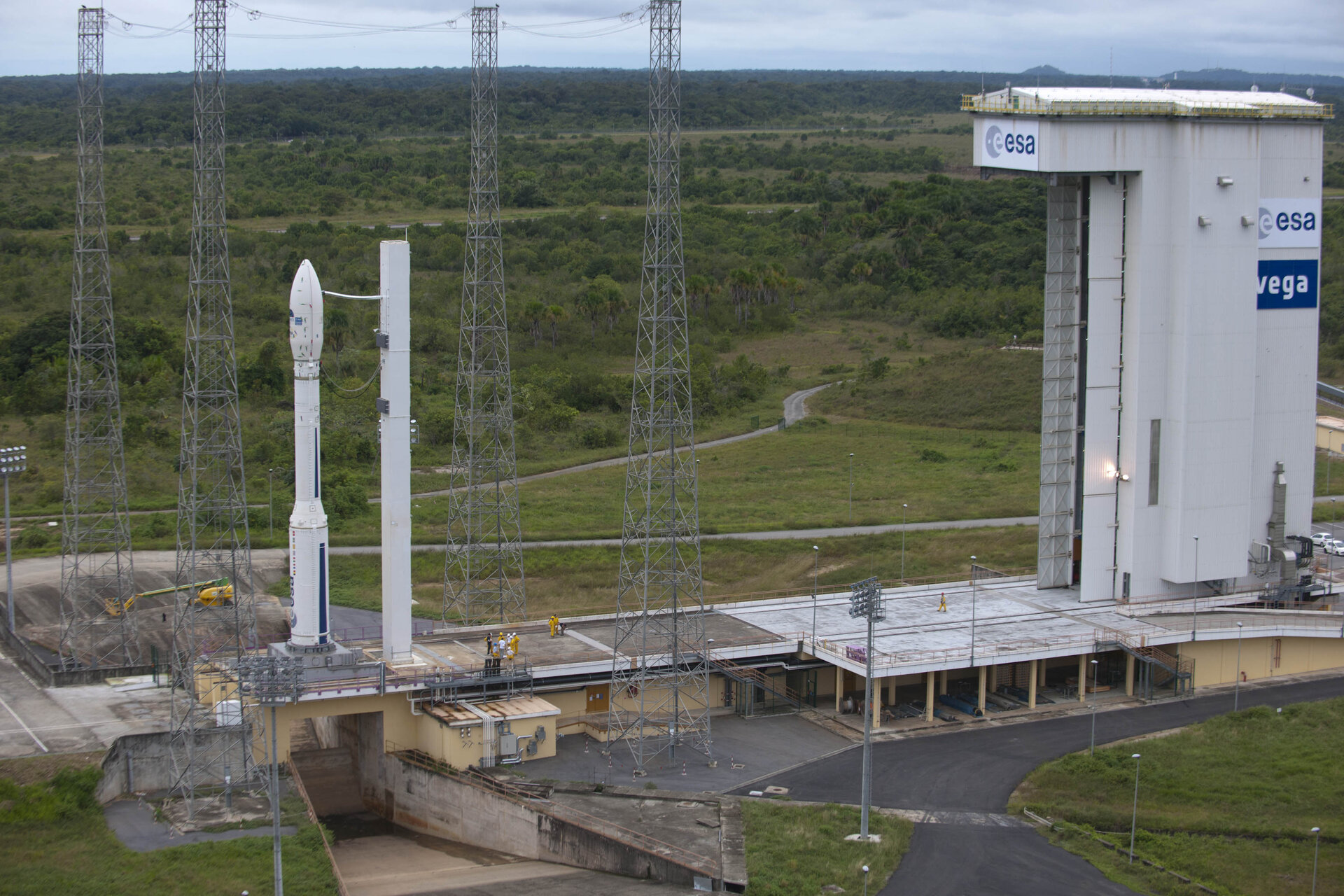
Vega is all set for launch on Monday. The new launcher passed its final hurdle on Saturday at Europe’s Spaceport, the Launch Readiness Review, and is ready for liftoff.
This last review checks the final status of the entire launch system, including the vehicle and the ground infrastructure, following the full dress rehearsal of the countdown and launch of earlier this week.
The first mission, designated VV01, is scheduled for liftoff during a three-hour launch window lasting 10:00–13:00 GMT (11:00–14:00 CET; 07:00–10:00 local time).
VV01 flight profile
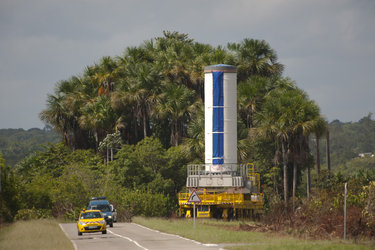
Vega’s P80 solid-propellant engine will be ignited first and a fraction of a second later the vehicle will lift off. It will burn out and separate at 1 min 54 sec. The Zefiro-23 second stage will ignite one second later and be jettisoned 3 min 22 sec into the flight.
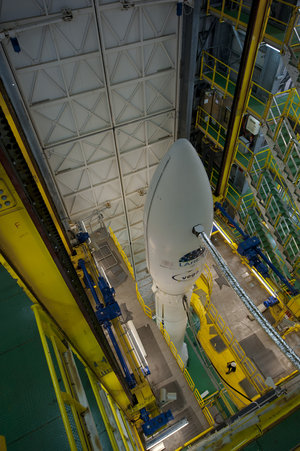
About 16 seconds later, the Zefiro-9 third stage will ignite. The fairing protecting the payload during the climb through Earth’s atmosphere will be discarded at 3 min 43 sec, followed by Zefiro-9 separation at 5 min 47 sec.
The first firing of the AVUM liquid-propellant fourth stage will begin at 5 min 54 sec; the second will begin at 48 min 7 sec.
At 55 min 5 sec into the flight, Italy’s LARES laser-ranging satellite will separate from the upper stage.
AVUM’s third burn starting at 66 min 10 sec will be followed by the separation of ALMaSat-1 and the seven CubeSats at 70 min 35 sec.
Vega’s flight will be completed 81 min after first-stage ignition.

Vega qualification flight
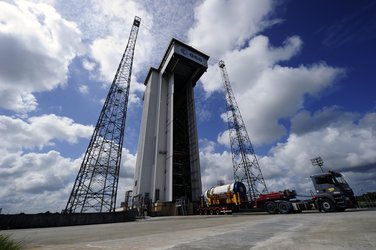
Flight VV01 will depart from the new Vega launch site at Europe’s Spaceport in Kourou, French Guiana, carrying nine satellites into orbit.
The payload consists of two Italian satellites – ASI’s LARES laser relativity satellite and the University of Bologna’s ALMASat-1 – as well as seven picosatellites provided by European universities: e-St@r (Italy), Goliat (Romania), MaSat-1 (Hungary), PW-Sat (Poland), Robusta (France), UniCubeSat GG (Italy) and Xatcobeo (Spain).
The flight will qualify the overall Vega system, including the vehicle, the ground infrastructure and operations, from the launch campaign to the payload separation and disposal of the upper module.
In particular, it will demonstrate the vehicle’s performance and payload services.
A flexible mission

Vega will provide Europe with a safe, reliable and competitive capacity to carry science and Earth observation satellites into orbit, perfectly complementing the heavy Ariane 5 and medium Soyuz rockets already launched from the spaceport.
The rocket is designed for a wide range of missions and payload configurations in order to respond to different market opportunities and provide great flexibility.
Unlike most small launchers, Vega is able to place multiple payloads into orbit. In particular, it offers configurations able to handle payloads ranging from a single satellite up to one main satellite plus six microsatellites.