Evolution of ESA
At the Ministerial Council 2008, ministers will be focusing their decisions on those priority actions which are instrumental in ensuring the contribution of the space sector to the future of Europe, and allocating accordingly the resources for the implementation of programmatic decisions.
Thus, they must ensure that ESA’s vision and strategy are aligned with Europe’s needs and implemented in a coherent and affordable manner.
The European Space Policy has stated its strategic objectives in order for Europe to respond to global challenges and to play a global role. The definition of the policy and endorsement by ministers provide the policy base for space in Europe. Previous meetings of the 'Space Council' have defined the respective roles of ESA and the EU in delivering the European Space Policy, which has implications for the way in which ESA evolves to maximise its effectiveness in 21st century.
Together, these two key factors allow ESA to set its agenda, with the overarching goal of becoming a global space agency, indispensable to the world and strategic for Europe in meeting its ambitions on the global scene as a competitive society.
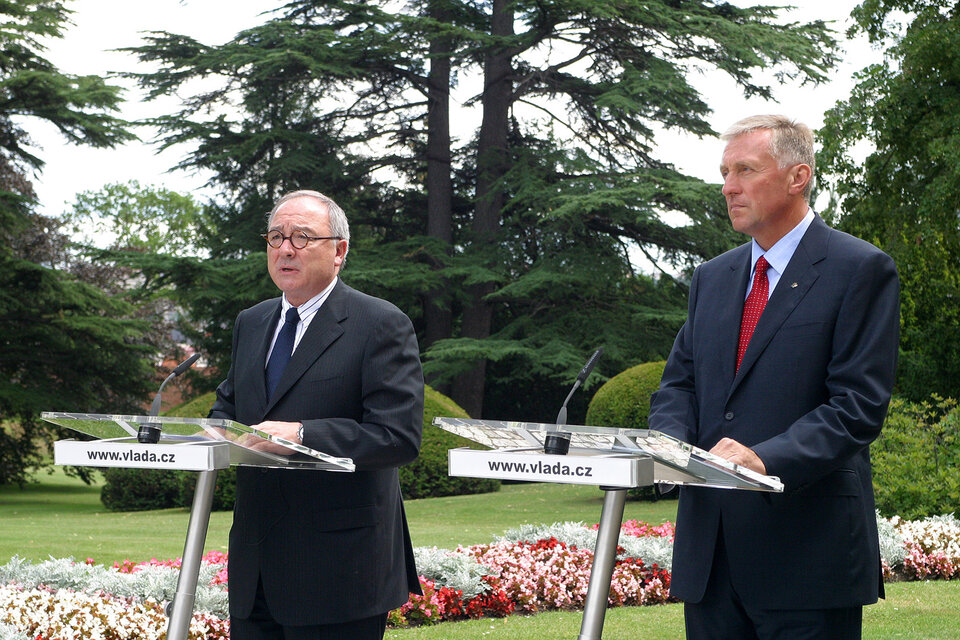
The face of Europe is gradually evolving. The enlargement of the EU to 27 Member States has expanded the borders of intra-European cooperation. Space systems provide important tools to support the accomplishment of both of these processes and ESA must invest more resources into building ties with new EU Member States and neighbouring countries.
In this way, it will ensure that space is able to respond to European political requirements and meets European needs for services in a timely way. In this sense, international cooperation for ESA starts within Europe, the very purpose of ESA since its inception.

In parallel, international cooperation outside Europe remains important to the achievement of many missions. The sharing of resources and technologies is the direct benefit of this, but the act of cooperating provides further opportunity for hidden enrichments.
Asserted ambitions in selected areas of space activities will allow Europe to lead in some global political challenges such as environmental monitoring, progress of knowledge, and sharing of information.
These factors lead to the establishment of clearly related programmatic priorities, consistent with the strategic objectives on the one hand, and with the longer-term vision on the other, assisting Europe to:
- further develop the benefits of space to society and the knowledge economy, stimulating innovation, creativity and growth;
- promote the development of new products and services for daily life;
- be increasingly successful on the global market in space systems, services and applications;
- meet its defence and security needs for space; and
- assure continued access to space.
As part of an evolving environment and to meet Europe’s changing role in the global political system and economy, ESA needs to pursue a membership policy in harmony with the enlargement of the EU. Indeed, at the informal meeting of space ministers in July 2008, several EU States not belonging to ESA indicated that they were planning to apply for ESA membership.
In parallel, the Ministerial Council 2008 should ensure that ESA’s internal evolution is targeted to the continuous improvement in its ability to meet its goals more effectively and efficiently. In this respect, ESA will implement the message which its Ministers constantly convey nationally to the industry and service sectors, as well as to public bodies.