Testing ozone-monitoring satellite’s solar wings
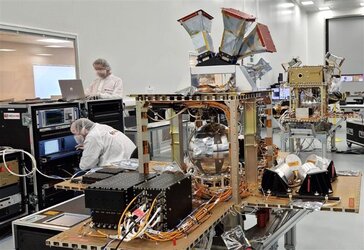
Over the past year, satellite engineers at Redwire Space in Belgium have been hard at work assembling European Space Agency’s ozone-monitoring satellite, ALTIUS. The team has now passed a major milestone: testing the deployment of the satellite’s two solar panels, a critical step in preparing it for life in orbit.
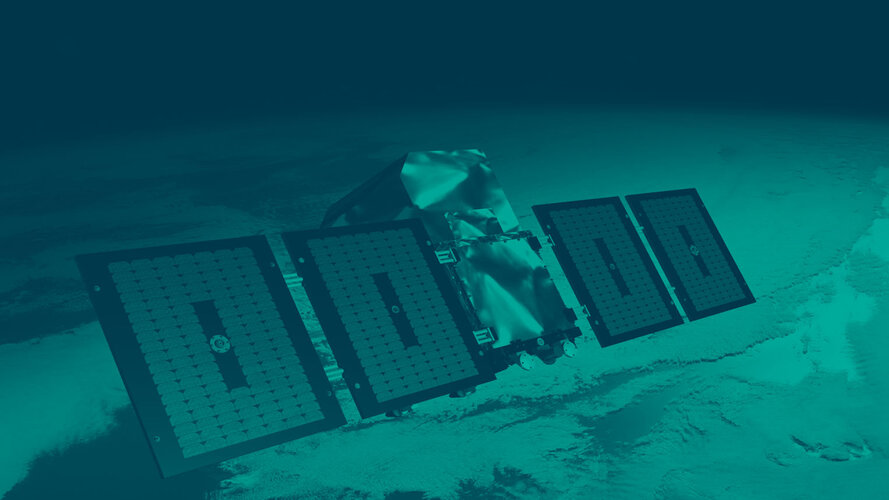
These solar arrays will be the satellite’s primary source of power, converting sunlight into electricity to operate its instruments, onboard computer, communications systems, and thermal controls. Because ALTIUS will circle Earth for years, the panels must deploy flawlessly after launch and perform reliably in the harsh conditions of space, where extreme temperature variations and radiation can affect materials and mechanisms.
The deployment test verified that the panels unfold smoothly from their stowed launch configuration and lock securely into place, ensuring structural stability and optimal orientation toward the Sun. Such tests are essential, as the solar arrays are compactly folded to fit inside the rocket and can only be deployed once in orbit.


Access the video
ESA’s ALTIUS Project Manager, Michael Francois, said, “This is an important milestone and my thanks go to everyone involved. The platform is now fully integrated and ready to host the Altius instrument, a novel three-channel spectra imager, which is due for delivery and integration onto the platform in the second quarter of next year.”
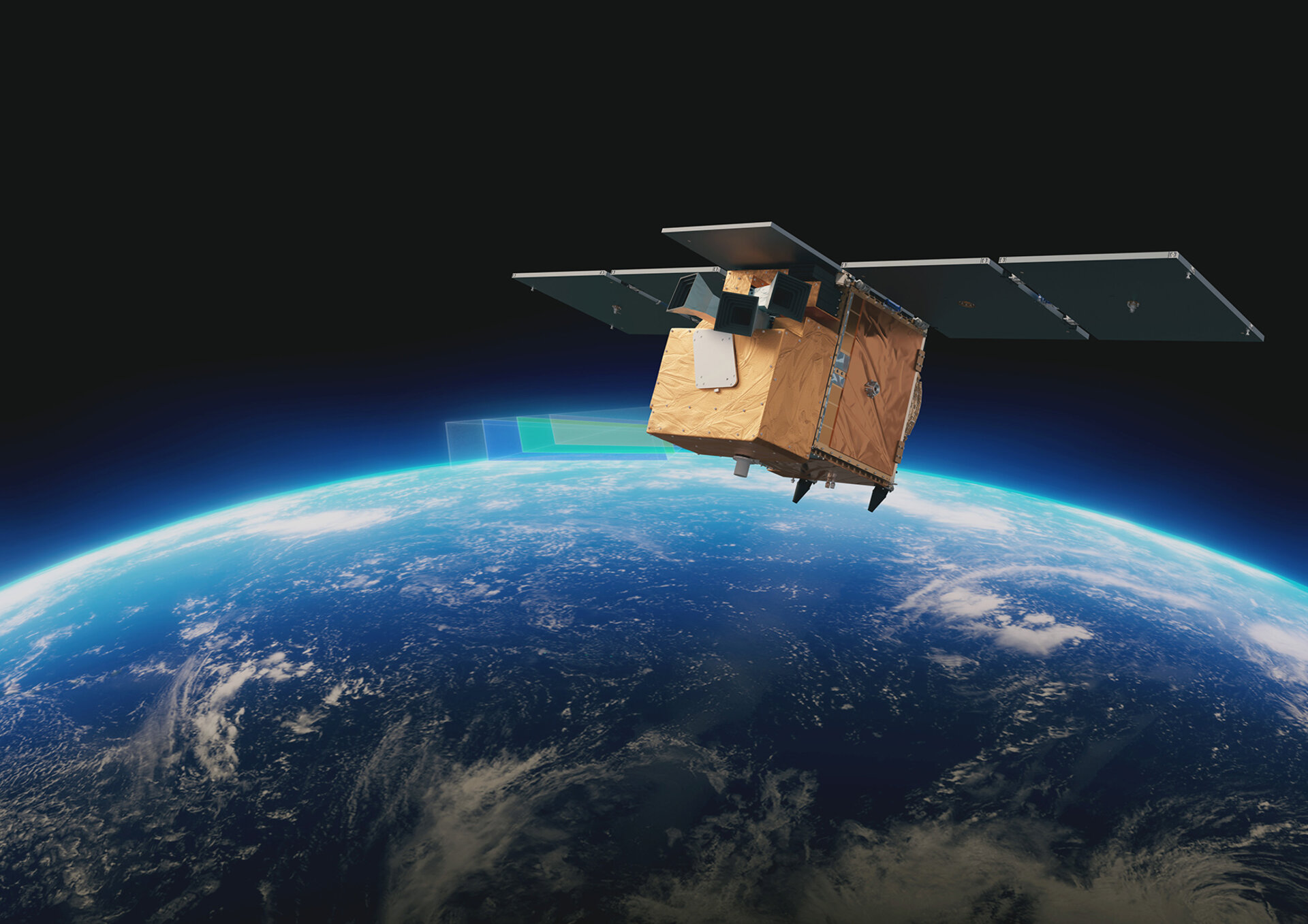
ALTIUS, which is short for Atmospheric Limb Tracker for Investigation of the Upcoming Stratosphere, is an Earth observation satellite developed to monitor ozone and other trace gases in the atmosphere.
The need to monitor atmospheric ozone dates back to the 1970s, when scientists discovered significant depletion of the ozone layer, especially above the South Pole, creating what became known as the ozone hole.
Atmospheric ozone functions as Earth’s natural sunscreen by absorbing ultraviolet radiation from the Sun, particularly harmful UV-B rays. Excessive exposure to UV-B radiation increases the risk of skin cancer and cataracts and can also harm plants and wildlife.
Over the past three decades, the Montreal Protocol has played a crucial role in reducing ozone depletion by limiting the use of harmful chemicals in products such as refrigeration systems. Although the ozone layer – located in the stratosphere about 15–30 km above Earth’s surface – is gradually recovering, continued monitoring and improved understanding of atmospheric processes remain essential.
Ozone also affects the temperature structure of the stratosphere by absorbing heat, influencing global atmospheric circulation patterns. Monitoring ozone therefore contributes to more accurate climate prediction models.
Unlike many other satellite missions that observe ozone by looking directly downwards, ALTIUS uses a technique called limb sounding. Its 2D spectral imager scans the atmosphere along Earth’s horizon rather than toward the surface. This approach enables measurements at multiple altitudes, producing vertical profiles of ozone concentration.
The instrument includes three independent spectral imagers operating in the ultraviolet, visible, and near-infrared ranges.
Developed within ESA’s Earth Observation Earth Watch programme, ALTIUS is primarily funded by Belgium, with support from Canada, Luxembourg, and Romania – an international collaboration reflecting the global importance of its mission.