Copernicus Contributing Missions
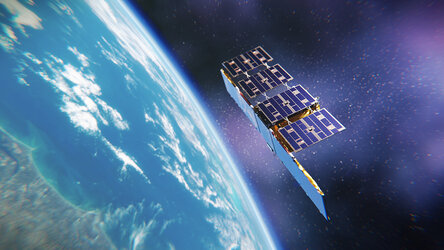
Copernicus provides access on a full, free and open basis to its Sentinel data and the Copernicus services information products. In addition to data provided by the Sentinel satellites, the missions contributing to Copernicus, the Copernicus Contributing Missions, play a crucial role, delivering high-resolution complementary data to ensure that a whole range of observational requirements is satisfied.
This Copernicus Contributing Mission (CCM) activity is implemented by ESA as an entrusted entity on behalf of the European Commission.
As part of the ongoing evolution of CCM activities, ESA, the European Commission and industry have created a dynamic purchasing system that brings together the entire data provider ecosystem, allowing ESA to tap into a wealth of commercial data to meet the evolving needs of Copernicus.
The primary users of the activity are the six Copernicus services - mainly the Land, Emergency, Security and Marine services, as well as other users, such as EU Public Authorities.
The existing or planned contributing missions include commercial missions from EU Member States or Copernicus Participating States, commercial Very High Resolution (VHR) optical and radar mission operators, and other emerging European mission operators that make some of their data available for Copernicus. In addition, the CCM component provides access to more than 150 contributing satellite missions including large satellite constellations operated by 25 different European and international economic entities.

The focus of the Contributing Mission activity is to provide, in particular, VHR optical and radar data in a very timely manner to answer the needs of the Copernicus Services for VHR Earth observation data. It also provides access to the Copernicus Digital Elevation Model (DEM), which represents the heights of natural and humanmade features on Earth’s surface. Certain instances of the DEM are available worldwide with a free license to data users from the general public.
Current Copernicus services mainly use the following CCM observation techniques for their day-to-day work:
- Synthetic Aperture Radar (SAR) sensors, for all weather day/night observations of land, ocean and ice surfaces, including data to fill the gap of Sentinel-1 data relevant to sea ice monitoring for the Marine Monitoring Service
- Atmospheric composition sensors, which provide on-demand observations to the Copernicus Atmosphere Monitoring Service
- Very High Resolution (VHR) optical and SAR sensors for on-demand targeting of specific sites globally, for emergency management and security applications
- Very High Resolution (VHR) optical sensors for systematic, predefined continental coverage, e.g. of Europe for annual reference years with high-accuracy satellite ortho-images
Access to on-demand CCM data is granted to eligible users via the Copernicus Contributing Missions Rapid Response Desk, which facilitates rapid access to data in time-sensitive situations like emergency responses. Predefined CCM collections are accessible via the Copernicus Data Space Ecosystem, which provides streamlined access to data from the Sentinel family and other missions.

The data portfolio is gradually being expanded to include other emerging commercial data such as thermal infrared, hyperspectral and atmospheric composition data in response to evolving user needs. Data demonstration activities are currently underway that will test how the Copernicus services will use data from these emerging domains.
With commercial companies playing an increasingly important role in creating a dynamic and innovative space industry, nine European New Space companies have joined Copernicus as Contributing Missions and a further six were onboarded in 2025. The aim of bringing emerging European New Space companies into the programme is to help keep Copernicus ahead of the game in the rapidly changing sector of observing Earth from space.

European Earth observation companies have the opportunity to join Copernicus as Contributing Missions. Read the guide on how to apply for more details.
Back to Copernicus homepage |