Scouting for water
Changes in Earth’s water cycle pose a serious risk to the ecosystems, the environment and to communities.
Extreme weather, such as drought or floods, can result in water scarcity and impact food production. Disrupted patterns in the water cycle can damage ecosystems and put human health and infrastructure at risk.
HydroGNSS observes four crucial parameters that are identified as Essential Climate Variables (ECVs) or closely related to ECVs and to the water cycle: soil moisture, inundation and wetlands, freeze–thaw state over permafrost, and above-ground biomass.
The mission uses a technique called GNSS reflectometry, where the HydroGNSS satellites pick up L-band navigation signals from existing systems like GPS and Galileo after they bounce off Earth’s surface.
The amplitude, delay and polarisation of these reflections carry information about the properties of land, ice, and water.


Access the video
This approach allows HydroGNSS to ‘scout for water’ in several ways:
Soil moisture – detect how much water is stored in the soil, which is vital for understanding droughts, floods and agricultural productivity.
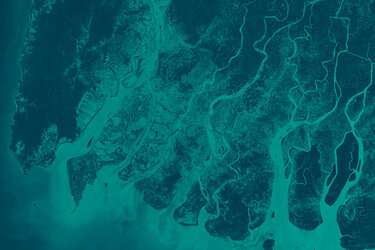
Wetlands and inundation – map the extent of flooded areas and wetlands, which are critical ecosystems that regulate water flow and store carbon.
Freeze–thaw cycles – track when soil and permafrost freeze or thaw, which influences ecosystems, hydrology, and greenhouse gas release.
Above-ground biomass – monitor vegetation growth, which is closely linked to water availability.
By delivering information on these climate variables, HydroGNSS provides global, frequent and cost-effective monitoring of water-related processes, helping scientists understand how Earth’s water cycle is changing under the influence of climate change and human activity.
This technique is an affordable and sustainable method of taking global measurements of geophysical parameters with high revisit time. The mission is expected to pave the way for future missions using GNSS reflectometry.