MetOp-SG operations and data flow
Each MetOp-SG satellite operates in a polar orbit, at an altitude of approximately 832 km, ensuring global coverage. The mission consists of two satellites, type-A and type-B, each carrying complementary instruments. These satellites circle Earth about 14 times a day.
Life in orbit is divided into two key phases:
Launch and early orbit phase (LEOP)
This phase involves the initial deployment of the satellite after launch (e.g. solar array), including early systems checks and establishing communications with ground stations. This phase is performed by a third-party satellite operator (Telespazio).


Access the video
Routine operations
Following LEOP, the satellite enters its long-term operational phase, during which it continuously collects and transmits data to Earth. This phase includes regular orbit adjustments, satellite health monitoring, and instrument calibration to ensure optimal performance throughout the mission’s lifespan. At the beginning of this phase, the satellite will be tested in orbit during the commissioning phase.
Routine mission operations are managed by Eumetsat’s Mission Control Centre in Darmstadt, Germany. The centre oversees the routine control of the satellites, including orbital manoeuvres, health checks, and payload management. Eumetsat ensures that the data collected by the MetOp-SG satellites are processed and made available to users in near-real time.

The ground segment of the mission is composed of two key operational components: the Mission Control and Operations (MCO) system, and the Payload Data Acquisition and Processing (PDAP) system. These systems work together to manage satellite operations and ensure the timely collection, processing, and distribution of data.
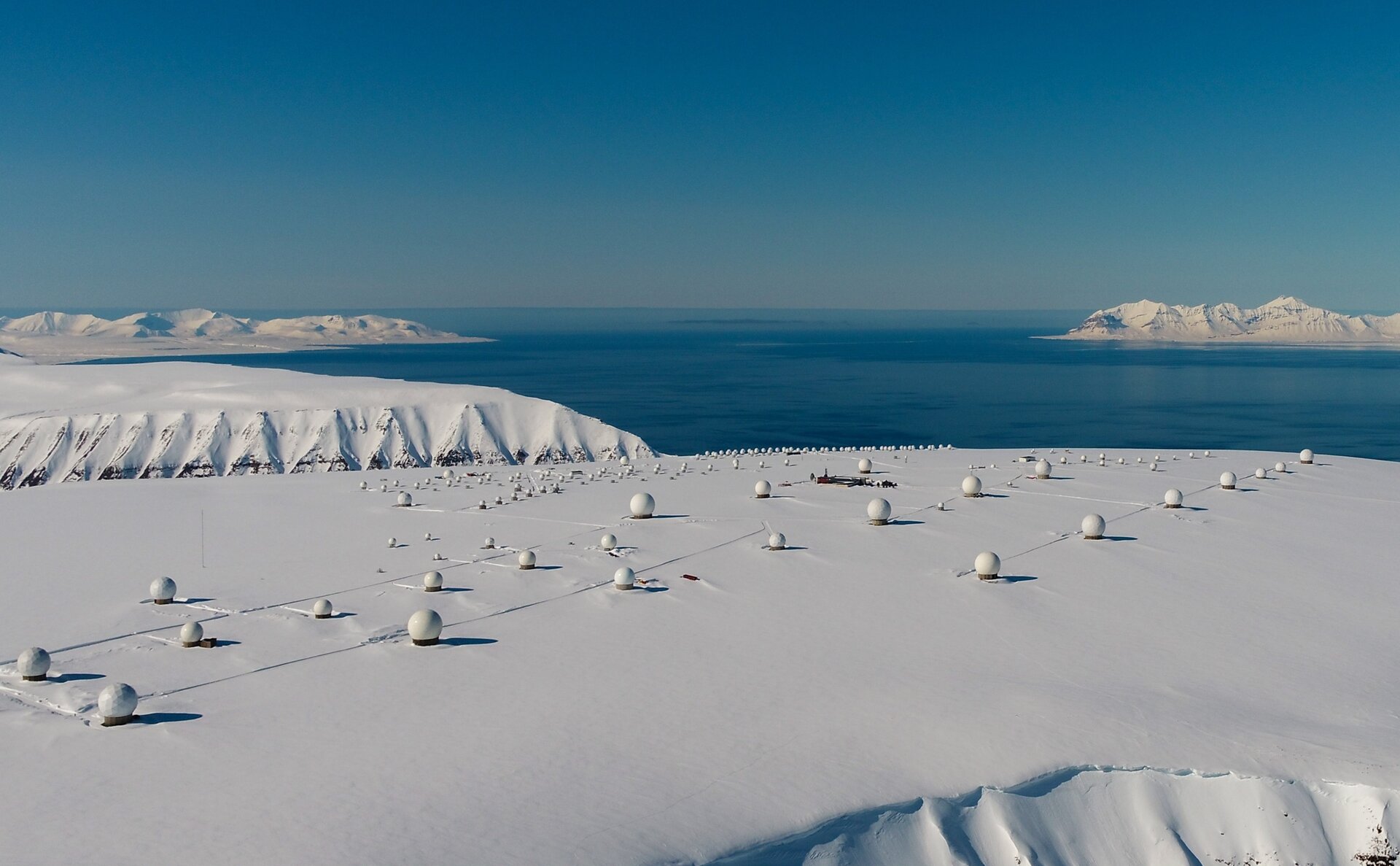
The main downlink station for MetOp-SG is in Svalbard, Norway, ensuring that the data collected in each orbit is downloaded to the PDAP every orbit. In addition, the NOAA ground station in Antarctica, along with Eumetsat’s multimission infrastructure, plays a crucial role in the global dissemination of data and the provision of support services to users.
The MetOp-SG satellites use three distinct radio frequency for seamless communication between the satellites and the ground segments. These links play a critical role in both satellite control and data transmission, ensuring the timely delivery of vital meteorological observations.
S-band: telemetry, tracking and command
The S-band is dedicated to managing communications for satellite monitoring and control. This link ensures that the MetOp-SG satellites operate reliably. Key functions supported by the S-band include:
- Housekeeping telemetry: this downlink signal transmits essential information regarding the satellite’s systems and health to ground stations.
- Telecommand: this uplink signal is used to send operational commands to the satellite, enabling ground control to either issue individual commands or upload pre-planned mission schedules.
- Tracking and ranging: this two-way signal helps determine the satellite's distance and relative velocity from the ground station for precise orbit determination in case of outages of the satellite navigation-based system on board is not available.
Ka-band and X-band: data transmission links

To deliver the valuable observational data collected by its instruments, MetOp-SG employs two high-speed data links: Ka-band and X-band.
Ka-band: stored mission downlink
The Ka-band link transmits stored observational data to ground stations. These data are collected throughout the satellite’s orbit and downlinked to key ground stations at two locations:
- Full orbit data are transmitted to the Svalbard station
- Half-orbit data are sent to the McMurdo station
X-band: direct data broadcast
The X-band provides realtime transmission of observational data, directly supporting realtime applications. This link offers:
- Realtime data for external users – this service is ideal for local users who require immediate access to data for nowcasting (short-term weather forecasting) and realtime environmental monitoring.
- Enhanced data for Eumetsat ground stations – by strategically collecting live observational data over specific geographic areas, Eumetsat improves the timeliness of weather and climate products in those regions, supporting rapid response and forecasting needs.
These three links – S-band for satellite control, Ka-band for stored data transmission, and X-band for realtime broadcast – ensure that Eumetsat can reliably manage satellite operations and deliver critical meteorological data to users across the globe. Once MetOp-SG data are transmitted, it undergoes a series of steps to ensure that they are processed and disseminated to users around the world. These steps include:
- Data reception: Data are transmitted to a global network of ground stations. Once received, the data are sent to Eumetsat’s processing centres for further processing and quality control.
- Level-1 processing: The raw data undergo Level-1 processing, which involves geolocation and radiometric calibration to ensure that they are reliable and in a standard format suitable for operational meteorology and climate research.
- Level-2 processing: Level-1 data are transformed into Level-2 products, which provide detailed information on specific meteorological parameters such as temperature profiles, humidity, wind speed, sea-surface temperature, cloud cover, and aerosol content. These products are vital for accurate weather forecasting and climate modelling.
EUMETSAT’s data processing chain ensures that Level-1 and Level-2 products are generated and made available to users in near-real time, typically within a few hours of the observations being made. This rapid data turnaround is crucial for users such as national meteorological services, environmental agencies and researchers who rely on up-to-date and very accurate information for weather forecasts and climate analysis.
Data processing and product generation are a collaborative effort, with responsibilities shared between Eumetsat and a network of eight satellite application facilities across Europe.
One of the primary platforms for data dissemination is EUMETCast, a data broadcasting system. EUMETCast uses satellite communication technology to transmit data directly to users who are equipped with ground reception systems. For users who prefer to access data online, Eumetsat also provides data through its online services. These services allow users to download realtime data as well as access archived datasets for long-term research and analysis.