Applications
Facts and figures
5094 views
5 likes
| Mission
|
|
|---|
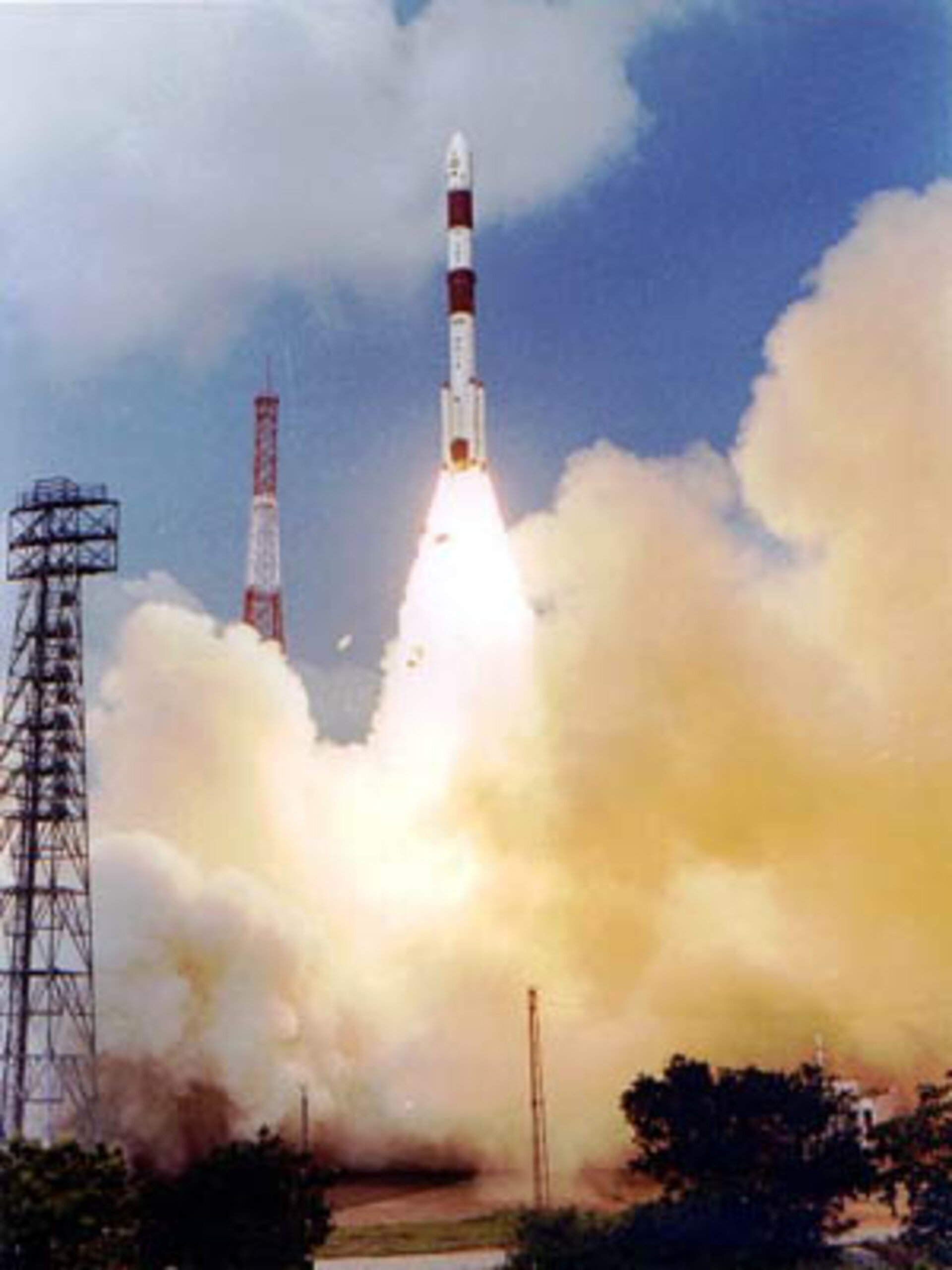
| Launch date |
22 October 2001 |
| Launch site |
Sriharikota, India |
| Launcher |
Antrix/ISRO PSLV-C3 |
| Orbit |
LEO Sun-synchronous |
| Orbital parameters |
681x561 km |
| Orbital plane inclination |
97.9 degrees |
| Orbital period |
96.97 minutes |
| Mission duration |
One year (planned) |
| Number of instruments |
Eight |
| Number of technological payloads |
Six |
| Mission operations and ground station |
ESA/REDU dedicated 2.4 m dish, average of 4 contacts of 10 m/day, automated evening & weekend passes |
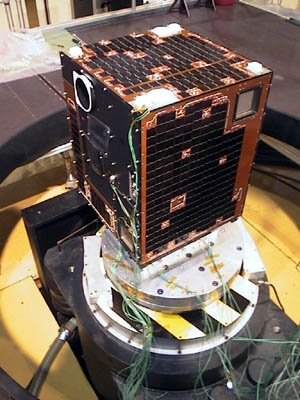
Proba PFM during vibration tests
| Spacecraft
|
|
|---|
| Spacecraft mass |
94 kg |
| Instrument mass |
25 kg |
| Technological payload mass |
30 kg |
| Shape |
60x60x80 cm box shaped aluminium honeycomb structure |
Proba-1 platform features
- Computing system (highest performance computing system yet flown on an ESA spacecraft)
- ERC-32 (SPARC V7) processor, >80 krad, 10 MIPS, 2 MFLOPS
- TCS 21 020 digital signal processor, >100 krad, 15 MIPS, 45 MFLOPS
- 12 other processors in subsystems/payload
- off-the-shelf operating system (Vx Works)
- full automatic code generation of all attitude control and navigation software (~50 000 lines of code)
- 3-axis stabilisation (Earth pointing or inertial) by four miniaturised reaction wheels
- absolute pointing accuracy: 150 arcsec
- relative pointing stability: 10 arcsec over 10 s
- 2-headed star tracker providing arcsec level pointing knowledge
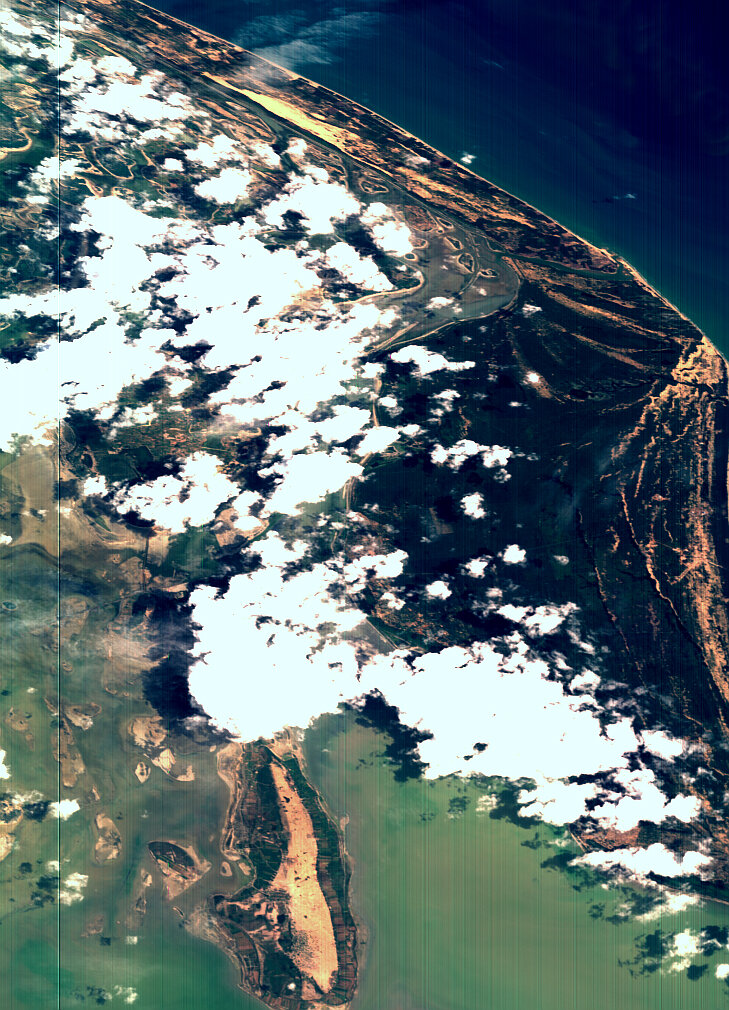
Sriharikota, India - CHRIS image - 8 February 2002
- GPS sensor providing 20 m position and fly-by knowledge
- Spacecraft agility (along- and across-track), enabling multiple payload imaging (typically 5) of the same target in the same pass
- Autonomous navigation via GPS and orbit propagation (no propulsion)
- GaAs solar cells on five structure faces
- 120 W peak
- 17 W in safe mode
- 28 Vdc regulated power bus
Thank you for liking
You have already liked this page, you can only like it once!