Water management
"To deliver our mission, all those responsible for implementation need access to suitable information to assess and maintain the ecological character of wetlands as a contribution towards achieving sustainable development.
Earth Observation technology is making an increasingly important contribution to providing this vital assessment and monitoring information to aid national authorities and wetland managers in sustainably managing their wetlands."
Nick Davidson, Deputy Secretary General of the Ramsar Convention on Wetlands.
Overall availability of water is not a problem for most Europeans, but its quality cannot be taken for granted.Human activities can pollute water in a variety of different ways, and - whether it has been polluted by households, agriculture or industry - all polluted water eventually returns to the environment where it can erode environmental quality or damage human health.
Europe's Framework Water Directive represents an ambitious attempt to guarantee the quality of the continent's water supply. Implementing it however is a major challenge to the bodies in charge of and delivering information on Europe's water resources for its citizens.
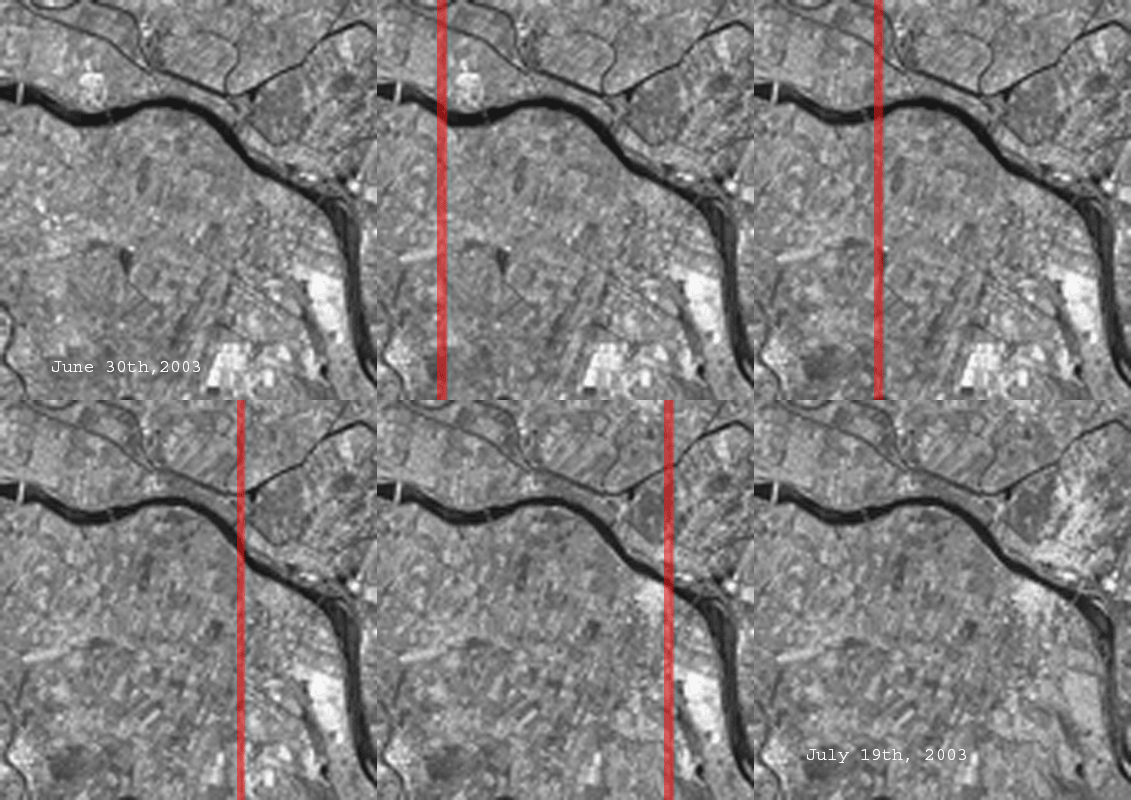
The Directive is organised on a river catchment basis, and Earth Observation can acquire an entire water basin with a single highly detailed image, enabling authorities to identify the source of water pollution within that basin – so nitrates in the water could be traced to intensive agricultural activities located upriver.

Landscapes dominated by water, known as wetlands, are among the world's most productive environments. They are cradles of biological diversity, coupling water with a rich collection of nutrients that countless species of plants and animals depend on for survival.
Unfortunately, wetlands continue to be among the world's most threatened ecosystems. Earth Observation technology can support international organisations, national authorities and wetland managers to ensure the efficient conservation and sustainable management of wetlands worldwide.