Watch: FLEX and Sentinel-3C launch on Vega-C
The European Space Agency’s FLEX satellite and the Copernicus Sentinel-3C satellite are scheduled to launch together aboard a Vega-C rocket on 15 September at 03:21 CEST (14 September at 22:21 local time). Watch the VV30 launch live from Europe’s Spaceport in French Guiana, with coverage starting at 02:50 CEST.
FLEX satellite will open a new window on the health of Earth’s vegetation, while Copernicus Sentinel-3C will continue the essential task of monitoring our oceans, land, ice and atmosphere.
Tune in and learn more about these two exciting missions and witness next step in Europe’s commitment to observe and understand our changing planet.
Watch live on ESA YouTube or ESA Web TV Two.
Programme –15 September (all times in CEST)
02:50 Broadcast begins
03:21 Liftoff
03:51 Break
04:12 Broadcast resumes
04:21 Sentinel-3C separates
04:32 Break
05:07 Broadcast resumes
05:17 FLEX separates
05:36 Broadcast ends
About FLEX

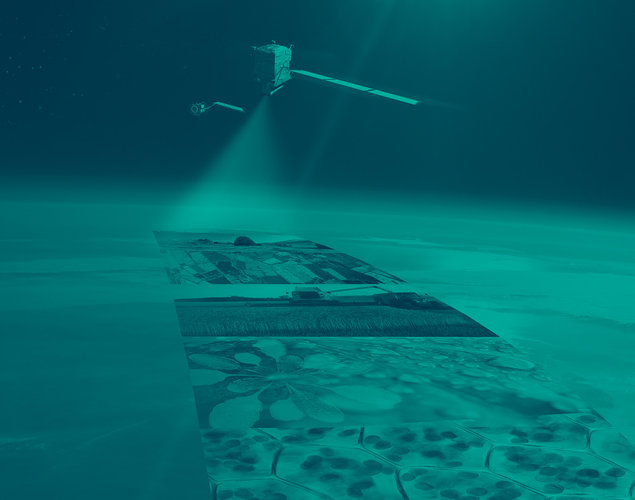
FLEX – the Fluorescence Explorer – is ESA’s next Earth Explorer mission and is designed to reveal a phenomenon invisible to the human eye: the faint fluorescence emitted by plants as they photosynthesise. Equipped with a Fluorescence Imaging Spectrometer, FLEX will detect and measure this incredibly weak signal from orbit. Because the fluorescence varies with plant health and environmental conditions, the measurements will provide scientists with new information about photosynthetic activity and vegetation stress on a global scale.
FLEX will produce global maps of vegetation fluorescence at a resolution of 300 × 300 metres, offering a new way to study how plants interact with the atmosphere and how carbon and water move through Earth’s ecosystems.
About Sentinel-3C
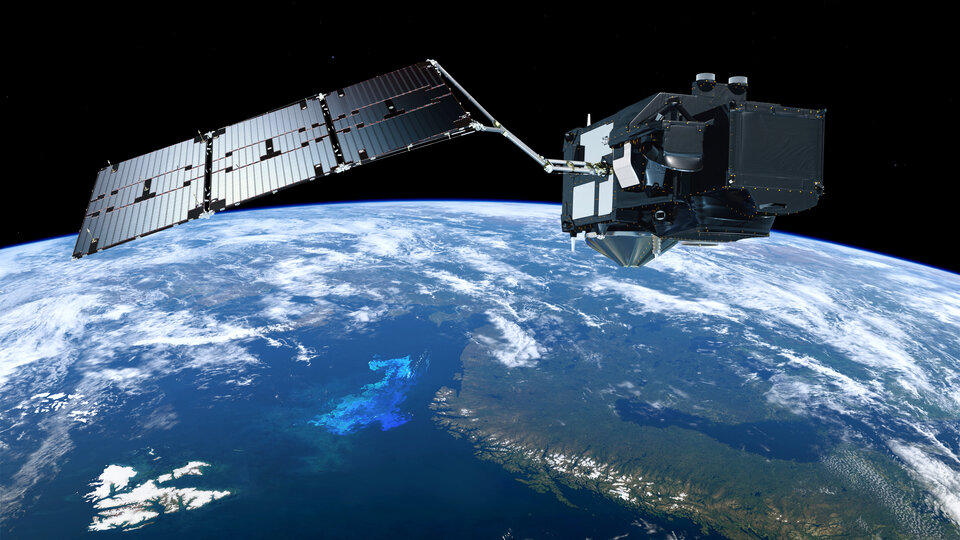
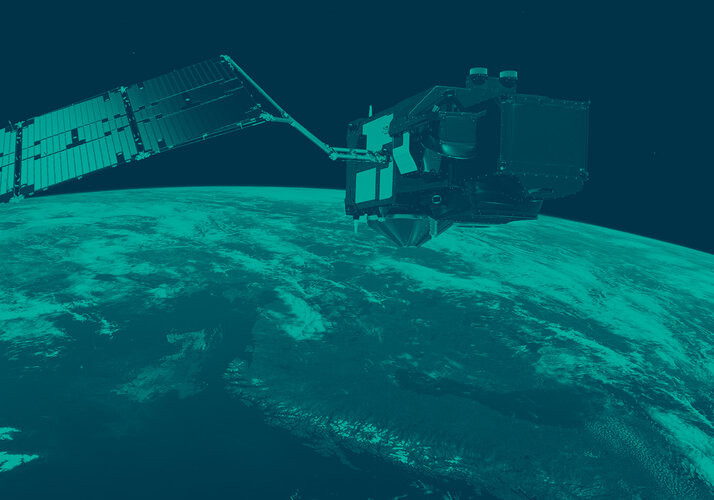
Copernicus Sentinel-3C is the third satellite in the Sentinel-3 series. Like its two predecessors already in orbit, it carries a suite of advanced instruments that systematically measure Earth’s oceans, land, ice and atmosphere. These observations support the monitoring and understanding of large-scale processes and dynamics across our planet, while providing essential near-real-time information for ocean and weather forecasting. Sentinel-3 mission data support the Copernicus Services and help understand Earth dynamics.
Two satellites one rocket

FLEX and Sentinel-3C are being launched together. Sentinel-3C will be injected into orbit first so it sits above FLEX in the Vega-C fairing. To accommodate the two satellites, FLEX is encapsulated within the lower part of a secondary payload adapter called Vespa. Sentinel-3C was then mated to the upper part of Vespa.
In fact, FLEX will orbit tandem with one of the Copernicus Sentinel-3 satellites, however not Sentinel-3C initially. Sentinel-3 will be used to provide critical information on the atmosphere such as clouds, aerosols and water vapour as well as information about the land surface, such as the surface temperature and type of land cover and additional vegetation parameters. This integrated package of quasi-concurrent measurements promises to enable an unprecedented view of global vegetation function and status.
About Vega-C

An evolution of Europe’s Vega family of rockets, Vega-C can launch 2300 kg into space. It weighs 210 tonnes on the launch pad and reaches orbit with three solid-propellant-powered stages before the fourth liquid-propellant stage takes over for precise placement of satellites into their desired orbit around Earth. Complementing the Ariane family, Vega-C ensures that Europe has versatile and independent access to space.
ESA leads the Vega-C programme, working with Avio as prime contractor and design authority. For this launch Avio is also launch service operator.
Vega-C flight VV30