Pacis 3 – Secure Communications
The Pacis 3 project works towards providing more secure, flexible and affordable satellite communication services for governments in Europe. Through its support for disaster response, humanitarian aid, and civil protection, Pacis 3 will help make societies safer and more resilient.
In a world where data can be equalled to currency, securing data has become more important than ever. Access and manipulation of data through cyberthreats can compromise big financial transactions and access to essential supplies such as power and water. By contributing to solving these threats, Pacis 3 also strengthens European competitiveness and creates hundreds of jobs in the space sector.
Pacis 3 aims to develop Europe’s most challenging active antennas so far: reconfigurable active antennas for secure communications at frequencies specifically used by governmental users. It will also develop and integrate a pallet with six individually steerable antennas that work at the higher Ka frequency band, also for governmental use.
By accelerating the use of secure and market-ready satellite communications solutions, Pacis 3 works towards strengthening Europe’s secure communications infrastructure for government and allied users. The innovative nature of the solution tailors these technologies to offer reliable communications during times of crisis or in remote locations.
Pacis 3 is one of the bases of Hisdesat’s much larger SpainSat Next Generation (NG) programme, focused on advancing secure satellite communications for Europe.


Once in full operation, the SpainSat NG programme will become a vital asset for the European Commission’s GOVSATCOM HUB thanks to the satellites’ software that will quickly adapt to evolving operational needs and reliable protection against jamming and spoofing.
The Pacis 3 project will also demonstrate in-orbit innovative pooling and sharing services, which allow multiple governments to access secure communications as needed, improving efficiency and reliability. It’s expected that SpainSat NG will be in operation until 2040, providing critical support across an extensive coverage area from Europe, North and South America and Africa, through to parts of the Middle East and Singapore in Asia.
The project is a Partnership Project between European Space Agency (ESA) and Spanish satellite operator Hisdesat, supported by Airbus Defence and Space, Spain’s Centre for the Development of Industrial Technology (CDTI) and the Spanish Space Agency. It is part of the ESA programmes Advanced Research in Telecommunications Systems (ARTES).
How it works
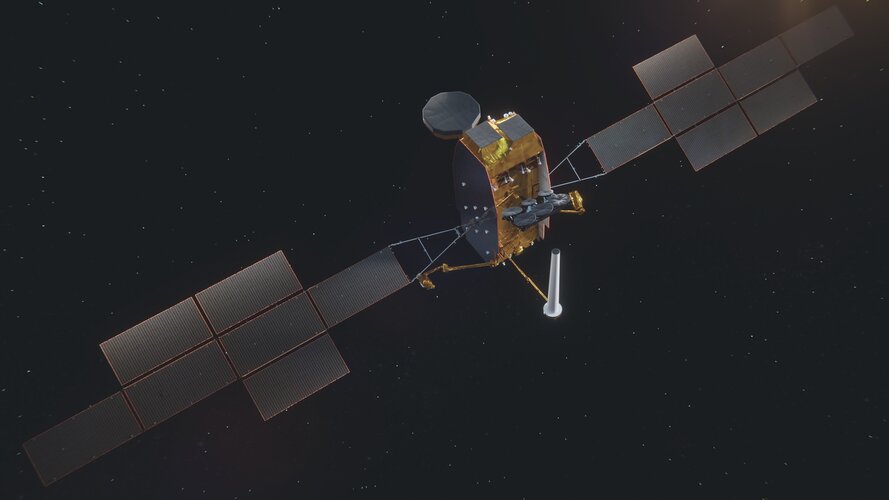
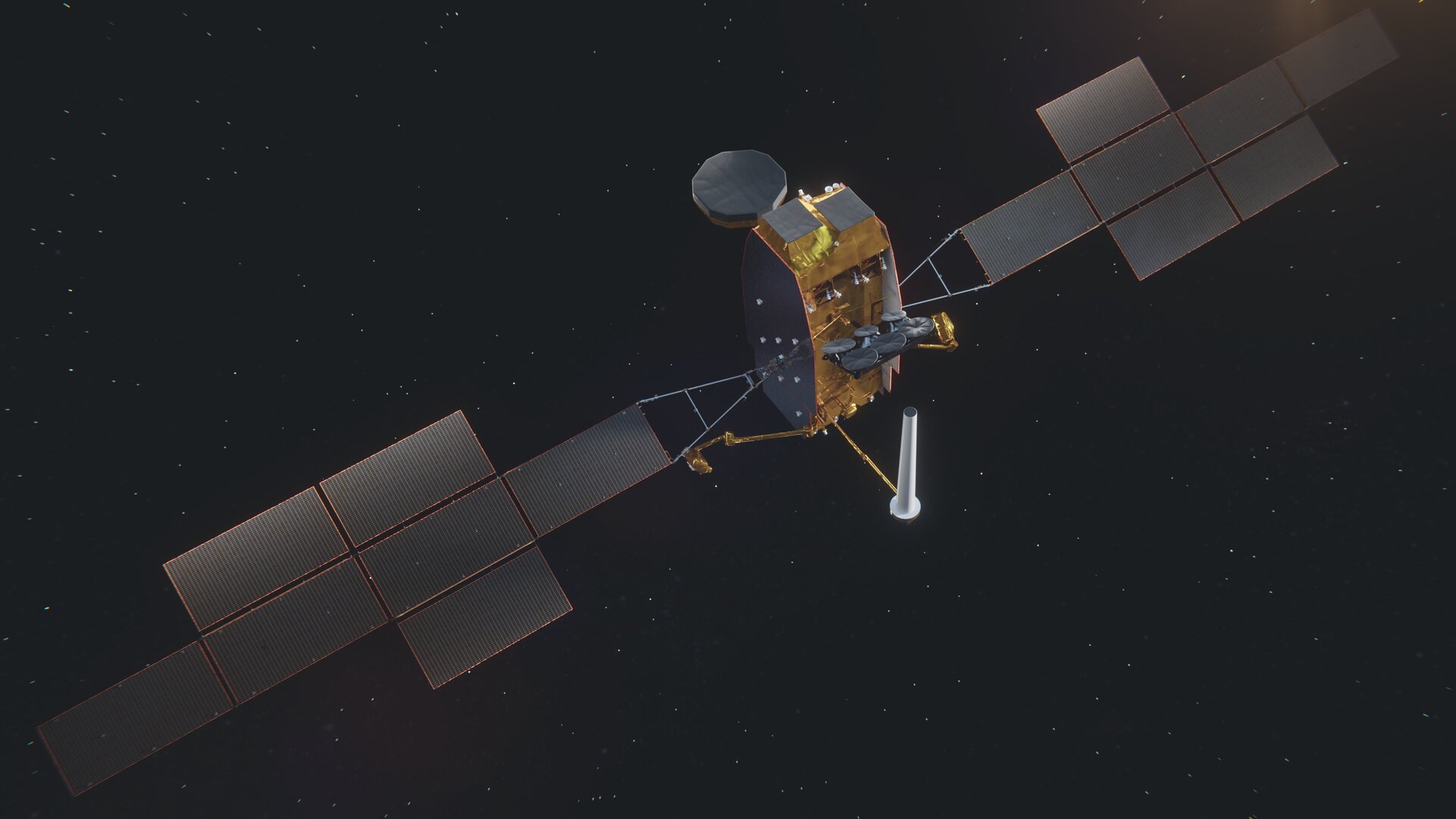
It involves two next-generation satellites based on Airbus’ Eurostar Neo product line, which passed their critical design reviews just two years after the contracts were signed. The two satellites will provide secure communications using two new types of technologies.
Unlike traditional antennas that have fixed coverage areas, the X-band active antennas used in Pacis 3 can be reprogrammed in-orbit. This means they can change where they send signals and how wide those signals spread. They support features like beam-hopping, which lets the satellite rapidly switch its signal between different regions to serve multiple users efficiently, and geolocation, which helps pinpoint the source of jamming signals – useful for tracking interference. These smart antennas also work smoothly with technologies like artificial intelligence, big data, and the Internet of Things on the ground.
The satellite uses a Ka-band pallet, that carries six antennas capable of steering their signals in different directions. This means the satellite is not locked into fixed coverage areas. Instead, it can adapt on demand, sending high-speed data to wherever it’s needed most, whether that’s a remote village, a disaster zone or a military unit on the move. These steerable antennas allow the satellite to deliver powerful and flexible coverage across large regions, making it far more responsive and efficient than traditional systems.

The first satellite launched on 20 January 2025, and became operational in August of the same year. The second satellite launched on 24 October 2025 and will become operational in Q2 2026.
The antennas have been developed in Spain by satellite manufacturer Airbus Defence and Space, which led a consortium of six Spanish space companies: Sener, Indra, Arquimea, Tecnobit, GMV and Airbus CRISA. This makes this ESA Member State a leader in European secure satellite technology, while generating significant industrial and employment benefits.