Trends in Arctic sea ice thickness from 2011–2025
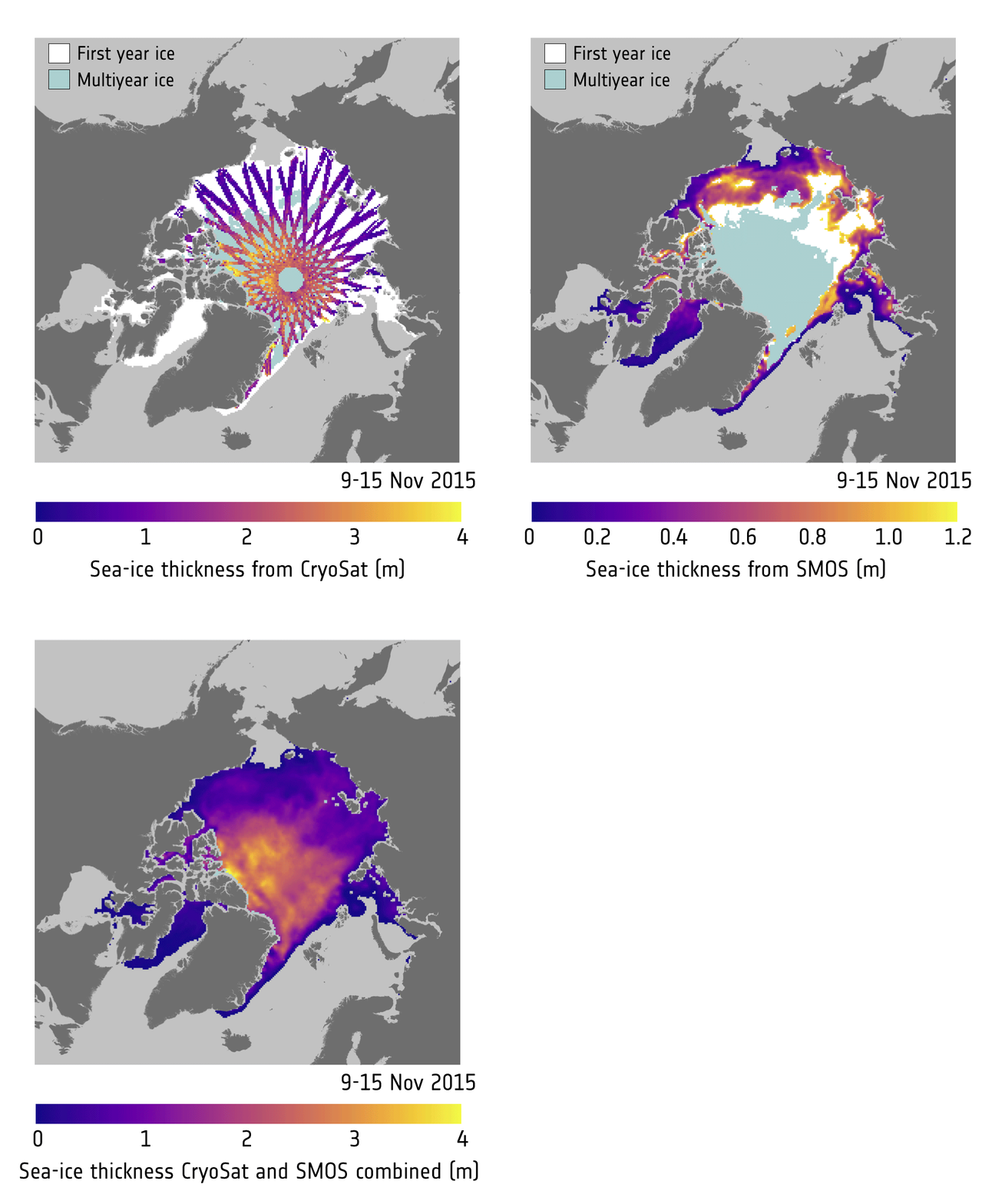
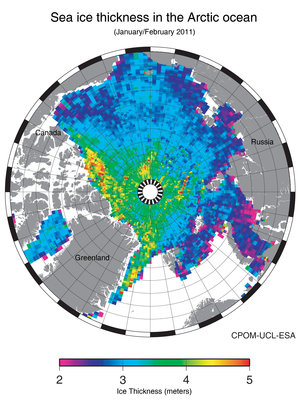
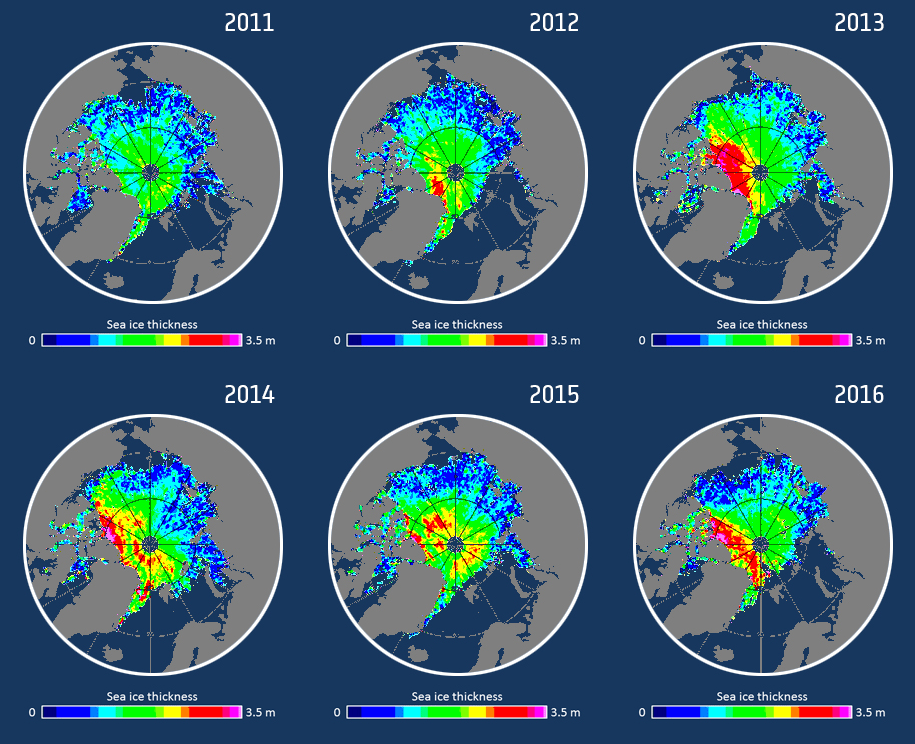
Satellite observations reveal that the extent of sea ice in the Arctic is once again hovering near record lows for this time of year – underscoring a troubling and persistent trend. ESA’s Climate Change Initiative Sea Ice Project complies datasets from various satellite altimeters, such as from ESA’s CryoSat and SMOS missions, and the Copernicus Sentinel-3 mission. These datasets are available to help predict how much sea ice there will be in the future, particularly in September when, in the Arctic, sea ice dips to its minimum.
This image shows trends in Arctic sea ice-thickness from 2011–2025 (in metres per decade) measured in March – when sea ice is at its seasonal maximum.
This dataset was produced within the ESA CryoSat and SMOS production & dissemination service (CS2SMOS-PDS) and the algorithm development was supported by the ESA Climate Change Initiative and the ESA SMOS Expert Support Laboratories.
Read full story: Sea ice lows high on the agenda