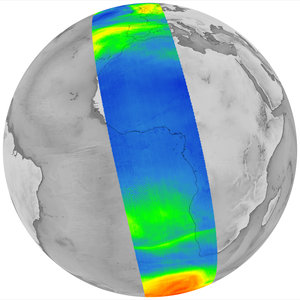
First image of ozone from Sentinel-4
The new Copernicus Sentinel-4 mission has delivered its first images, highlighting concentrations of atmospheric nitrogen dioxide, sulphur dioxide and ozone. Despite being preliminary, these images mark a major milestone in Europe’s ability to monitor air quality all the way from geostationary orbit, 36 000 kilometres above Earth.
This image shows a vertical column of ozone. While ozone high up in the stratosphere plays a crucial role in shielding life on Earth from harmful ultraviolet radiation, ozone in the lower atmosphere acts as a pollutant, contributing to poor air quality and respiratory problems.
The overall ozone levels here are within the expected range. The large-scale distribution, featuring a maximum over the Balkans and Greece and a minimum over the Baltic region, is consistent with patterns detected on the same day by heritage instruments such as GOME-2 on the MetOp satellites and Tropomi on the Sentinel-5 Precursor mission.
Read full story: Sentinel-4 offers first glimpses of air pollutants