


Human Space Physiology Training Course 2026
The Human Space Physiology Training Course provides university students with a comprehensive introduction to the physiological challenges of human spaceflight. Participants will explore how the human body responds and adapts to microgravity, the space environment, and long-duration missions, as well as the countermeasures developed to protect astronaut health and performance. The course also examines the use of Earth-based analogues, such as bed rest studies and Antarctic expeditions, to investigate physiological adaptations relevant to future exploration missions to the Moon and beyond. The course will take place from 30 November to 4 December 2026.
The experience
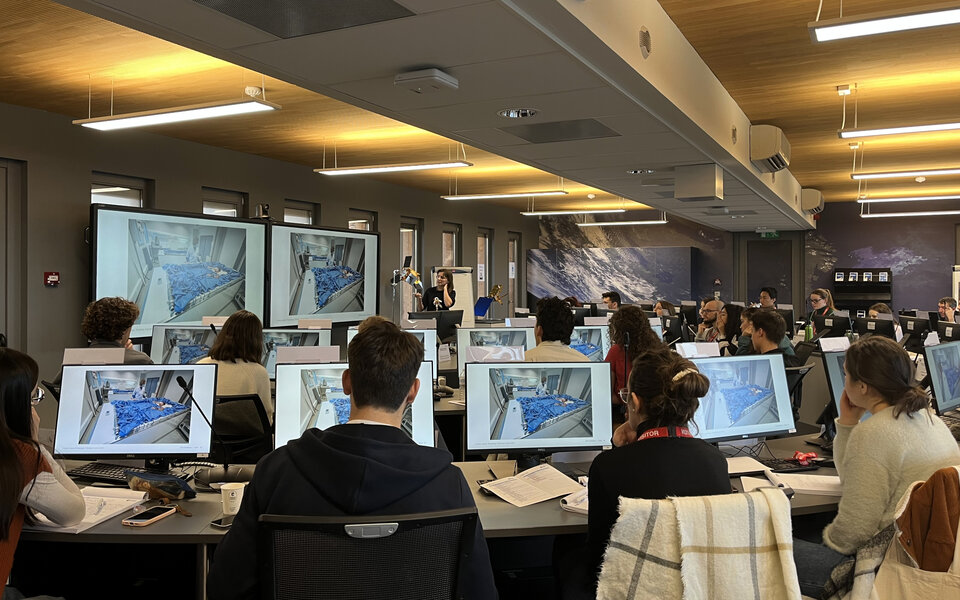
Taught by experts from ESA's Space Medicine Team, the course combines lectures, interactive discussions, and collaborative project work. Participants will learn about the effects of spaceflight on major physiological systems, the development of operational countermeasures, human factors considerations, and current challenges in human space exploration.
A key component of the course is the group project, in which students work in multidisciplinary teams to investigate a topic related to human spaceflight and future exploration missions, such as the Lunar Gateway or the Artemis programme. Teams will develop and present their findings while receiving guidance and feedback from course experts throughout the week.
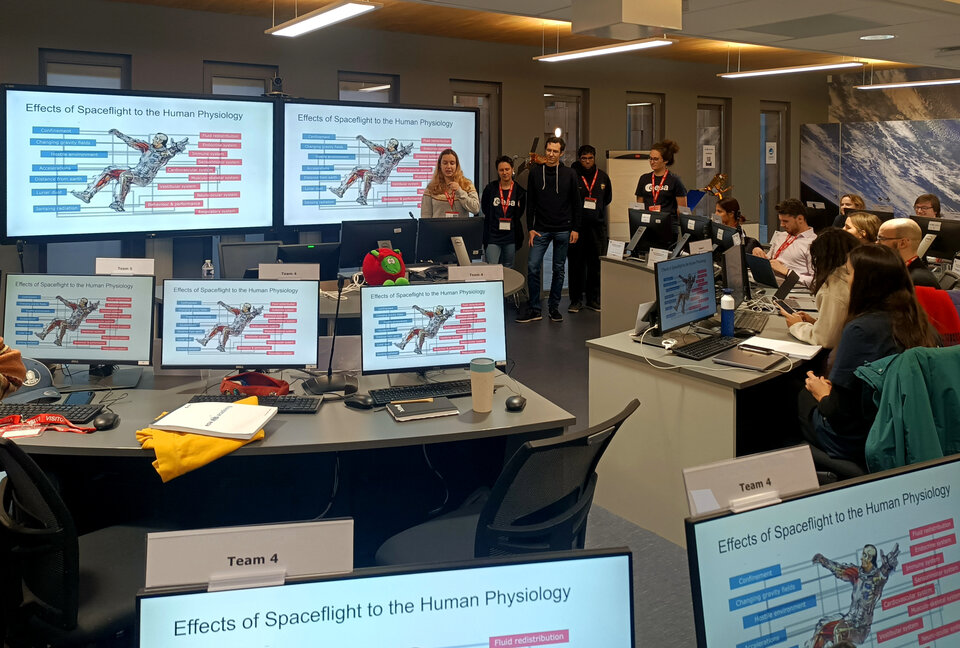
Upon successful completion of the course, participants will receive an ESA Academy Certificate of Participation and a course transcript. Assessment is based on active participation throughout the course and the final group project presentation, which is evaluated by a panel of experts.
The course transcript enables participants to request ECTS credit recognition from their home university, subject to the institution's own academic regulations.
Preliminary schedule
| Day 1 |
Welcome and introduction The space environment - outside and inside a space vehicle History of human spaceflight ESA Human Research Activities - ISS and ground analogues Space radiation and health risks Group project introduction |
| Day 2 |
Effects of microgravity on the cardiovascular system Fundamentals of bone and muscular physiology in space How space has an impact on the neurosensory system and the brain Psychological effects of human spaceflight Group work |
| Day 3 |
Physical exercise and reconditioning in spaceflight Adaptation of the human immune system to extreme and changing environments ESA medical operations in support of exploration missions Nutritional support for astronauts Group work |
| Day 4 |
How do animal and cellular studies help our understanding of human space physiology? EVA training Space medicine projects at EAC AI and space omics Group work |
| Day 5 |
The global exploration roadmap - the future of human space exploration Experience of an ESA astronaut Group work Group presentations Conclusion |
Who can apply?

Eligibility criteria
To participate, students must fulfil the following criteria at the time of application:
- Aged minimum 18 years old. ESA Academy and relevant partners will only appraise applications from students who have no or limited professional experience in relevant scientific or other space-related topics.
- Be a citizen of an ESA Member State, an ESA Associate Member, or Canada*
- Enrolled in a bachelor (i.e., BSc or equivalent), or master (i.e., MSc or equivalent) degree programme with a background in medicine, allied healthcare fields, life sciences, biomedical sciences, or biological sciences.
- Be enrolled as a university student for the year 2026-2027
Sponsorship & attendance
Sponsorship
Selected students will be required to attend the entire training course at ESEC. They will be sponsored by ESA to cover accommodation and meals, as well as up to 350 Euros for travelling to Belgium.
Canadian students
*Canadian students enrolled in a Canadian post-secondary institution may apply for additional support from the Canadian Space Agency through this Announcement of Opportunity (grant applications must be submitted at least 7 weeks before the event start date – create an account as soon as possible!). This additional support is to cover costs that are not already covered by ESA for selected Canadian post-secondary students.
Diversity and inclusion statement
ESA is committed to achieving diversity and creating an inclusive professional environment. To this end, we welcome proposals and applications from all eligible candidates irrespective of gender, sexual orientation, ethnicity, beliefs, age, disability, or other characteristics. The ESA Academy strongly encourages inclusiveness within its programmes and within participating teams, which contributes to the enrichment of our programme.
Whenever possible, we seek to accommodate individuals with disabilities by providing the necessary support, either digitally or at the location of the training. In case of any questions or specific needs, please reach out to academy.training@esa.int to get assistance or advice during the application process.
How to apply?
- Apply through ESA Learn, the ESA Education and Community Platform;
- Upload a motivation letter (PDF, maximum 1 page, no images);
- Upload a CV (PDF, in Europass format, maximum 2 pages, no images);
- Upload a formal recommendation letter (PDF, maximum 1 page, including signature, no images) from a university professor or academic supervisor. If the referee cannot provide the letter, ask them to email academy.training@esa.int directly before the deadline;
- Upload a Transcript of Grades from the two previous semesters, or from the previous graded academic year if not available (PDF). May be submitted in the university's language if an English version is unavailable.
All answers and documents must be in English, except the Transcript of Grades.
Deadlines
Application deadline 31 July 2026, 23:55 CEST.
Selection announcement 4 September 2026.
Accommodation
- Participants will stay at Mercure hotel in Han Sur Lesse.
- The hotel will be provided and paid for by ESA.
- Students will be assigned shared rooms with participants of the same gender.
Arrival and departure
Arrival:
- Students are expected to arrive at Rochefort-Jemelle train station on Sunday, 29 November 2026.
Departure:
- Either Friday, 4 December after 18:00 CET (from Rochefort-Jemelle train station), or
- Saturday, 5 December 2026 before 11:00 CET
Important:
- Selected students are required to attend the entire course from start to finish.
Transportation during the course
- A bus service will be provided and paid for participants by ESA:
- Morning: Hotel → ESA ESEC-Galaxia
- Evening: ESA ESEC-Galaxia → Hotel
Contact & further information
For more information, please contact academy.training@esa.int.