Meet the Team: V-STARS
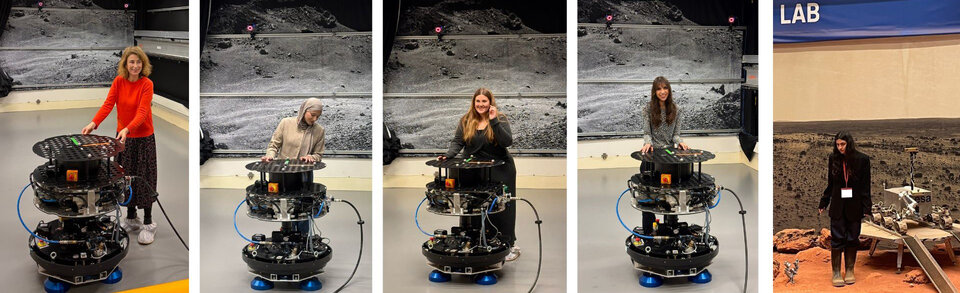
The V-STARS team is an all-women group of passionate, aspiring scientists interested in understanding how human performance can be supported in altered gravity environments. As part of the ESA Academy Experiments Programme, the team will have the opportunity to carry out their experiment in the frictionless environment of the Orbital Robotics Lab (ORL), at ESA ESTEC.
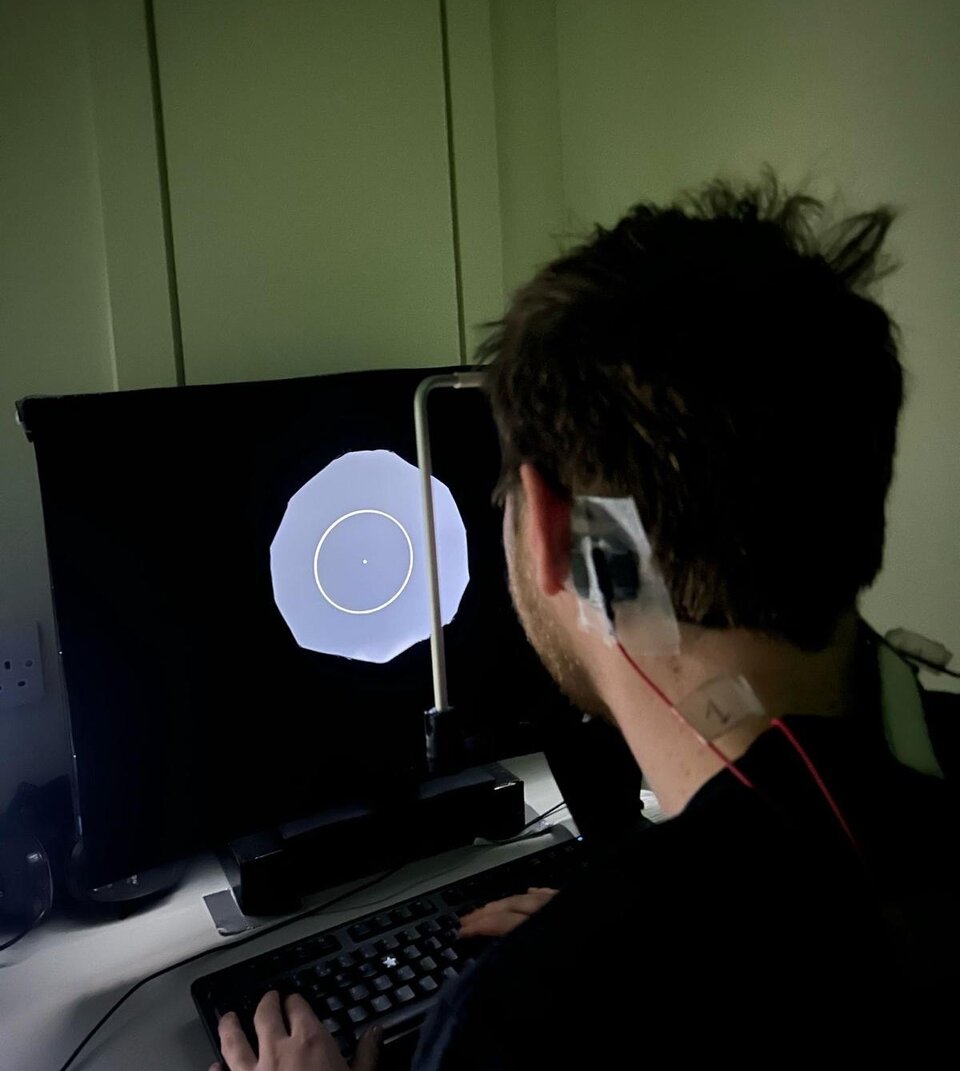
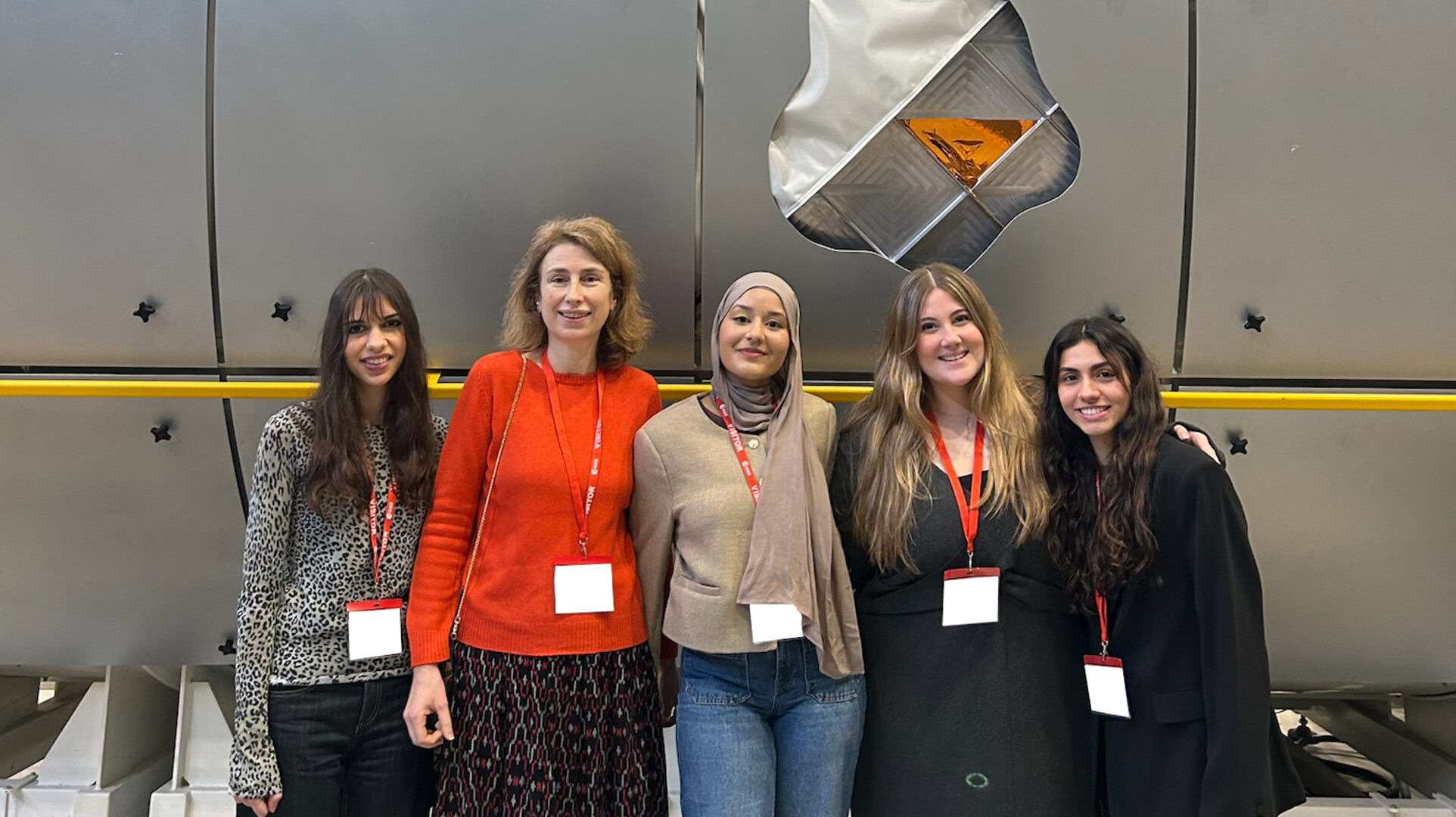
Team V-STARS is composed of five students from Birkbeck, University of London, and the University of Kent in the UK, studying various disciplines such as neuroscience, astrobiology, and psychology. V-STARS stands for Vestibular Stochastic Techniques for Adaptive Responses in Spaceflight. Their project investigates whether subtle electrical noise stimulation applied to the vestibular system can improve spatial orientation in spaceflight conditions.
The vestibular system, located in the inner ear, detects gravitational accelerations and integrates this information with other sensory inputs to maintain balance, orientation and spatial awareness. In space, however, the absence of gravity disrupts these signals, leading to impaired perception, increased risk of space motion sickness, and sensorimotor coordination difficulties.
Their project investigates the use of Vestibular Stochastic Resonance - a phenomenon where controlled noise enhances the sensitivity of a sensory system - to improve perception and potentially accelerate adaptation to microgravity conditions. To simulate microgravity conditions, the team will use the Orbital Robotics Laboratory (ORL) platform at the European Space Research and Technology Centre (ESTEC). This platform is free-floating, allowing for the experience of two translational and one rotational degree of freedom. Human participants will be on the free-floating platform performing a gravity-related perceptual task, enabling them to assess whether Vestibular Stochastic Resonance can facilitate adaptation to a microgravity-like environment.
Accurate sensory perception is crucial for astronaut safety and performance in space. Their study will be the first to investigate the effects of vestibular stochastic resonance on perception in microgravity conditions, and the first to use the ORL platform to study human participants. The team is eager to push the boundaries of space science and contribute to more effective human space exploration!
You can follow the progress of the team on LinkedIn and Instagram.