Meet the team: GRASP
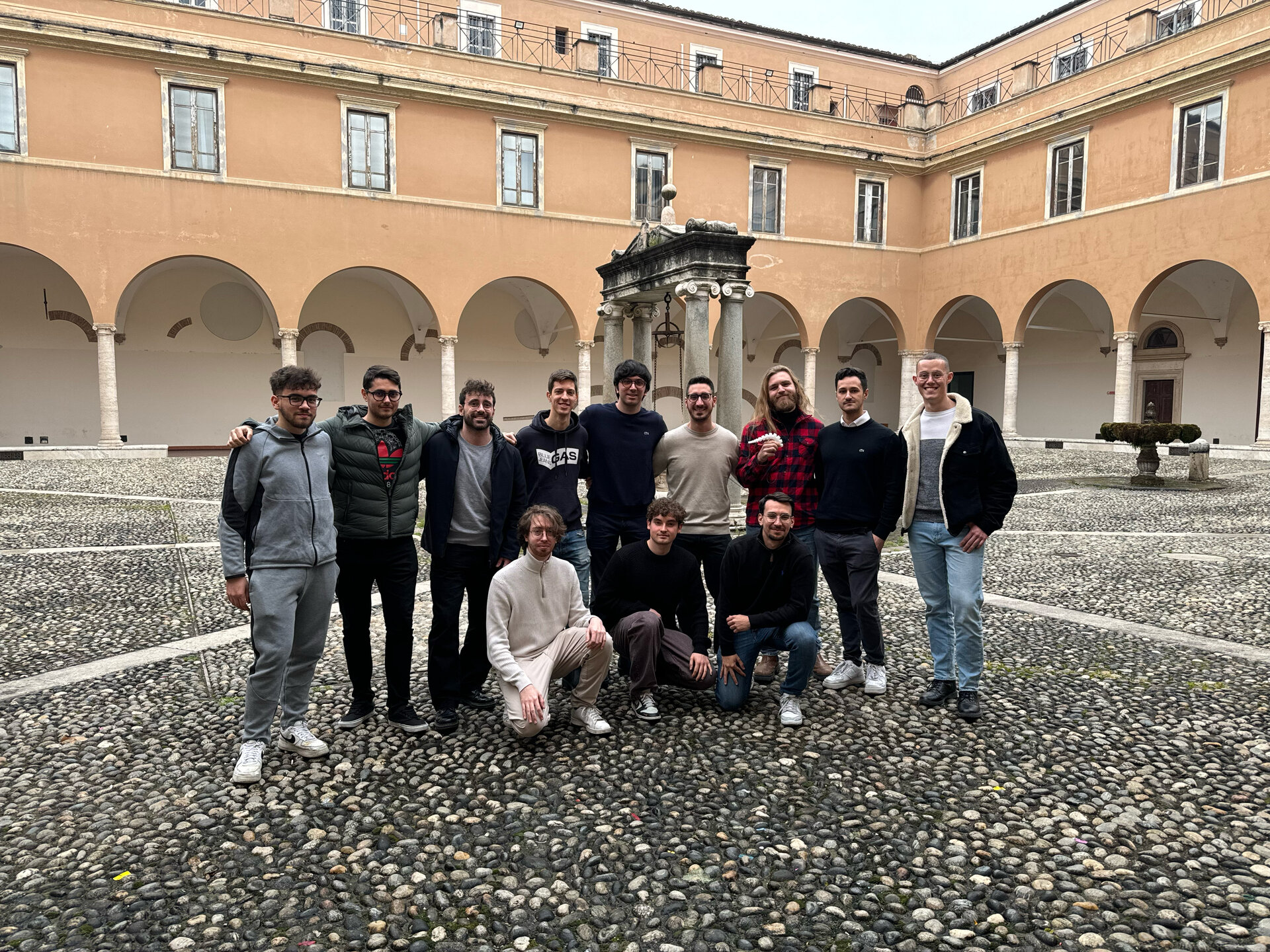
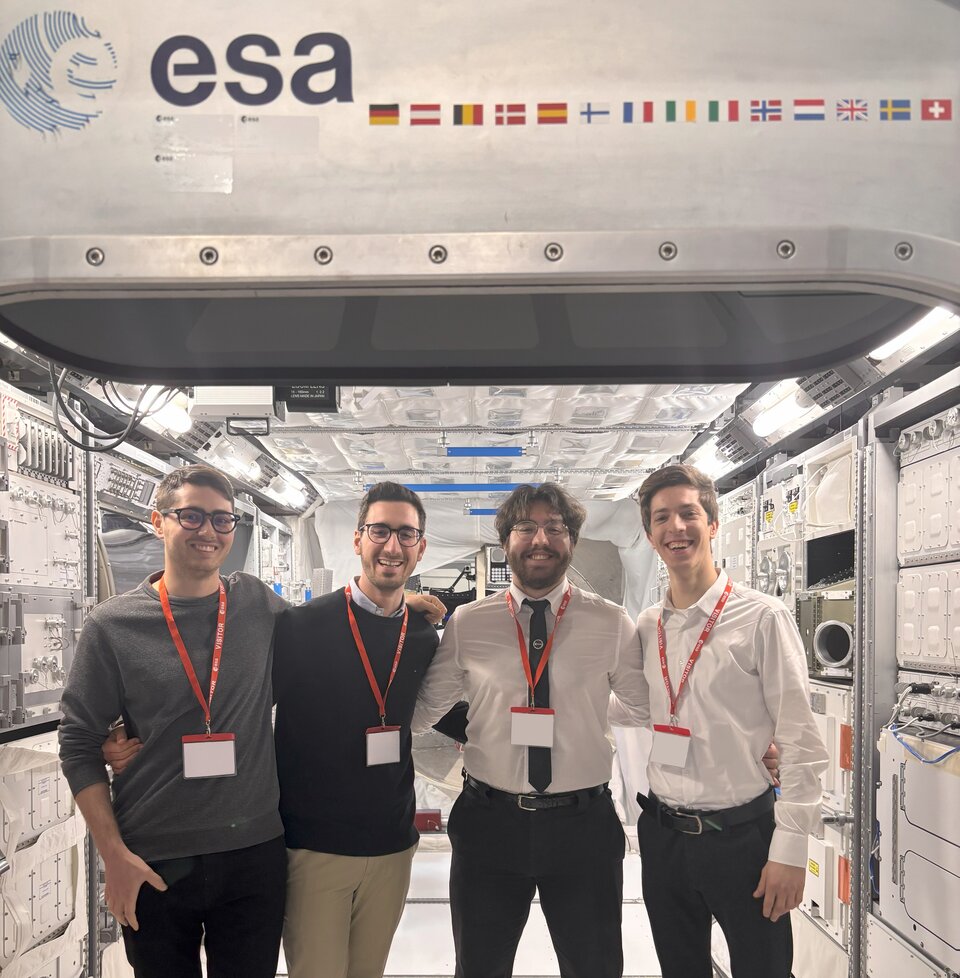
The team of the GRASP experiment consists of 14 students from Sapienza University of Rome. The objective is to evaluate the performance of a robotic arm equipped with a gecko-inspired adhesive gripper, testing an autonomous control system and assessing its applicability in a microgravity rendezvous scenario. As part of the ESA Academy Experiments Programme, the experiment will be carried out in the frictionless environment of the Orbital Robotics Lab (ORL) at ESA ESTEC.
GRASP, whose name stands for Gecko Rendezvous Autonomous System and Pincher, explores an innovative approach to performing capture manoeuvres with non-cooperative targets in space. The project is the result of a collaborative, multidisciplinary effort involving students from diverse academic backgrounds, ranging from aerospace engineering and robotics to artificial intelligence and mechanical engineering. Initially conceived as a classroom exercise for the Space Robotic System course, the project is now part of the ESA Academy Experiments Programme and has rapidly evolved into a structured academic initiative aimed at advancing the team's expertise in robotic platforms for in-orbit servicing applications.
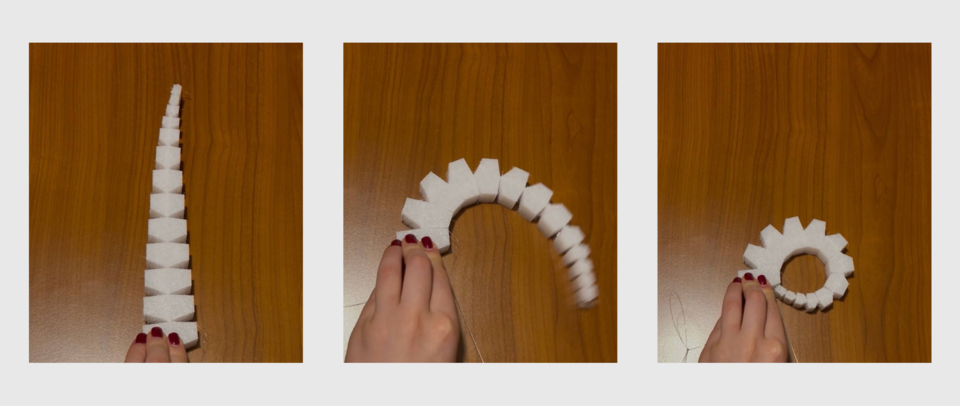
The GRASP team has developed a planar robotic arm, focusing on both hardware and software. Its innovative end-effector includes tentacle-like structures with pads made of a special material that mimics gecko toe adhesion. This material, composed of microscopic lamellae, forms planar contact surfaces under slight shear forces, enabling adhesion via Van der Waals forces. To generate these forces without imparting significant momentum, crucial in space, the arm employs a precise control system, guided by a target pose estimation algorithm for accurate, fine motion in close proximity operations.
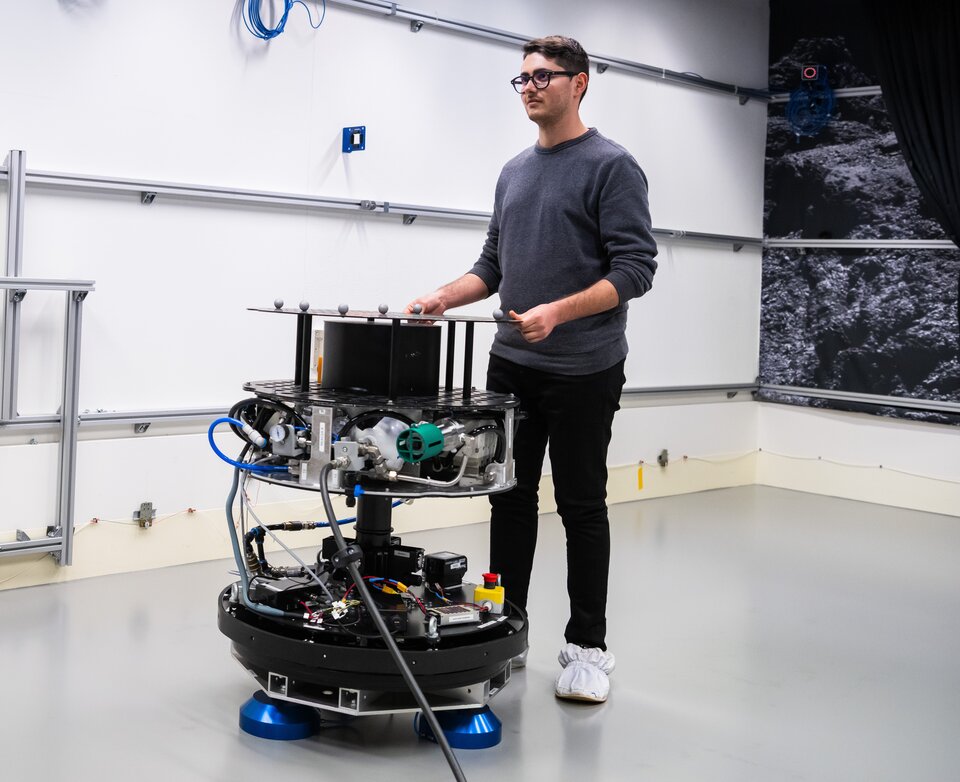
This experiment aims at technological development for active debris removal and docking applications. The gecko-inspired adhesive is one of the few materials that can function effectively in the vacuum of space, where traditional adhesion methods fail or do not allow on-demand deployment. Scenarios representative of these applications will be tested during the experimental campaign. The test will take place at the Orbital Robotics Lab (ORL), home to the flattest floor in Europe.
The robotic arm will be mounted on a floating platform, representing the chaser spacecraft, while the target will be placed on a second platform. These platforms are supported by air bearings, which create a thin air cushion between the platform and the floor, allowing for the simulation of a two-dimensional simulated microgravity environment on Earth.
You can follow the progress of the team on LinkedIn and Instagram.