

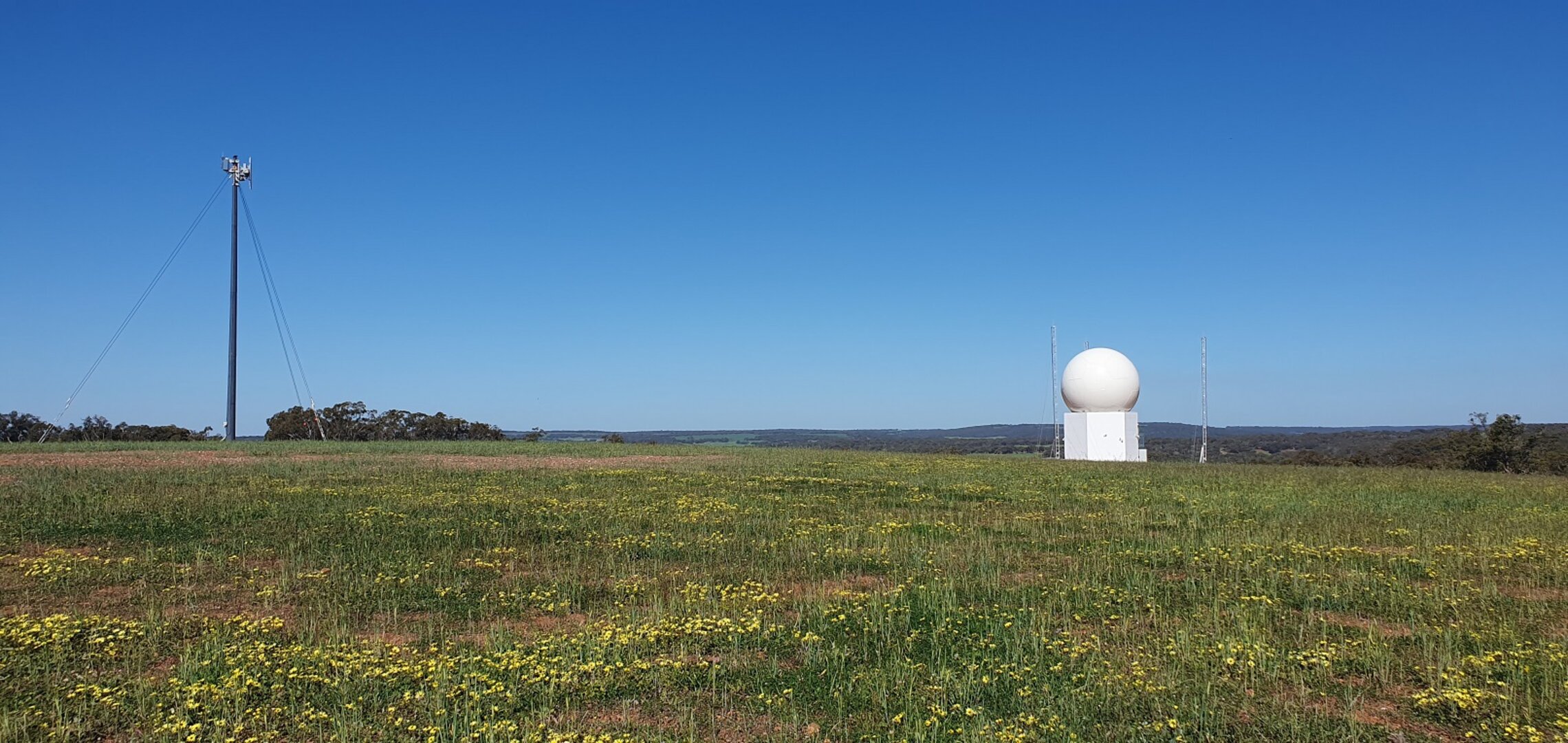
Biomass, an oversized football and the Australian outback
ESA’s forest mission Biomass will be supported by a custom-built transponder antenna installed in New Norcia, Australia.
The satellite will fly over the transponder to calibrate its instrument during its six-month commissioning period, and then regularly up to two times a year.
Launched on 29 April, the Biomass mission will conduct a five-year survey of Earth's forests and map carbon stored within them using an innovative P-band synthetic aperture radar.
This instrument is capable to pierce through the canopy to detect the full structure of the forest from the top of canopy down to the ground and will be crucial to the success of the Biomass mission.
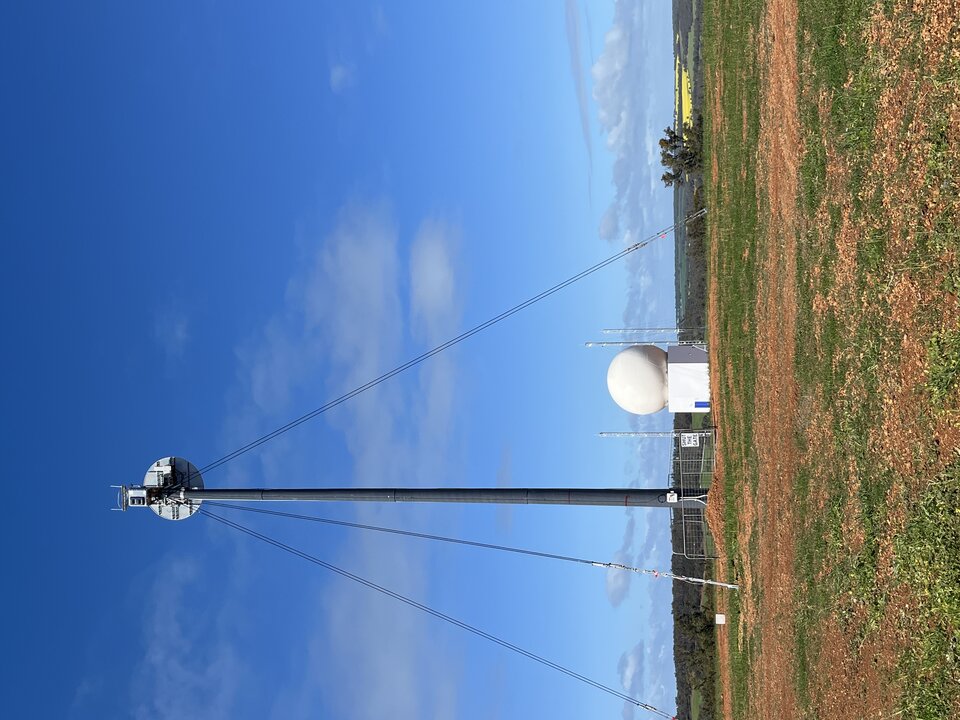
This very special radar requires an equally special, custom-built on-ground antenna to ensure its measurements are accurately calibrated: the Biomass Calibration Transponder (BCT).

Located at ESA’s New Norcia site in Australia, the Biomass Calibration Transponder transmits and receives radar signals from the Biomass satellite, helping to verify that the mission is well calibrated. It provides the mission operators with essential information needed to maintain the radar instrument's condition throughout its service life.
The satellite is visiting the BCT intensively during its six-month commissioning period and will undergo check-ups up to two times a year thereafter.
A one-of-a-kind antenna
ESA has decades of expertise building state-of-the-art ground stations across the globe. Resembling a football from the outside, the 5-meter transponder sits inside a protective radome and is integrated onto a mobile positioner, which allows it to track the satellite moving across the sky.
“The Biomass Calibration Transponder is a unique antenna. It is a much larger than any of the ones we have installed for our other Synthetic Aperture Radar missions,” explains Peter Droll, from ESA Ground Station Systems Division.
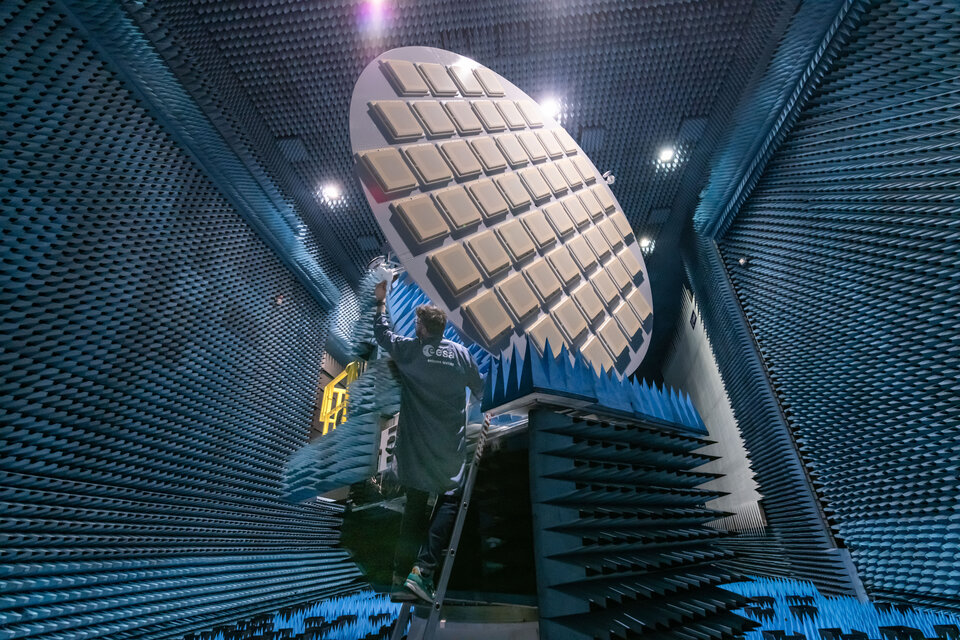
In 2022, the BCT was tested at ESA’s Hertz radio frequency test chamber, located at ESTEC. Given its unusual size, it remains to this day the largest one ever tested in the facility. In 2023, the antenna was assembled and installed in New Norcia.
The BCT was constructed under ESA lead through an industrial contract by satellite prime-contractors Airbus UK (United Kingdom), and sub-contractor C-CORE (Canada) responsible for the BCT. The transponder antenna was developed and built by IDS (Italy). The site infrastructure including the BCT building was realised with Australian local contractor Anspach Ag.
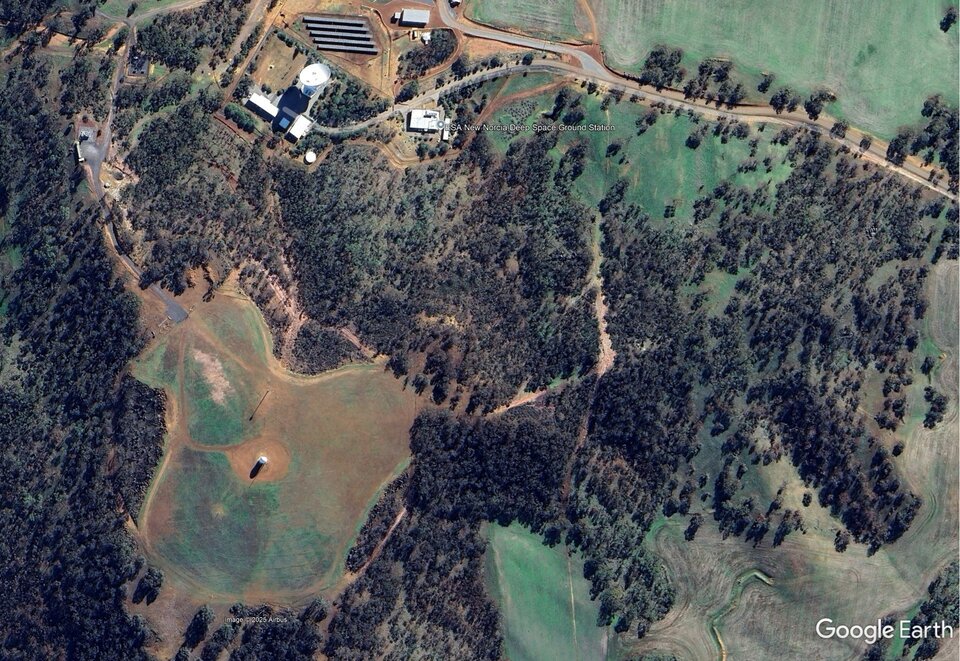
The New Norcia site was chosen to host the BCT after evaluating several dozen sites worldwide for their location, infrastructure, and characteristics. The New Norcia site already operates a ground station with two antennas: a 35-metre diameter deep space antenna and a 4.5-meter launcher-tracking antenna. ESA is on track to inaugurate its fourth deep space antenna, and second at the New Norcia site in Australia, by the end of 2025.
