Space missions require new technologies to meet the challenges of higher performance, reduced costs and new concepts. From ideas through to making them a reality, ESA chaperones technologies though each stage of their development. At the same time, ESA identifies promising technologies for space applications.
Early innovation
Every space mission begins long before a rocket leaves the ground. ESA builds it step by step, starting with long-term investment in the essentials – laboratories, test facilities, ground stations and expertise – without which nothing could fly.
From there, scientists, engineers and industry explore innovative concepts in the discovery and preparation phase, shaping ideas into realistic mission proposals.
Getting ready for space
In space, spare parts and repairs are hard to come by, so any technology sent into its unforgiving environment must have proven itself on Earth through a series of increasingly more intense tests. The long testing time required means that the technologies that will be used in Europe's future missions are being imagined today.
ESA’s technology programmes take technologies from an early concept through these increasingly more intense tests, all the way up to demonstration flights in space – so when the time comes to use it on future missions, it's ready to go.
Media modal
About the General Support Technology Programme (GSTP)
Artificial intelligence
Artificial intelligence is helping transform how space missions are planned, operated and monitored. At ESA, AI supports engineers by analysing vast amounts of data, identifying anomalies, assisting with planning and automating routine tasks. These technologies help improve efficiency, enhance decision-making and enable more resilient mission operations.
From spacecraft health monitoring to future autonomous systems, AI is opening new possibilities for exploration and innovation, helping ESA prepare for increasingly complex missions across Earth orbit, the Moon and deep space.
Media modal
Cybersecurity
As cyberattacks become more frequent and sophisticated, ensuring resilient systems on Earth and in space is a strategic priority for ESA. Security is embedded throughout every stage of the mission lifecycle and reinforced across ESA sites.
At ESA’s cybersecurity centre in Redu, Belgium, engineers help ensure space systems are secure by design and by implementation. At ESA’s Centre for Earth Observation in Frascati, Italy, experts lead security assurance and risk management across the agency.
Meanwhile, the mission control centre in Darmstadt, Germany, monitors the security of space missions, identifying threats and vulnerabilities to help safeguard operations. Research into integrating cybersecurity into onboard spacecraft systems is conducted by teams at ESA's ESTEC technology and research centre in the Netherlands.
Quantum technologies
Advances in physics, such as quantum mechanics, are revolutionising our understanding of the world and opening up new technological possibilities. At ESA, the potential of quantum technologies is being explored in several areas.
A quantum computer, Bell-1, was recently installed at ESA’s Earth observation centre ESRIN to investigate how quantum computing could complement classical computers in processing complex satellite data.
ESA is also researching quantum sensing to improve the sensitivity and accuracy of Earth observation instruments. In secure communications, missions including quantum key distribution will detect attempts to intercept encryption keys, allowing compromised keys to be discarded.
Media modal
ESA brings quantum computing to Earth observation
SAGA – Security and cryptographic mission
Quantum sensing: the next frontier in sensor performance
QKDSat: Secure communication via quantum cryptography
Future space transport
The future launchers preparatory programme is advancing Europe's space transportation capabilities to space, in space, and back from space. It supports the development and testing of new technologies and concepts that will shape the next generations of European space transportation systems.
From reusable launchers and in-space transportation to advanced propulsion, the future launchers preparatory programme prepares the future of space transportation.
In-orbit servicing
A paradigm shift is on its way. Currently, a satellite’s mission ends once its fuel runs out or repairs are needed, despite the hefty price tag and environmental consequences. ESA, together with industry, is developing technology needed to service spacecraft right where they are: in orbit around Earth.
The ability to refill, move and remove, refurbish and even recycle satellites for a commercially acceptable price will open a door to a whole new space ecosystem – and support Europe’s autonomy in space.
Media modal
Proving technology in space
Satellite removal mission CAT
ESA to build first in-orbit servicing mission with D-Orbit
ClearSpace-1
Sustainability in space
Earth orbit is quickly getting polluted with space debris. To ensure a future for our activities in space, there is an urgent need to develop more sustainable technologies and practices.
Aside from preventing further space debris and removing it from orbit, ESA also develops technologies to protect Earth’s limited resources, the atmosphere and the environment by developing more sustainable, ‘zero debris’ satellites that get disposed of properly.
In the long term, the goal is nothing less than the peak of sustainability: a circular economy in space.
Media modal
ESA’s Zero Debris approach
Ecodesign
Innovating space applications
Satellites play a key role in daily life, navigating us to new places, keeping us connected and helping us predict the weather. Before new applications can fly on satellites, they must first be developed and tested on the ground to ensure they will be able to provide new services in space. ESA has several programmes that focus on developing new technologies that will benefit life here on Earth.
Media modal
Horizon Europe
CubeSats: miniature satellites
We tend to think of satellites as huge spacecraft that tower over the engineers who build them, but over the last 25 years, miniature satellites called CubeSats have made accessing space easier and cheaper.
CubeSats are typically built from standard cubic units, each just a bit bigger than a Rubik's cube. CubeSats were initially developed as educational tools, but they are increasingly being used in orbit for technology demonstrations, scientific studies and even commercial purposes.
Media modal
Celeste
Hera's CubeSats
Pulse
Pulse is ESA's innovative software platform designed to support the preparation, monitoring and operation of space missions. Developed at ESA’s European Space Operations Centre (ESOC), it provides a flexible and mission-independent framework that can be adapted to a wide variety of spacecraft and mission types.
By bringing together information, systems and operational processes, Pulse helps teams maintain situational awareness and coordinate complex activities more effectively. The platform is also available to European partners, helping strengthen Europe's space capabilities and support future innovation.
Optical communications
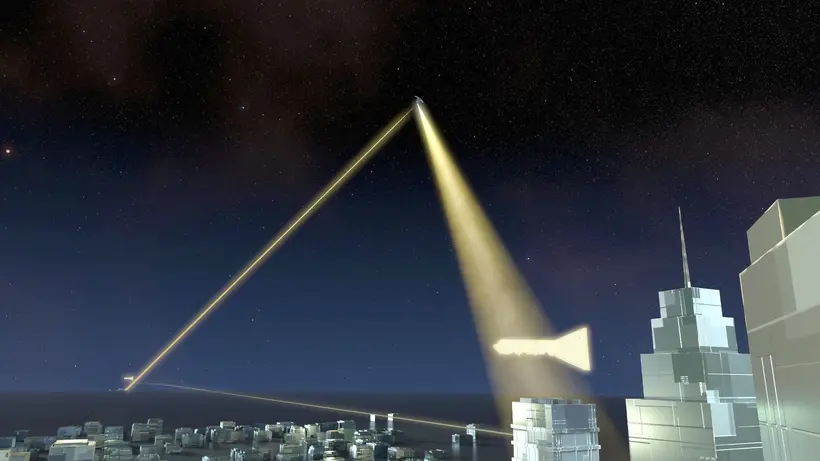
As spacecraft generate ever larger volumes of data, new communication technologies are needed to transmit information more efficiently. Optical communications use laser technology to send data through space at significantly higher rates than traditional radio-frequency systems.
This emerging capability could enable faster transmission of scientific data, images and videos from future missions exploring Earth orbit, the Moon and beyond. ESA is advancing optical communication technologies to help build the next generation of space communications infrastructure and support future exploration.
FOX
The Facility for Operations Experimentation (FOX), based at ESA’s European Space Operations Centre (ESOC), is an initiative designed to support operational experimentation, technology validation, in-orbit demonstration/validation (IOD/IOV), qualification activities, end-to-end operational assessment and experimentation support for both traditional and New Space missions.
FOX provides a configurable environment where services can be used individually or combined to establish project-specific experimentation that may be difficult to perform within purely operational service environments. FOX is powered by Estrack, ESA’s global ground station network. Through Estrack, FOX experimentation activities can access the same global communications infrastructure that supports ESA missions in orbit and across the Solar System.