

Pulse: ESA’s new approach to flying satellites
In brief
To enhance operations across its growing portfolio of missions, the European Space Agency (ESA) has officially announced Pulse, a new solution that streamlines mission monitoring and control. To be deployed next year on ESA’s three-satellite Swarm constellation, Pulse will progressively support all ESA missions and serve the broader European space sector.
In-depth
As ESA’s space activities expand in scale and complexity, there is a growing demand for interoperable systems capable of managing information across multiple missions, centres, and partners. Traditional tools, often mission-specific and fragmented, limit situational visibility and collaboration. ESA’s response is Pulse, a mission-independent logic that links operational data, enhances responsiveness, and reduces fragmentation.
Pulse is not a single software product or control system. It is a strategic operational framework that use technologies such as European Ground Segment – Common Core (EGS-CC), streamlining telemetry, event management, information exchange and execution processes. Built on the collective experience of ESA teams, Pulse aims to transform how data flows are interpreted and actioned across missions.
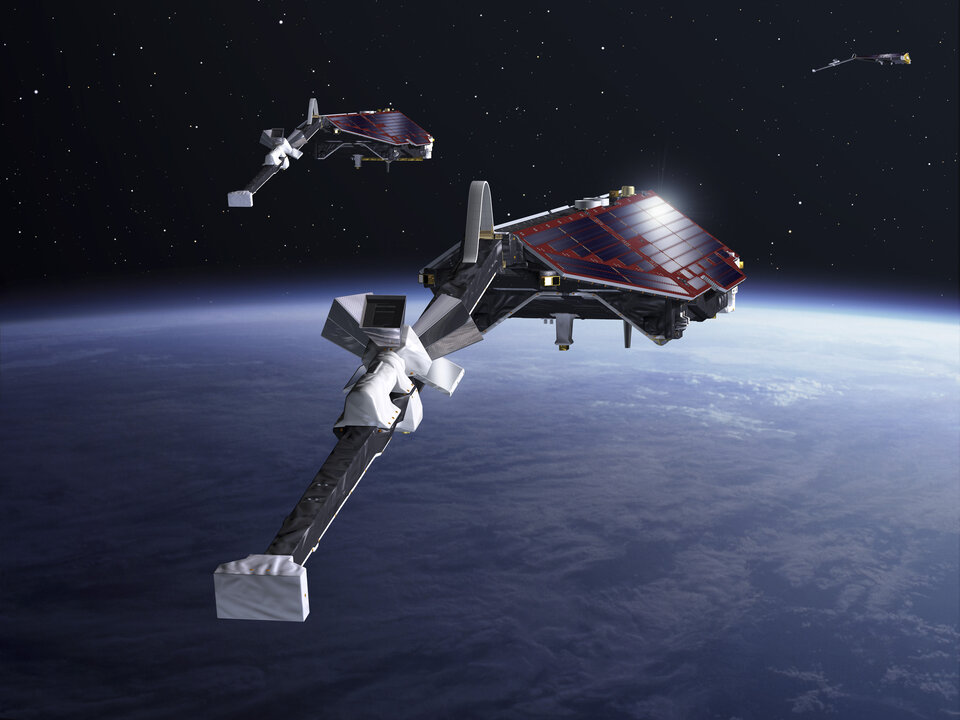
Pulse will be deployed on ESA’s Swarm constellation in 2026. Over time, ESA intends for Pulse to become the default synchronisation and coordination layer for future missions, from construction (ie. Assembly, Integration and Validation of the spacecraft) to operations phases, whether in Earth’s orbit or in deep space.
Importantly, it is distributed under the ESA Community Licence, which enables access across the European space ecosystem without commercial constraints. Interested users can find more information here.
"Pulse is a foundational step towards an integrated, agile operational culture within ESA," said Katarzyna Cichecka, ESA Head of the System and Applications Engineering Division. "It empowers teams to coordinate faster, react earlier, and see further. We are proud of what has been achieved and excited about what’s ahead."
The solution was shaped through continuous validation and cross-functional collaboration. Recently, a milestone user acceptance test was conducted with mission operators and engineering teams from ESA’s European Space Operations Centre (ESOC). Their feedback confirmed significant improvements in coordination, usability, and operational consistency.
“From a mission operator's point of view, Pulse changes how we see and manage monitoring and control activities by expanding and easing automation possibilities” said Juan Piñeiro, ESA Satellite Operations Lead Architect.