


Rehearsing for Sentinel-6B’s early days in space
Last month, mission controllers at ESA's mission control centre started a major simulations exercise to ensure that the next Copernicus Sentinel Earth Observation mission, Sentinel-6B, safely navigates its first days in space. As the launch is approaching, so is the end of this critical pre-launch phase.
Five years after the launch of Sentinel-6 ‘Michael Freilich’, mission control at ESA’s European Space Operations Centre (ESOC) is getting ready for the launch of Sentinel-6B, Europe’s latest sea-level monitoring satellite.
Started on 2 September, the ‘simulation campaign’ is designed to test the mission control team’s ability to take the satellite through the ‘Launch and Early Orbit Phase’ (LEOP), identify and solve potential issues, adapt the mission timeline, and operate under stress.

Augmented by engineers and scientists from ESA, partners and industry, this ‘team of teams’ counts over one hundred people and features experts from the satellite’s manufacturer, as well as specialists of every domain: satellite operations, ground segment, flight dynamics, software, networks, and more.
Currently scheduled for launch at the end of the year, Sentinel-6B will be taken in space by a Falcon 9 rocket from the Vandenberg Space Force Base in California.
Almost a ‘carbon copy’
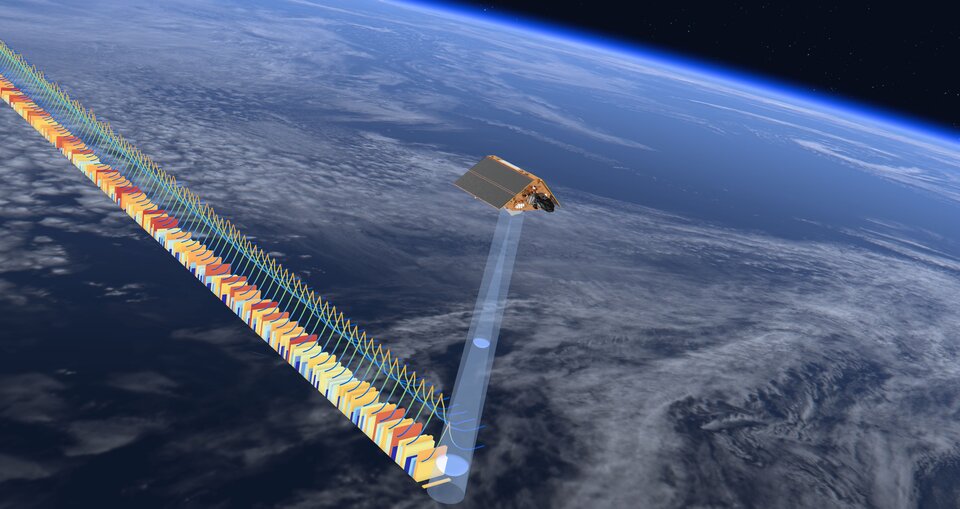
Sentinel-6B is essentially a twin of Sentinel-6 ‘Michael Freilich' with the same design, launcher, and launch site. Many systems, including flight dynamics and simulations, are reused or slightly evolved from Sentinel-6.
“One main aspect is that the team has changed a lot since Sentinel-6, both at ESOC and on the project and manufacturer side,” explains Eduardo Zornoza, Spacecraft Operations Manager for Sentinel-6B. “For this reason, we’ve scheduled an adequate number of sessions to get everyone up to speed and familiar with the satellite.”
Unlike other Copernicus Sentinel Earth Observation missions, but similarly to Sentinel-6, the Launch and Early Orbit Phase will be handled by teams at ESOC, while daily flight operations will be managed by Eumetsat, the European Organisation for the Exploitation of Meteorological Satellites.
Just the LEOP

During the first few days in orbit, ESOC will perform two critical manoeuvres to guide the spacecraft closer to its target trajectory. After day three, command and control responsibilities will transition to Eumetsat.
Once Sentinel-6B is safely drifting toward its final orbit, Eumetsat will complete the final ‘orbit acquisition’ and take over commissioning, routine operations, and the distribution of the mission’s vital sea-level data.
“Copernicus Sentinel-6B will become altimetry constellation reference mission after commissioning, building upon the excellent results of Sentinel-6 ‘Michael Freilich’ to maintain the sea level rise record started in the 1990s. This essential climate variable is at the core of the international collaboration with NASA, NOAA, EUMETSAT and CNES on Sentinel-6”, says Pierrik Vuilleumier, ESA Project Manager.
Launch overlap scenario in mind
As part of the simulation campaign, the mission control team is rehearsing a wide range of scenarios - from software glitches to critical system failures in space, and on ground - to ensure readiness for any eventuality.
“We’ve prepared for a parallel LEOP scenario with independent teams across all areas in case of overlap with another mission. Resources are either independent or can support both launches,” says Franco Zurletti, Deputy Spacecraft Operations Manager for Sentinel-6B.

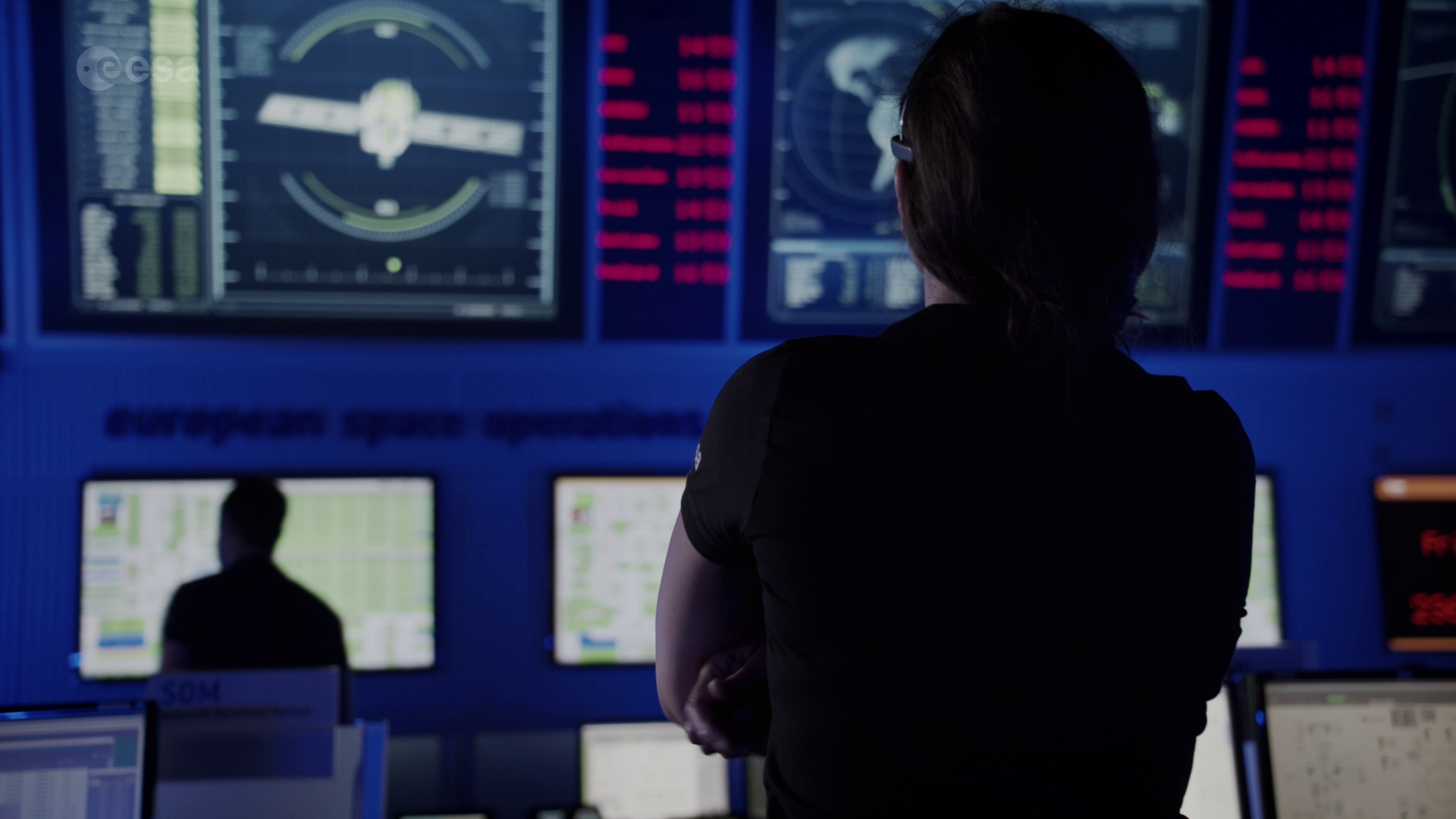
Access the video
Familiar and uncommon ground station choices

“This isn’t a typical Earth Observation mission,” explains Eduardo Zornoza. “Contrary to other Sentinel missions, which follow a sun-synchronous path, Sentinel-6B doesn’t go as far North or South”.
For this reason, the mission will be covered by Punta Arenas station in the Southern Hemisphere, provided by the Swedish Space Corporation (SSC). Located in Chile, the station is not as close to the South Pole as other stations and will be adequate for the satellite’s low-inclination orbit.
ESA’s Kiruna and SSC’s Inuvik stations, both of which routinely support Earth Observation missions, will provide coverage in the Northern Hemisphere.
Dress rehearsal
Right after the last simulation session, a full-scale final rehearsal of the countdown and launch sequence will put together teams at ESOC with the joint ESA, SpaceX and industry launch team in Vandenberg.
During the rehearsal, the mission control team will receive live signals from the satellite via an umbilical connection that will be disconnected shortly before launch.
“The launch of Sentinel-6 happened during the pandemic, which made coordination extremely challenging,” recalls Franco Zurletti. “With Sentinel-6B, we hope we can finally enjoy it."
Once this final step is complete, the mission control team will be fully ready to launch Sentinel-6B and give it the GO!