Venus compared to Earth
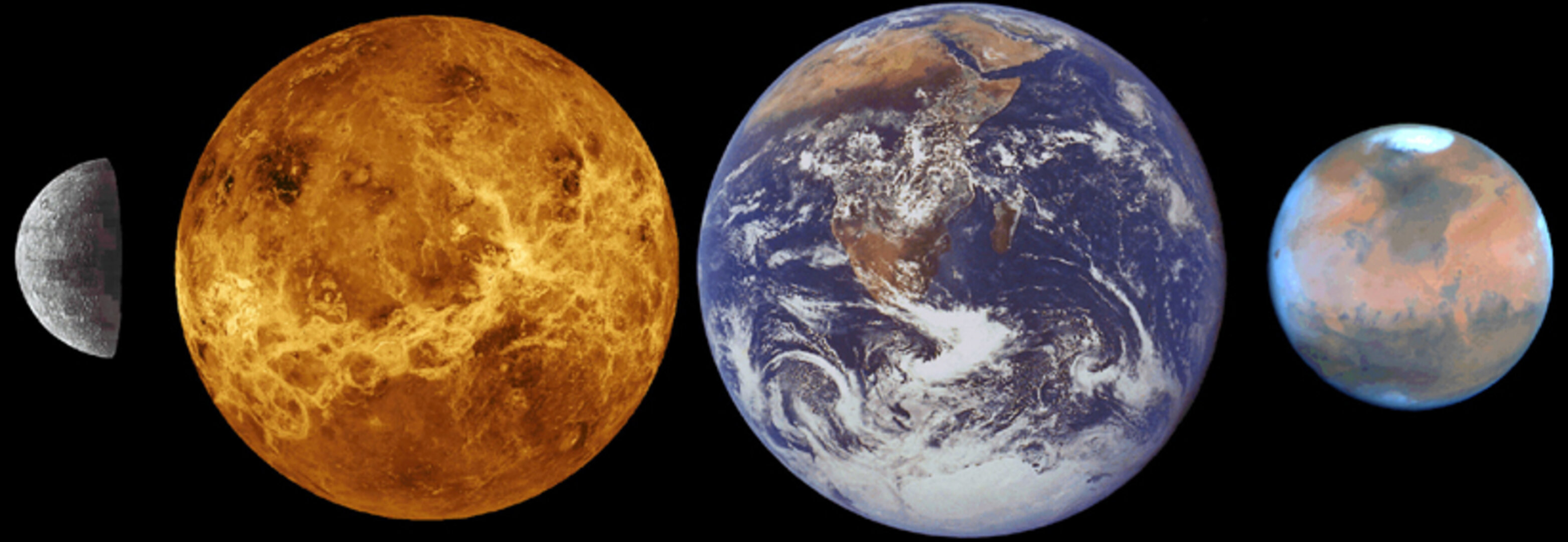
Venus, Mars and Earth, three out of the four inner or ‘rocky’ planets of the Solar System, have a lot in common – a solid surface you could walk on, a comparable surface composition, an atmosphere and a weather system.
If you are looking for a twin sister to Earth, that would be Venus... or is it?
| Venus | Earth | |
|---|---|---|
| Mass | 4.87 x 1024 kg | 5.98 x 1024 kg |
| Radius | 6052 km | 6378 km |
| Density | 5250 kg/m3 | 5520 kg/m3 |
| Av. distance from Sun | 108 million km | 150 million km |
| Rotation period (day) | 243 Earth days (retrograde) | 23 hours 56 minutes |
| Orbit period (year) | 224.7 Earth days | 365.2 days |
| Surface temp. (mean) | 465 °C | 15 °C |
| Surface pressure | 90 bar | 1 bar (sea level) |
| Albedo (reflectivity) | 0.76 | 0.37 |
| Highest point on surface |
Maxwell Montes (17 km) |
Mount Everest (8.8 km) |
| Atmosphere | 96% CO2 , 3% N2 | 78% N2 , 21% O2, 1% Ar |
| Surface composition | Basalt rock, altered materials | Basalt, granite, altered materials |
| Orbit inclination | 3.4° | 0° by definition |
| Axial tilt (obliquity) | 178° | 23.5° |
| Surface gravity (equator) | 8.9 m/s2 | 9.8 m/s2 |
| Moons | None | 1 (The Moon) |