ESA prepares for next missions to Mars
Before humans can leave footprints on the surface of Mars, many questions have to be answered and many problems solved. One of the most fundamental questions is whether life has ever existed on Mars.
In its long-term Aurora Programme of Solar System exploration, ESA is preparing a series of robotic missions that will reveal the Red Planet’s secrets and pave the way for future human expeditions.
A major step in this ambitious programme was completed this week with the selection of two industrial teams to carry out the detailed design of the ExoMars rover and its payload of scientific instruments called 'Pasteur'.
These teams will be responsible for producing a detailed design concept for the rover, the first vehicle of its kind to be built by ESA. ExoMars will be ESA’s first mission to carry 'exobiology' instruments, meaning they are specifically designed to search for life.
Over the next few months ESA scientists will define a multi-instrument package that will be able to carry out a number of key tasks. It should be able to drill into the surface, retrieve and analyse samples, study the physical environment and look for evidence of biomarkers – clear signs that life has existed on Mars in the past, or even survives to the present day.
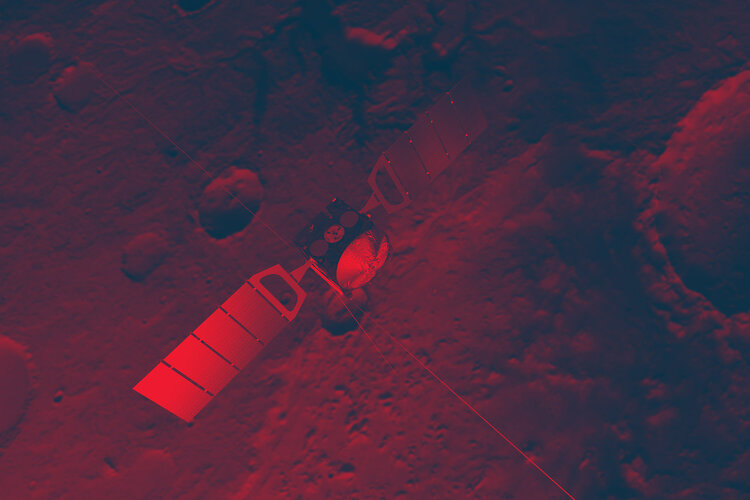
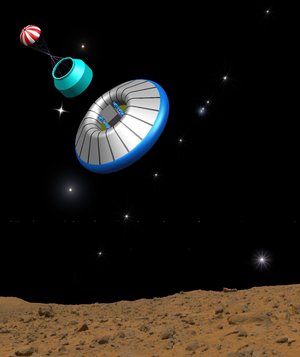
ExoMars, which is scheduled for launch in 2009, will include an orbiter and a descent module that will land a highly mobile rover, weighing up to 200 kilogrammes, on the surface of Mars. After delivery of the lander and rover, the orbiter will operate as a data relay satellite between the Earth and the vehicle on the surface.
The main aim of the rover and its state-of-the-art Pasteur payload will be to search for signs of life, past or present, on the Red Planet. Pasteur will be the most comprehensive scientific package ever to land on Mars, with tools that can extract, handle and analyse samples of Martian soil.
Its unique capability to obtain underground samples at depths of up to two metres will provide an excellent opportunity to gain access to ice-rich soil layers - and possibly the first definitive evidence of primitive Martian life.