Europe commits to sustainable practices in space
How can Europe remain competitive and independent while ensuring that space stays safe and sustainable for all? At the International Space Summit, ESA worked with European and international partners to advance in-space operations and services, improve the long-term sustainability of space activities and support a global framework governing radio frequencies and satellite orbits.
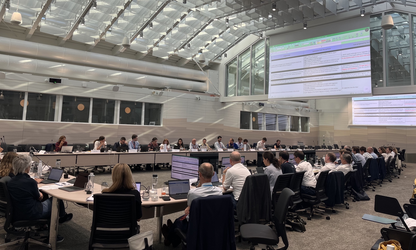
Held in Paris from 9 to 10 September 2026, the International Space Summit brought together 90 national delegations and international organisations to reflect on the future of space. Key points in the summit’s agenda included the growing use of low-Earth orbits, the sustainability and security of space operations, the exploration of the Moon and Mars, and how the space sector can improve its competitiveness and technological development.
On top of crucial discussions on Europe’s future in space, the summit resulted in the celebration of a joint declaration between the European Space Agency (ESA) and the European Commission on advancing In-Space Operations and Services (ISOS), and the endorsement of two declarations on sustainability in space.
Advancing European in-space operations and services

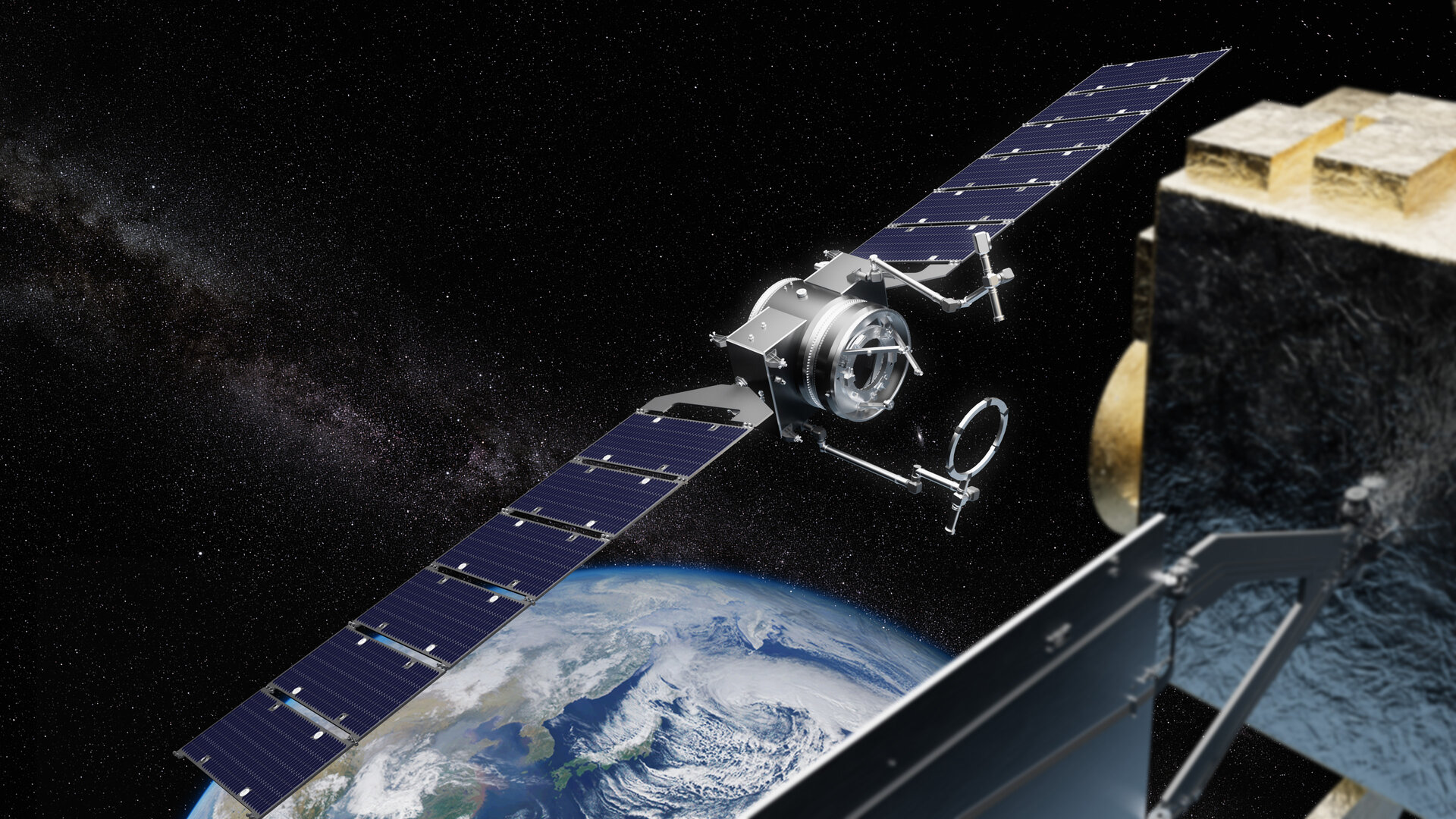
In-orbit services are set to change the way we operate in space. Rather than relying on ‘disposable’ satellites, these services will bring the infrastructure we need to achieve refilling, assembly, manufacturing, removal, repositioning, inspection, refurbishment and recycling in orbit.
This approach supports the transition towards a circular economy in space, allowing new operations and transportation paradigms. The improved sustainability and efficiency will go hand in hand with new commercial opportunities for Europe.
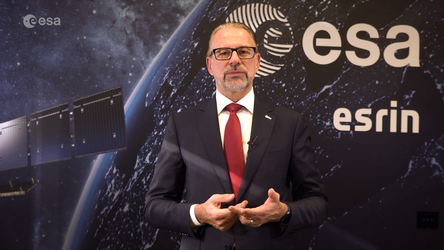
As in-orbit operations are of strategic importance to Europe, ESA Director General Josef Aschbacher and the EU Commissioner for Defence and Space Andrius Kubilius celebrated a joint declaration between ESA and the European Commission, in a ceremony that took place during the summit.
The message of the declaration is clear: to cooperate closely on the development and maturation of key technologies and mission concepts as part of the EU’s ISOS initiative, so Europe can operate independently in space and strengthen its technological leadership, competitiveness and long-term sustainability.
By joining forces, ESA and the European Commission are creating the conditions for a thriving European in-space service ecosystem. The partnership combines ESA’s technical excellence with the European Union’s policy, regulatory and funding frameworks, enabling a coherent and strategic approach.
A more sustainable use of space for all

The participants of the summit endorsed the ‘Declaration for a sustainable use of outer space for all’, reflecting a shared commitment to a peaceful, secure, safe, stable and sustainable use of outer space.
By reaffirming full compliance with the principles of the 1967 Outer Space Treaty, the declaration highlights the role of international cooperation and coordination, and the need for a pragmatic and more transparent approach to international space issues, guaranteeing the long-term sustainability of space activities.
The importance of the United Committee on the Peaceful Uses of Outer Space (COPUOS) in shaping the future governance of outer space was emphasised, calling for greater international participation and continued implementation of its sustainability guidelines.
The endorsers of the declaration also welcomed the creation of the Expert Group on Space Situational Awareness. Under COPUOS, this group will be responsible for developing recommendations to strengthen international coordination and improve the transparency of outer space activities.
ITU gets support for its regulatory framework for frequency management
The International Telecommunications Union (ITU) gained wide support as the primary global entity responsible for the efficient and sustainable use of the radio-frequency spectrum and associated orbit. A key point in ITU’s development mandate is the equitable access to spectrum and orbit resources, particularly by developing countries, therefore reducing the digital divide.
Based on Radio Regulations, an international treaty that governs the use of the radio-frequency spectrum and satellite orbits, the supported ITU framework for frequency management is essential for ITU Member States to coordinate their radiocommunication systems. It aims to prevent harmful interference between satellite systems, as well as the development of the Member States’ space radiocommunication policies.
Endorsers stressed the importance of the framework for the protection of geostationary networks from harmful interference while ensuring that non-geostationary constellations can continue to operate effectively in shared frequency bands.
This is crucial to guarantee the continuity of satellite systems that support public space and governmental satellite services, while allowing the deployment and operation of non-geostationary networks within a technology-neutral framework that fosters innovation and access to the radio-frequency spectrum.
Towards a safe and sustainable future in space
As space activities continue to expand, their long-term sustainability will require both technological innovation and international cooperation.
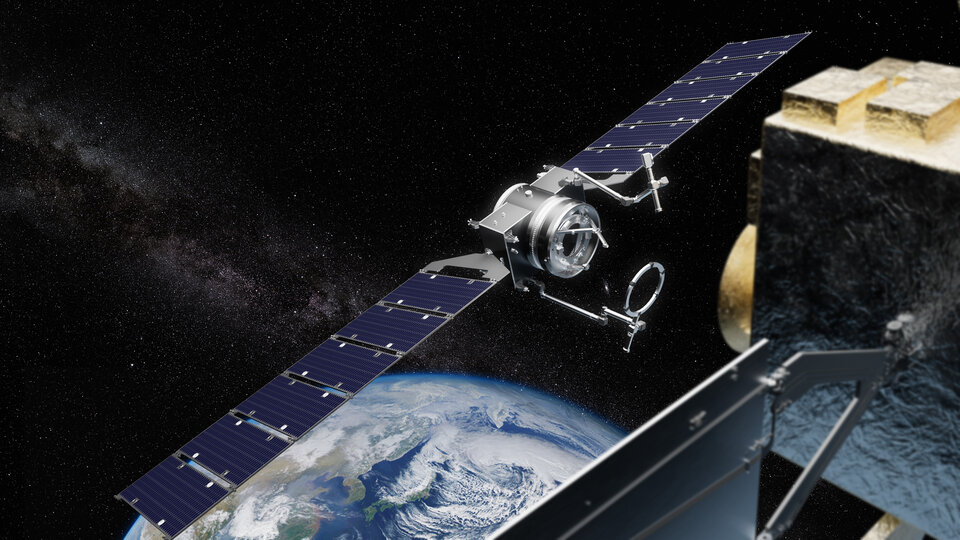
The initiatives underway at ESA Space Safety and ESA Space Transportation are fundamental for the commitments outlined in the joint ESA/European Commission declaration: through its In-Space Servicing, Assembly and Manufacturing (ISAM) activities, ESA has been driving the development of critical technical building blocks for in-orbit transportation and services. The sustainability of our activities in space is a priority for ESA, reflected in its principles for Ecodesign, its Zero Debris approach and a responsible use of radio-frequency resources.
The outcomes of the summit, together with ESA’s technological innovation and operations, demonstrate a shared determination to build a safer, resilient and more sustainable space environment, while strengthening Europe’s ability to operate independently and competitively in orbit. All of this, for a future in which space remains accessible, secure and beneficial for everyone.