12 AUG. 2009 publication date 4355 Views

or Pushing things around

Page123


Monopropellant systems

As the name implies monopropellant rockets do not carry separate fuel and oxidant supplies. Rather the propellant is a single liquid that decomposes to gases either on heating or when it is passed over a catalyst. There are two common monopropellants; hydrogen peroxide (H2O2) and hydrazine (N2H4). Hydrogen peroxide decomposes when it comes in to contact with a silver or platinum catalyst mesh (up to 98% concentration is used as a monopropellant):
hydrogen peroxide decomposition
This produces steam and oxygen at over 600 °C and produces a specific impulse of up to 165 s. Hydrogen peroxide has also been used to power devices as diverse as drag racing cars and torpedoes.

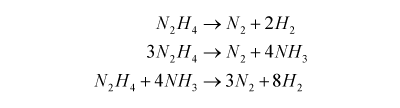
Hydrazine is a more powerful but toxic monopropellant. It decomposes in contact with platinum/iridium metal into ammonia, nitrogen and hydrogen by a number of different possible paths:
hydrazine decomposition
It does this at a temperature of around 800 °C and can produce a specific impulse of around 200 s.

Page123


Related links

fallback image 4
fallback image 4

stay updated

Subscribe to our newsletter to receive the latest news, mission updates, and exclusive insights directly in your inbox. Be the first to know about our upcoming projects and breakthroughs.