• → European Space Agency

      • Space for Europe
      • Space News
      • Space in Images
      • Space in Videos
    • About Us

      • Welcome to ESA
      • DG's News and Views
      • For Member State Delegations
      • Business with ESA
      • ESA Exhibitions
      • ESA Publications
      • Careers at ESA
    • Our Activities

      • Space News
      • Observing the Earth
      • Human Spaceflight
      • Launchers
      • Navigation
      • Space Science
      • Space Engineering
      • Operations
      • Technology
      • Telecommunications & Integrated Applications
    • For Public

    • For Media

    • For Educators

    • For Kids

    • ESA

    • Human Spaceflight

    • Astronauts

    • International Space Station

    • Research

    • Education

    • Exploration

    • Our vision
    • About human spaceflight
    • Current missions
    • Bedrest studies
    • ATV
    • Concordia
    • Past missions

      • PromISSe
      • Mars500
      • MagISStra
      • DAMA mission
      • Node-3 & Cupola
      • Expert
      • Alissé
      • OasISS
      • Columbus
      • Esperia
      • Celsius
      • Astrolab
      • Eneide
      • DELTA
      • Cervantes
      • Odissea
      • Marco Polo
      • Andromède
      • STS-100
    • Multimedia
    • Video
    • Multimedia gallery
    • RSS feeds
    • Resources
    • Experiment archive
    • Services
    • Subscribe

    ESA > Our Activities > Human Spaceflight

    Astronauts bring back new life

    23 November 2012

    It is not every day that astronauts can claim to return to Earth with a new species of life. But when the astronauts on ESA’s CAVES underground training course returned to the surface they were carrying a special type of woodlouse.

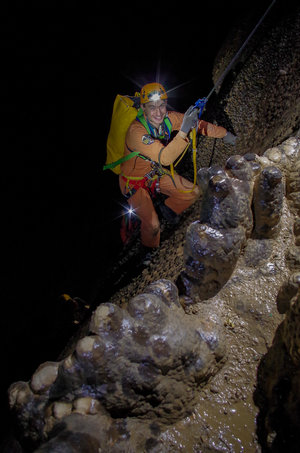
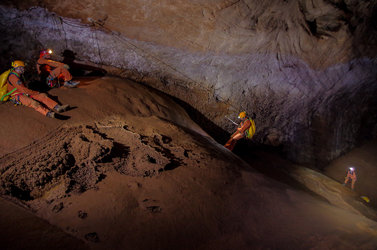
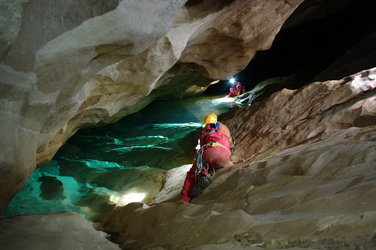
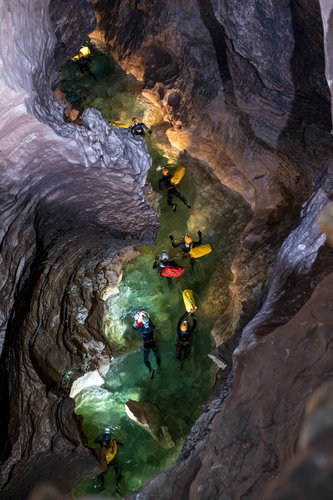
    CAVES training sends astronauts from all the International Space Station partner nations underground for a week to learn about working in multi-cultural teams under extreme conditions.

    During their six-night stay in caves in Sardinia, Italy, their scientific research included meteorology, surveying, geology and cataloguing underground life.

    “Every year we scout the area to prepare for the training mission,” says Loredana Bessone, course designer and project manager. “This year, we noticed interesting-looking crustaceans in a small pond.”


    Laying bait

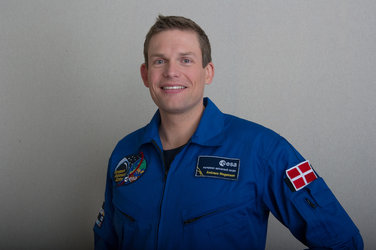
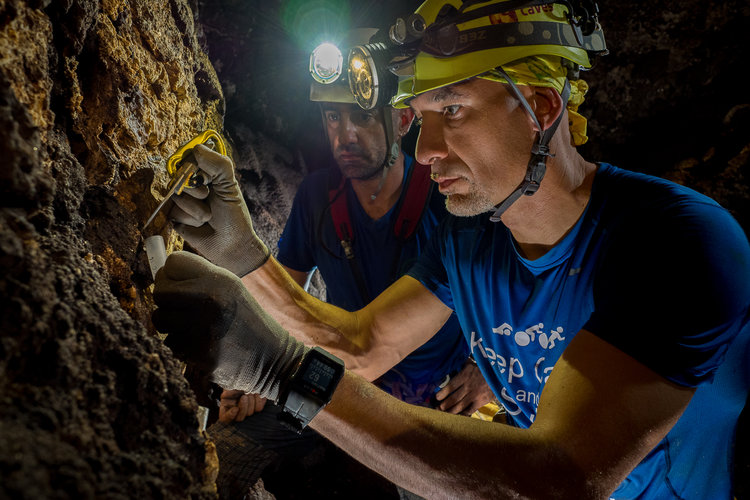
    The astronauts set bait near the pond and in other places to attract and identify as many life forms as possible. ESA astronaut Andreas Mogensen recalls: “We set four lures in pre-defined areas and had two mobile baits that we placed in areas of interest.”

    Cave scientists usually leave bait for three weeks. CAVES training lasts only a week so the biological sampling programme developer, Paolo Marcia, cooked up a special menu to lure the underground life: “I created a really stinky bait made of liver and rotten cheese.”

    After three to four days, the astronauts chose a few specimens of the less common species and preserved them in alcohol to take above ground.

    “We were concerned that not enough cave life had been collected, so I asked the astronauts to go back to the pond on the last day – and bingo!” says Laura Sanna, science operations director.

    “Afterwards, we and the astronauts checked the specimens on a list of known species” says Jo de Waele, science coordinator.

    Swimming underground woodlice
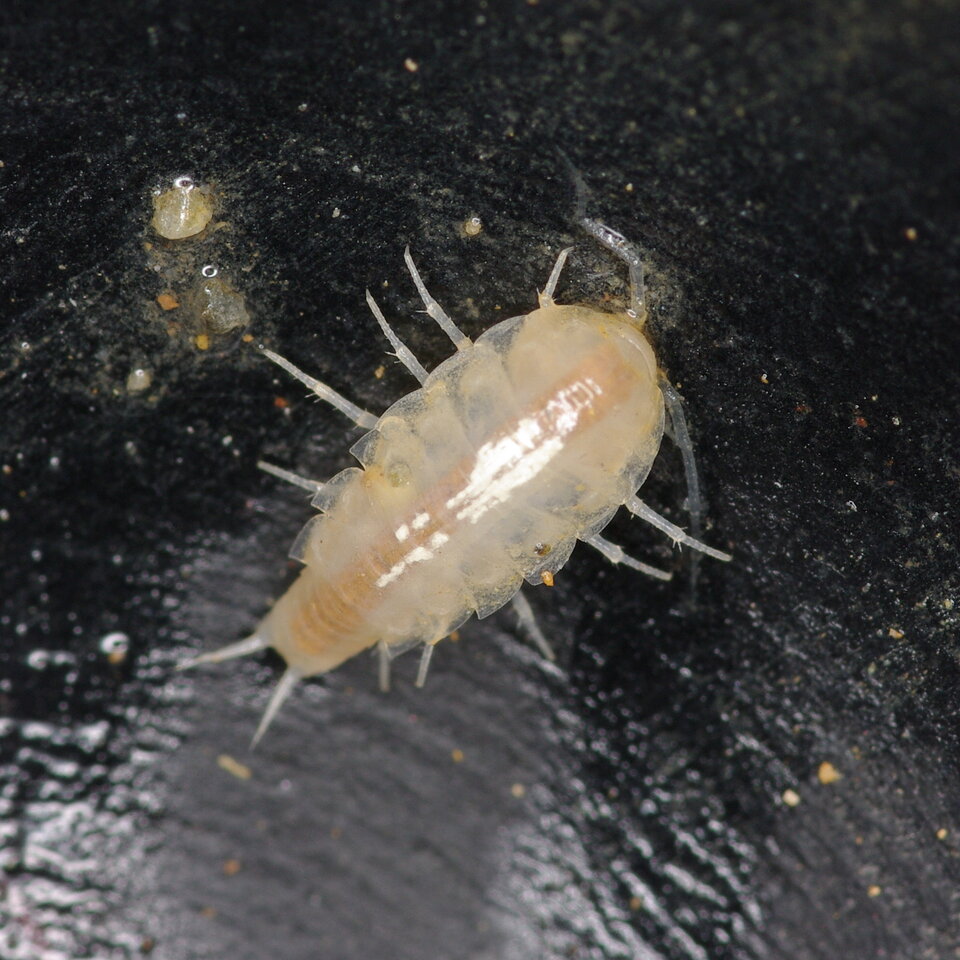
    Aquatic woodlouse
    Alpioniscus species

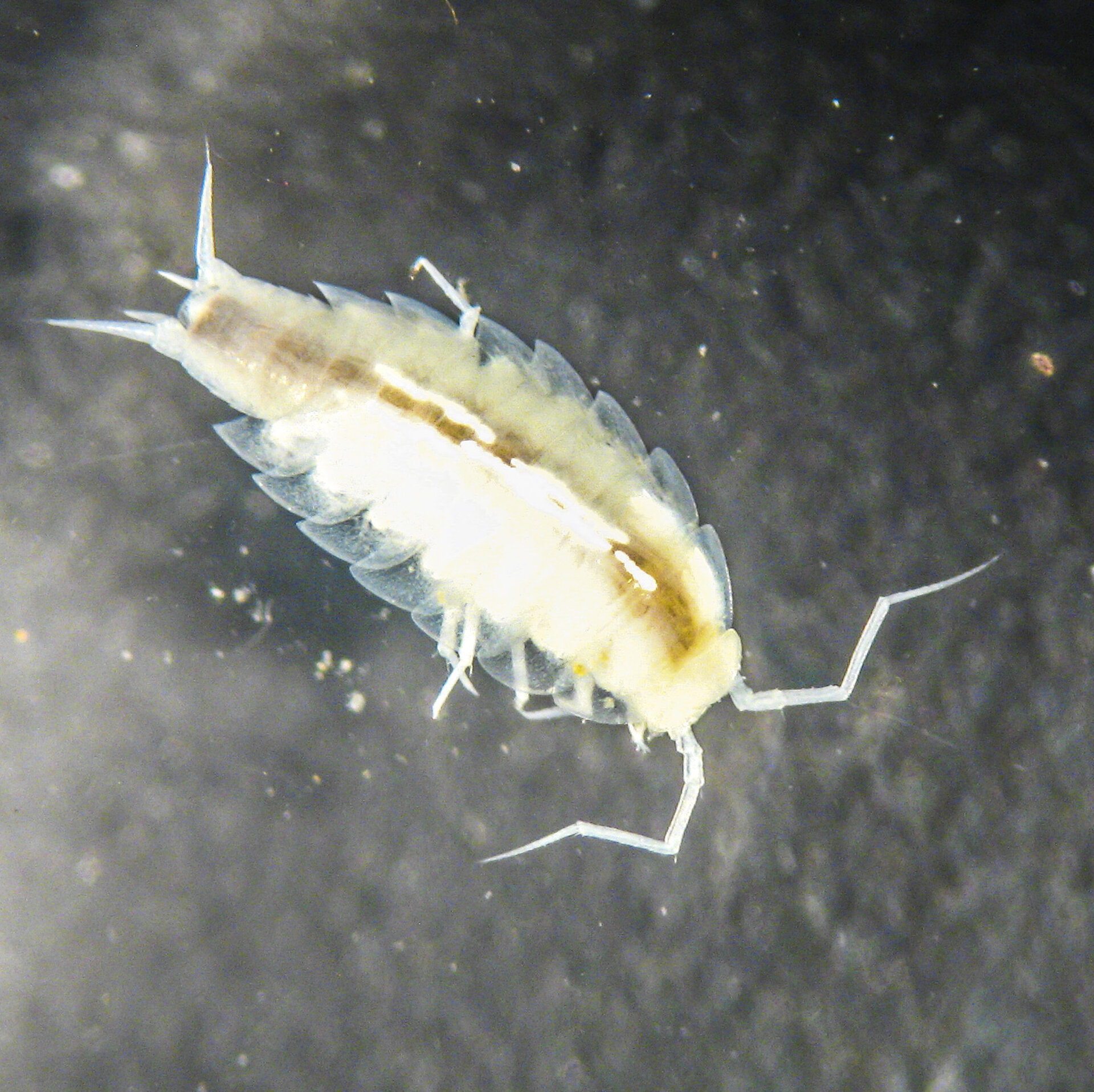
    Molecular analysis confirms the samples belong to a new species of crustaceans. Just under 8 mm long, these animals belong to the suborder of terrestrial isopods, commonly known as woodlice.

    Most crustaceans such as crabs, shrimps and lobsters live in water while woodlice are the only group that have fully adapted to life on land.

    The ancestors of the terrestrial isopods seem to have evolved from aquatic life to live on land. Surprisingly, the astronauts found a species that has returned to living in water, completing an evolutionary full circle.

    Studying samples

    “This find is important because the few aquatic woodlice we know of were thought to be primitive forms from which terrestrial woodlice had evolved. Now it is clear that these animals have evolved to live in water again,” explains isopod specialist Stefano Taiti.

    “It is changing our point of view on evolutionary processes in regards to terrestrial isopods living in an aquatic environment.

    “The find also confirms the theory that evolution is not a one-way process but that species can evolve to live in previously forgotten habitats.“

    “This shows that CAVES offers a truly interesting scientific programme while keeping to its main goal: to train spaceflight teams in an operational space analogue on Earth,” affirms Loredana.

    Rate this

    Views

    Share

    • Currently 5 out of 5 Stars.
    • 1
    • 2
    • 3
    • 4
    • 5
    Rating: 5/5 (1 votes cast)

    Thank you for rating!

    You have already rated this page, you can only rate it once!

    Your rating has been changed, thanks for rating!

    1158
    facebook
    twitter
    reddit
    google plus
    digg
    tumbler
    digg
    blogger
    myspace

    Related articles

    Astronauts of the European Space Agency (ESA)

    The European astronaut corps18 July 2001

    Astronauts of the European Space Agency (ESA)

    The European astronaut corps18 July 2001 In 1998, ESA Member States participating in the International Space Station (ISS) programme decided to unite their respective astronaut teams with the existing ESA core team to form a single European Astronaut Corps. This integration process was compl...

    Columbus artist's impression

    Columbus Mission16 November 2007

    Columbus artist's impression

    Columbus Mission16 November 2007 On 7 February 2008, the European Columbus laboratory launched with the STS-122 Shuttle mission on Space Shuttle Atlantis. Since being attached to the Harmony (Node 2) module a few days later on 11 February, Columbus is now an integral part of the Int...

    • More Information
      • CAVES crew 2012
      • More Information
        • CAVES crew 2012
        • Research partners
        • University of Bologna
        • The Institute of Ecosystem Study
        • University of Sassari Department of Science for Nature and Environmental Resources/Zoology
        • Related news
          • Astronauts bring back new life
            • Cavenauts return to Earth
              • Going underground
                • Astronauts searching for life – underground
                • Liens
                  • CAVES 2011 photo gallery
                  • CAVES 2011 video
                    • Mission accomplished: cave crew returns to Earth
                    • Downloads
                    • CAVES 2012 Information kit (PDF)
                    • Follow CAVES
                    • ESA_CAVES on Twitter
                    • CAVES on Youtube
                    • CAVES on Flickr
                    • Astronaut blog
                    • Follow the astronauts
                    • Follow @Astro_Andreas
                    • Follow @Astro_DavidS
                    • Follow @Astro_Soichi
                    • Follow @AstroIronMike
                    • Follow @spacetihon

    Connect with us

    • RSS
    • Youtube
    • Twitter
    • Flickr
    • Google Buzz
    • Subscribe
    • App Store
    • LATEST ARTICLES
    • · CryoSat hits land
    • · Ariane 5 completes seven launches …
    • · Measuring skull pressure without t…
    • · Malargüe station inauguration
    • · The solar wind is swirly
    • FAQ

    • Jobs at ESA

    • Site Map

    • Contacts

    • Terms and conditions