• → European Space Agency

      • Space for Europe
      • Space News
      • Space in Images
      • Space in Videos
    • About Us

      • Welcome to ESA
      • DG's News and Views
      • For Member State Delegations
      • Business with ESA
      • ESA Exhibitions
      • ESA Publications
      • Careers at ESA
    • Our Activities

      • Space News
      • Observing the Earth
      • Human Spaceflight
      • Launchers
      • Navigation
      • Space Science
      • Space Engineering
      • Operations
      • Technology
      • Telecommunications & Integrated Applications
    • For Public

    • For Media

      • Media
      • ESA TV
      • Videos for professionals
      • Photos
    • For Educators

    • For Kids

    • ESA

    • Human Spaceflight

    • Astronauts

    • International Space Station

    • Research

    • Education

    • About the International Space Station
    • Pushing the boundaries of science and technology
    • Current status
    • Where is the International Space Station?
    • Building the International Space Station
    • International collaboration
    • International Space Station legal framework
    • Europe's partners
    • European participation
    • Space Station elements
    • Control centres
    • How much does it cost?

    ESA > Our Activities > Human Spaceflight > International Space Station

    Another module for the International Space Station leaves Turin

    Cargo carrier for the ISS
    The cargo carrier
    24 July 2001

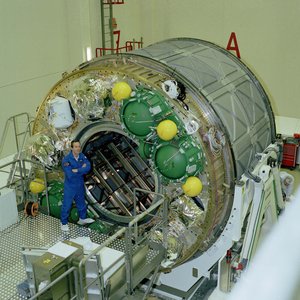
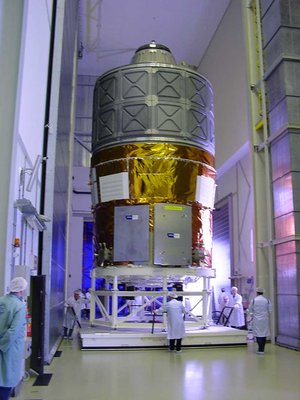
    A new pressurised module for the International Space Station leaves Turin airport for Amsterdam today, on board the huge Airbus Beluga, the transport vehicle used for exceptional loads.

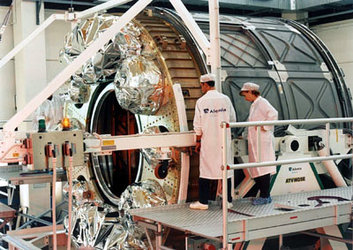
    Like its predecessors the logistics modules Leonardo, Raffaello and Donatello, this new module has been built by the Italian company Alenia Spazio, which is part of Finmeccanica.

    This mechanical model of the cargo carrier of the Automated Transfer Vehicle (ATV), known as the STM/Maquette Dynamique, is being developed under an ESA programme led by the French company EADS Launch Vehicles. Once the module arrives at ESA’s laboratories at ESTEC in the Netherlands, it will be integrated with the rest of the ATV and prepared for the structural and thermal tests that will be carried out between the end of this year and next summer.

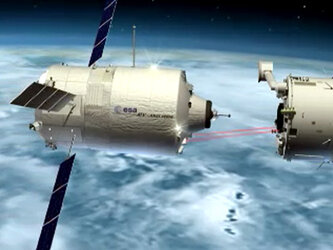
    The Automated Transfer Vehicle
    The Automated Transfer Vehicle

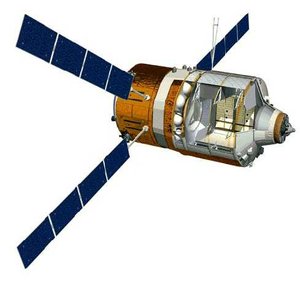
    Alenia Spazio has direct responsibility for the cargo carrier, the forward half of the ATV which contains mechanisms for attachment to the International Space Station (ISS), further fuel supplies for attitude control, and water and air for the crew. It will also carry onboard various supplies such as spare clothes and space suits, equipment and food.

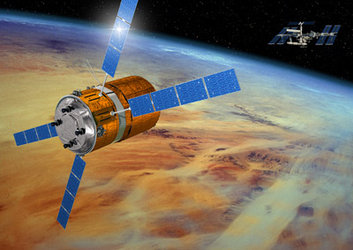
    The ATV - a type of space ‘lorry’ weighing over 20 tonnes at launch - will be injected into space by an Ariane-5 launcher in 2007. It has been designed to fly unmanned and dock to the space station automatically. After the in-orbit docking, astronauts will enter the ATV compartment built by Alenia Spazio to unload provisions and load waste material from the ISS. This will then be eliminated in a destructive re-entry approximately six months later.

    Prior to re-entry the ATV will carry out an important manoeuvre: the ‘re-boost’ to push the ISS back to its maximum orbit of between 360 and 420 km. This process has to be carried out periodically to make up for the gradual decrease in the height of the station’s orbit. Alenia Spazio is expected to produce 7 ATVs flight units for the ISS operations planned to take place between 2007 and 2012.
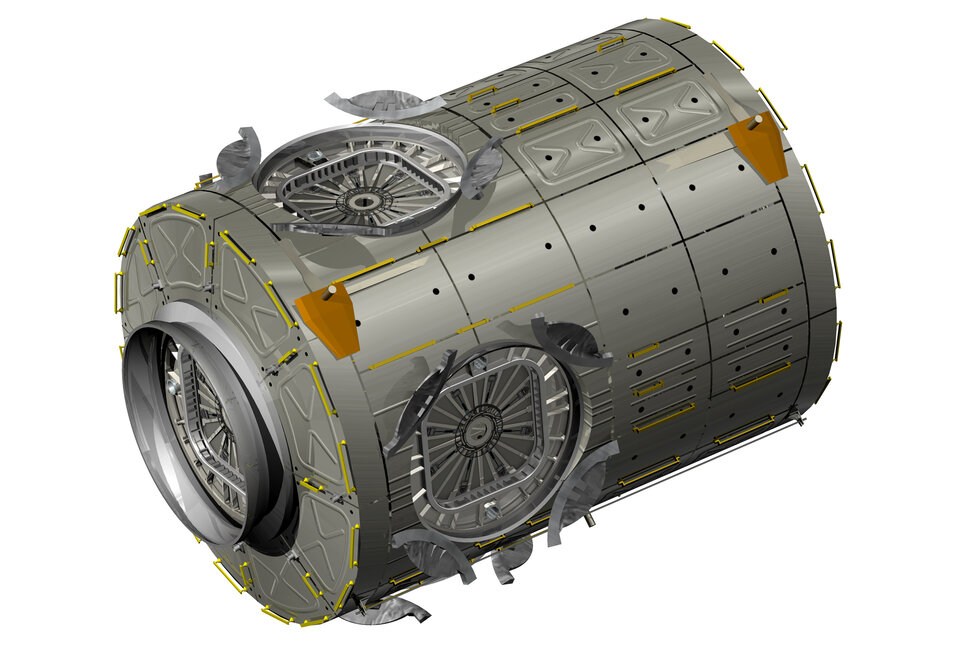

    The Node 2 connecting module
    The Node 2 connecting module

    The Italian company’s significant contribution to the ISS will continue at its Turin site with the integration and development of other key elements needed for the ISS. These include the European laboratory Columbus, the two interconnecting nodes 2 and 3, and the pressurised Cupola.

    Alenia Spazio is also in the study and definition phase for the CRV minishuttle, the ISS ‘lifeboat’ as well as the Habitation module that will become the final ISS residential quarters. These new projects were recently assigned to Alenia Spazio under an agreement between NASA and the Italian Space Agency ASI.
    Rate this

    Views

    Share

    • Currently 0 out of 5 Stars.
    • 1
    • 2
    • 3
    • 4
    • 5
    Rating: 0/5 (0 votes cast)

    Thank you for rating!

    You have already rated this page, you can only rate it once!

    Your rating has been changed, thanks for rating!

    48
    Tweet
    • News articles
      • Initial ATV test campaign completed ahead of schedule
        • ATV: The most challenging spacecraft ever built by Europe is taking shape
          • First test for Automated Transfer Vehicle
            • Automated Transfer Vehicle test campaign underway
              • Another module for the International Space Station leaves Turin
              • Technical updates
                • Collocation of ESA ATV management team and Prime Contractor EADS-LV: A very positive step
                  • Successful communication test for ATV
                  • Background
                  • ATV mission scenario - picture report
                    • ATV mission scenario - animation
                    • ATV fact sheet
                    • Related links
                    • How to build an ATV paper model
                    • ESTEC test centre
                    • Alenia Aerospazio
                    • Astrium Space

    Connect with us

    • RSS
    • Youtube
    • Twitter
    • Flickr
    • G+
    • Facebook
    • Livestream
    • Subscribe
    • App Store
    • LATEST ARTICLES
    • · Rare merger reveals secrets of gal…
    • · Watching for hazards: ESA opens as…
    • · ESA astronaut Timothy Peake set fo…
    • · Space drives e-mobility
    • · Proba-V opens its eyes
    • FAQ

    • Jobs at ESA

    • Site Map

    • Contacts

    • Terms and conditions