• → European Space Agency

      • Space for Europe
      • Space News
      • Space in Images
      • Space in Videos
    • About Us

      • Welcome to ESA
      • DG's News and Views
      • For Member State Delegations
      • Business with ESA
      • ESA Exhibitions
      • ESA Publications
      • Careers at ESA
    • Our Activities

      • Space News
      • Observing the Earth
      • Human Spaceflight
      • Launchers
      • Navigation
      • Space Science
      • Space Engineering
      • Operations
      • Technology
      • Telecommunications & Integrated Applications
    • For Public

    • For Media

      • Media
      • ESA TV
      • Videos for professionals
      • Photos
    • For Educators

    • For Kids

    • ESA

    • Operations

    • Ground Systems Engineering

    • Space Debris

    • SSA

    • Operations
    • Operations home
    • Background
    • About Operations
    • The Right Stuff
    • Multimedia

      • Images
      • Videos
    • SSA programme
    • Space Situational Awareness
    • Teams on ground
    • Ground Systems Engineering
    • EGOS - Ground operation system
    • Missions in space
    • Solar and planetary
    • Astronomy & fundamental physics
    • Earth observation
    • Human spaceflight
    • Technology demonstration
    • Estrack operations
    • Past missions
    • ESA mission history
    • - Find a mission: A...Z
    • Mission control centres
    • ATV Control Centre (ATV-CC)
    • Columbus Control Centre (Col-CC)
    • Ground stations
    • Estrack tracking stations
    • ESTRACK Control Centre
    • - Find a station: A...Z
    • OPS Community
    • Advanced Operations Concepts Office
    • HSO Exchange
    • Knowledge Management at ESA's Operations team

    ESA > Our Activities > Operations

    Deployment of second MARSIS boom delayed

    MARSIS prospecting for water
    9 May 2005

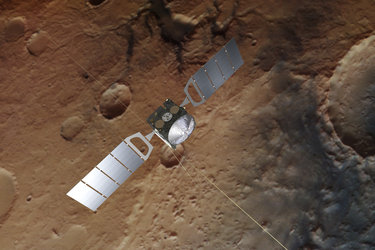
    The deployment of the second antenna boom of the Mars Express Sub-Surface Sounding Radar Altimeter (MARSIS) science experiment has been delayed pending investigation of an anomaly found during deployment of the first antenna boom.

    The anomaly was discovered on 7 May towards the end of the first deployment operations. Deployment of the first boom started on Wednesday 4 May. The problem with the boom was confirmed by flight control engineers working at ESA's European Space Operations Centre (ESOC) in Darmstadt, Germany, on 7 May, after which further activity was stopped pending a full assessment of the situation.

    The decision to delay deployment of Boom 2 pending clarification of the situation and implications was made on 8 May.

    Mission controllers were able to determine that 12 of the 13 boom segments of Boom 1 were correctly locked into position. However, one of the final segments, possibly No. 10, had deployed but was not positively locked into position.

    It was determined that deployment of the second boom should be delayed in order to determine what implications the anomaly in the first boom may have on the conditions for deploying the second.

    This decision is in line with initial plans which had allowed for a delay should any anomalous events occur during the first boom deployment.

    Mission staff will now take the time necessary to investigate the boom situation. Foreseen outcomes include confirming that all segments of Boom 1 have been locked into place and determining how the deployment of Boom 1 may affect that of Boom 2.

    All efforts will be made to ensure the safety of the spacecraft overall and to minimise any effects on the operations of ongoing science activity on board Mars Express.

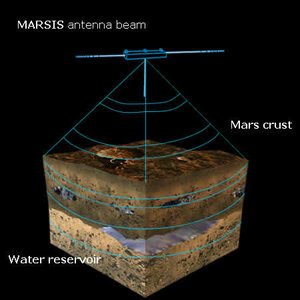
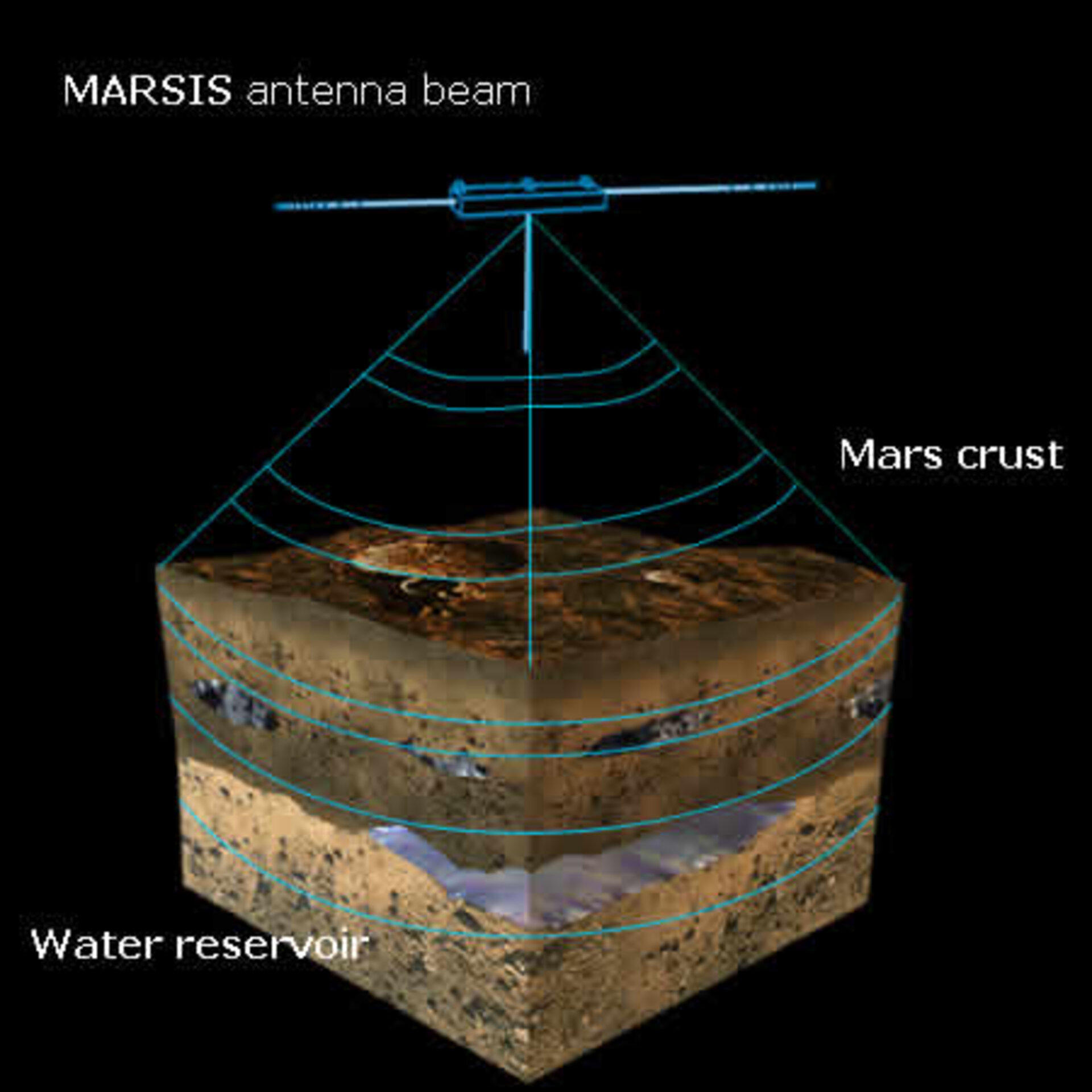
    The MARSIS experiment is to map the Martian sub-surface structure to a depth of a few kilometres. The instrument's 40-metre long antenna booms will send low frequency radio waves towards the planet, which will be reflected from any surface they encounter.

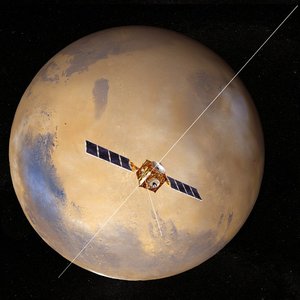
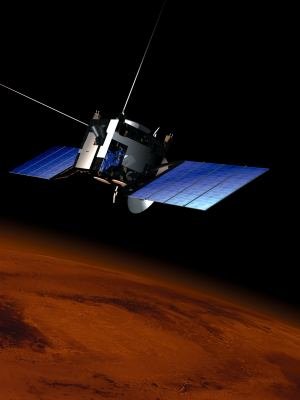
    MARSIS is one of seven science experiments carried on board Mars Express, one of the most successful missions ever flown to the Red Planet. Mars Express was launched on 2 June 2003 and entered Mars orbit in December 2003.
    Rate this

    Views

    Share

    • Currently 0 out of 5 Stars.
    • 1
    • 2
    • 3
    • 4
    • 5
    Rating: 0/5 (0 votes cast)

    Thank you for rating!

    You have already rated this page, you can only rate it once!

    Your rating has been changed, thanks for rating!

    19
    Tweet
    • Looking at Mars
    • More about...
      • Mars Express factsheet
        • Mars Express instruments
        • Animation
          • See stages of MARSIS deployment
          • Related articles
            • Mars Express radar collects first surface data
              • Smooth deployment for second MARSIS antenna boom
                • Green light for the deployment of the second MARSIS boom
                  • Deployment of second MARSIS boom delayed
                    • Mars Express radar to be deployed in May
                      • Mars Express latest findings give hints about water loss in the Martian atmosphere
                        • Chances of life are linked to water
                          • Water on early Mars?

    Connect with us

    • RSS
    • Youtube
    • Twitter
    • Flickr
    • G+
    • Facebook
    • Livestream
    • Subscribe
    • App Store
    • ESA Operations Twitter

    Follow ESA operations

    • LATEST ARTICLES
    • · Rare merger reveals secrets of gal…
    • · Watching for hazards: ESA opens as…
    • · ESA astronaut Timothy Peake set fo…
    • · Space drives e-mobility
    • · Proba-V opens its eyes
    • FAQ

    • Jobs at ESA

    • Site Map

    • Contacts

    • Terms and conditions