• → European Space Agency

      • Space for Europe
      • Space News
      • Space in Images
      • Space in Videos
    • About Us

      • Welcome to ESA
      • DG's News and Views
      • For Member State Delegations
      • Business with ESA
      • ESA Exhibitions
      • ESA Publications
      • Careers at ESA
    • Our Activities

      • Space News
      • Observing the Earth
      • Human Spaceflight
      • Launchers
      • Navigation
      • Space Science
      • Space Engineering
      • Operations
      • Technology
      • Telecommunications & Integrated Applications
    • For Public

    • For Media

    • For Educators

    • For Kids

    • ESA

    • Operations

    • Ground Systems Engineering

    • Space Debris

    • SSA

    • Background
    • About Operations
    • The Right Stuff
    • Multimedia

      • Images
      • Videos
    • SSA programme
    • Space Situational Awareness
    • Teams on ground
    • Ground Systems Engineering
    • EGOS - Ground operation system
    • Missions in space
    • Solar and planetary
    • Astronomy & fundamental physics
    • Earth observation
    • Human spaceflight
    • Technology demonstration
    • Past missions
    • ESA mission history
    • - Find a mission: A...Z
    • Mission control centres
    • ATV Control Centre (ATV-CC)
    • Columbus Control Centre (Col-CC)
    • Ground stations
    • ESTRACK tracking stations
    • ESTRACK Control Centre
    • - Find a station: A...Z
    • OPS Community
    • Advanced Mission Concepts & Technologies Office
    • HSO Exchange
    • Knowledge Management at ESA's Operations team

    ESA > Our Activities > Operations

    ESA’s powerful new tracking station ready for service

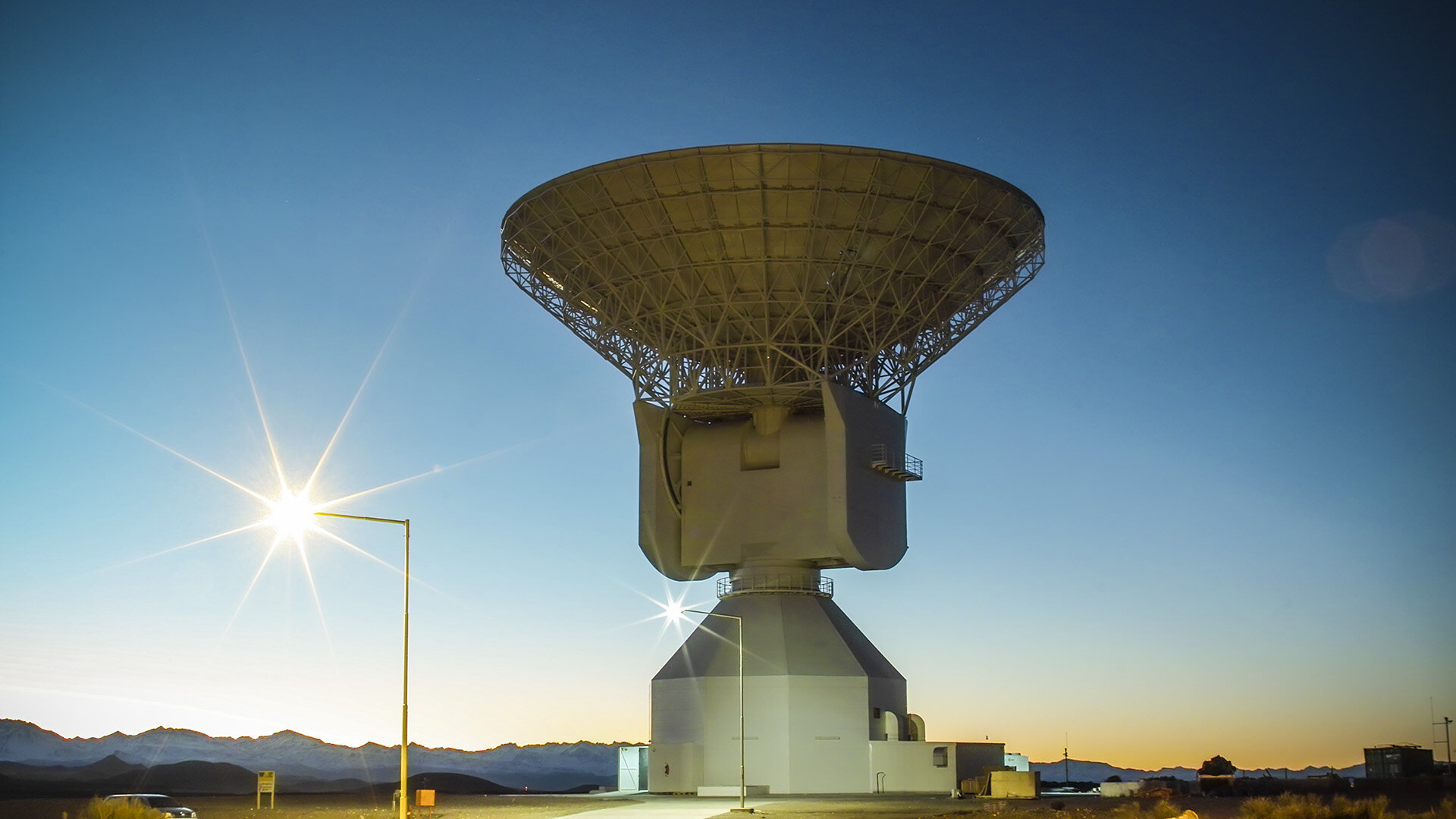
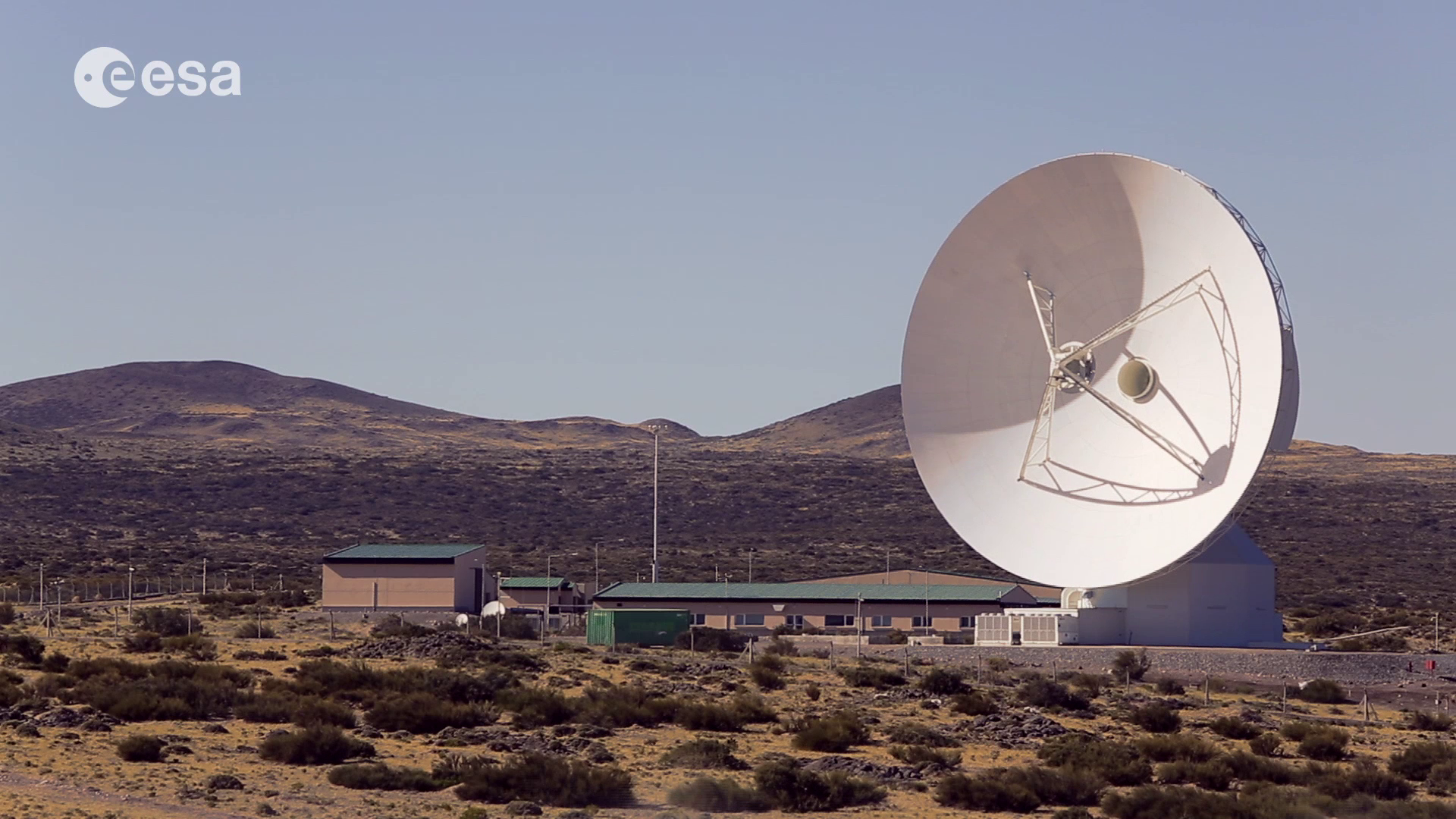
    ESA's Malargüe deep-space tracking station, Argentina, is part of the Estrack network
    Malargüe station
    14 December 2012

    A new satellite tracking station at Malargüe, Argentina, will be formally inaugurated on Tuesday, completing the trio of deep-space stations and confirming ESA as one of the world’s most technologically advanced space organisations.

    The massive radio reflector dish of ESA’s new station is the most visible indication of the impressive technology that will soon track missions voyaging hundreds of millions of kilometres deep in our Solar System.

    Forty metres tall and with a moving antenna assembly weighing 610 tonnes, the station strikes a starkly beautiful pose 1500 m up on an arid Argentinian plain, where high tech meets the high Pampas.

    In addition to tracking missions at Mars and Venus, it can also conduct radio science experiments, allowing scientists in Europe and Argentina to study the matter through which the spacecraft–ground communication signals travel.

    In exchange for hosting it for a planned 50 years, the station’s capacity will be shared with Argentina, whose CONAE national space office was an instrumental partner.

    Station technology by the numbers

    “Malargüe station receives X- and Ka-band radio signals, significantly boosting its ability to receive large amounts of data from very far away,” says ESA’s Roberto Maddè, station project manager.

    “It’s a marvellous piece of engineering, and years of design and development work at the Agency will come to fruition next week.

    We were helped a lot by our Argentinian partners in the making of the station and this collaboration shows how good is the relationship between ESA and CONAE.”

    A 20 kW amplifier enables transmission of telecommands hundreds of millions of kilometres into space, while low-noise amplifiers cooled to –258ºC enable receipt of ultra-weak signals from beyond Jupiter.

    To compare: the smartphone in your pocket transmits using a puny battery at about 125 milliwatts. This is millions of times more powerful than the signals that Malargüe can receive.

    Loading...
    From the pampas to the stars
    Access the video

    High-tech inauguration where Patagonia meets the Andes

    The inauguration ceremony will take place at the station, a short drive south of Malargüe, 1200 km west of Buenos Aires, in the presence of Julio de Vido, Argentina’s Minister of Federal Planning, Services and Public Investment.

    ESA's Malargüe deep-space tracking station, Argentina, is part of the Estrack network
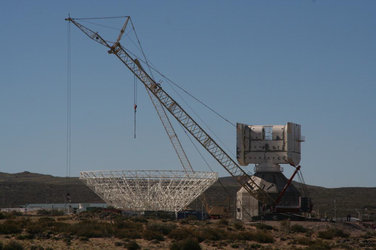
    Station construction in 2012

    Thomas Reiter, Director of Human Spaceflight and Operations, and Alvaro Giménez Cañete, Director of Science and Robotic Exploration, will represent ESA.

    “The inauguration of Malargüe marks the completion of the Agency’s trio of deep-space stations as part of the Estrack network,” says Thomas Reiter.

    “It’s important to note that long-standing technology standardisation work by ESA and our partners means that we can seamlessly exchange data with missions operated by NASA and other agencies, boosting cost efficiencies for everyone.”

    We look forward to many years of support from Malargüe station, a wonderful new support for space science of which all Europeans can be proud.

    Joining ESA’s existing stations in New Norcia, Australia, and Cebreros, Spain, Malargüe provides the final leg in ESA’s global coverage for deep-space probes.

    “Once in regular service in 2013, Malargüe will support ESA Science missions such as Mars Express, Venus Express, Rosetta and, in the future, Gaia, BepiColombo, ExoMars, Solar Orbiter, Euclid and Juice,” says Alvaro Giménez.

    “We could not have achieved this without the support of our Argentinian partners. We look forward to many years of support from Malargüe station, a wonderful new support for space science of which all Europeans can be proud.”
    Rate this

    Views

    Share

    • Currently 5 out of 5 Stars.
    • 1
    • 2
    • 3
    • 4
    • 5
    Rating: 4.96/5 (27 votes cast)

    Thank you for rating!

    You have already rated this page, you can only rate it once!

    Your rating has been changed, thanks for rating!

    5107
    facebook
    twitter
    reddit
    google plus
    digg
    tumbler
    digg
    blogger
    myspace

    Related articles

    ESA's Mars Express relays Rocknest3 images from NASA Curiosity

    Fostering Curiosity: Mars Express relays rocky images26 November 2012

    ESA's Mars Express relays Rocknest3 images from NASA Curiosity

    Fostering Curiosity: Mars Express relays rocky images26 November 2012 For the first time, ESA’s Mars orbiter has relayed scientific data from NASA’s Curiosity rover on the Red Planet’s surface. The data included detailed images of ‘Rocknest3’ and were received by ESA’s deep-space antenna in Australia.

    ESA's new 35m deep space station Malargüe, Argentina, ESTRACK

    Giant tracking station readies for operation31 October 2012

    ESA's new 35m deep space station Malargüe, Argentina, ESTRACK

    Giant tracking station readies for operation31 October 2012 One of the world’s most sophisticated satellite tracking stations is nearing inauguration in Malargüe, Argentina, 1000 km west of Buenos Aires. The new station will ensure reliable communications with missions voyaging hundreds of millions of kilometr...

    Under construction: Malargüe station.

    Malargüe tracking station powered up30 November 2011

    Under construction: Malargüe station.

    Malargüe tracking station powered up30 November 2011 On 29 November, the power plant at ESA's new 35m deep space station in Malargüe was connected to the public power network. The key construction milestone was overseen by the Governor of Argentina's Mendoza Province and the Mayor of Malargüe...

      • ESTRACK tracking stations
        • Malargüe - DSA 3
        • Malargüe images in Flickr
        • Malargüe inauguration - fact sheet for media (EN & ES)

    Connect with us

    • RSS
    • Youtube
    • Twitter
    • Flickr
    • Google Buzz
    • Subscribe
    • App Store
    • ESA Operations Twitter

    Follow ESA operations

    • LATEST ARTICLES
    • · CryoSat hits land
    • · Ariane 5 completes seven launches …
    • · Measuring skull pressure without t…
    • · Malargüe station inauguration
    • · The solar wind is swirly
    • FAQ

    • Jobs at ESA

    • Site Map

    • Contacts

    • Terms and conditions