Sophisticated ESA space weather tool under development
If a satellite encounters high-energy particles or other 'space weather' phenomena before ground controllers can take action, on-board electronics could be disrupted, scientific instruments damaged and, in very rare and extreme cases, spacecraft may even be lost. A sophisticated tool in development at ESOC promises to provide effective monitoring and forecasting for any type of mission.
But since early 2005, SEISOP (Space Environment Information System for Operations), a space-weather monitoring and forecasting tool under development at ESA's Space Operations Centre, has been successfully providing near-real-time space weather reports for Integral, ESA's gamma-ray space observatory.
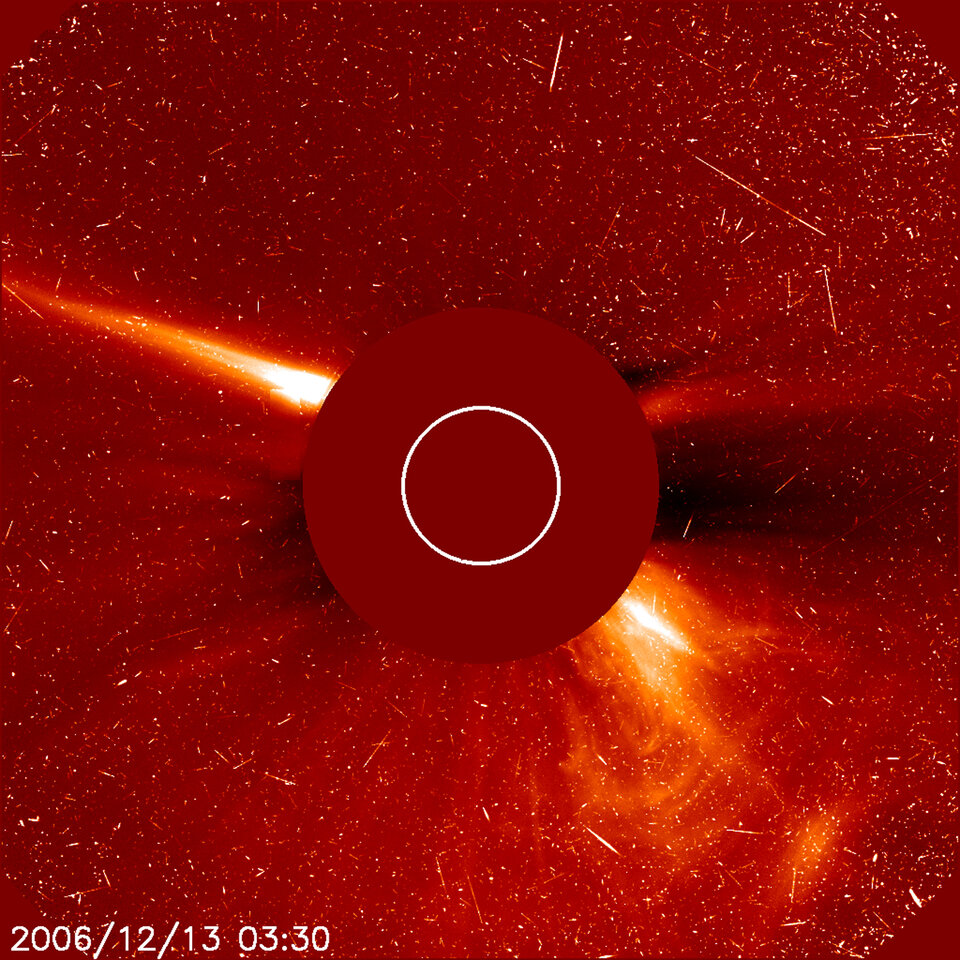
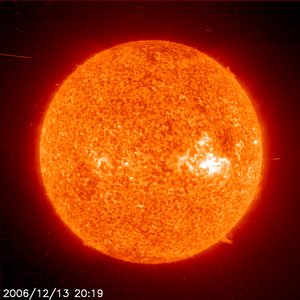
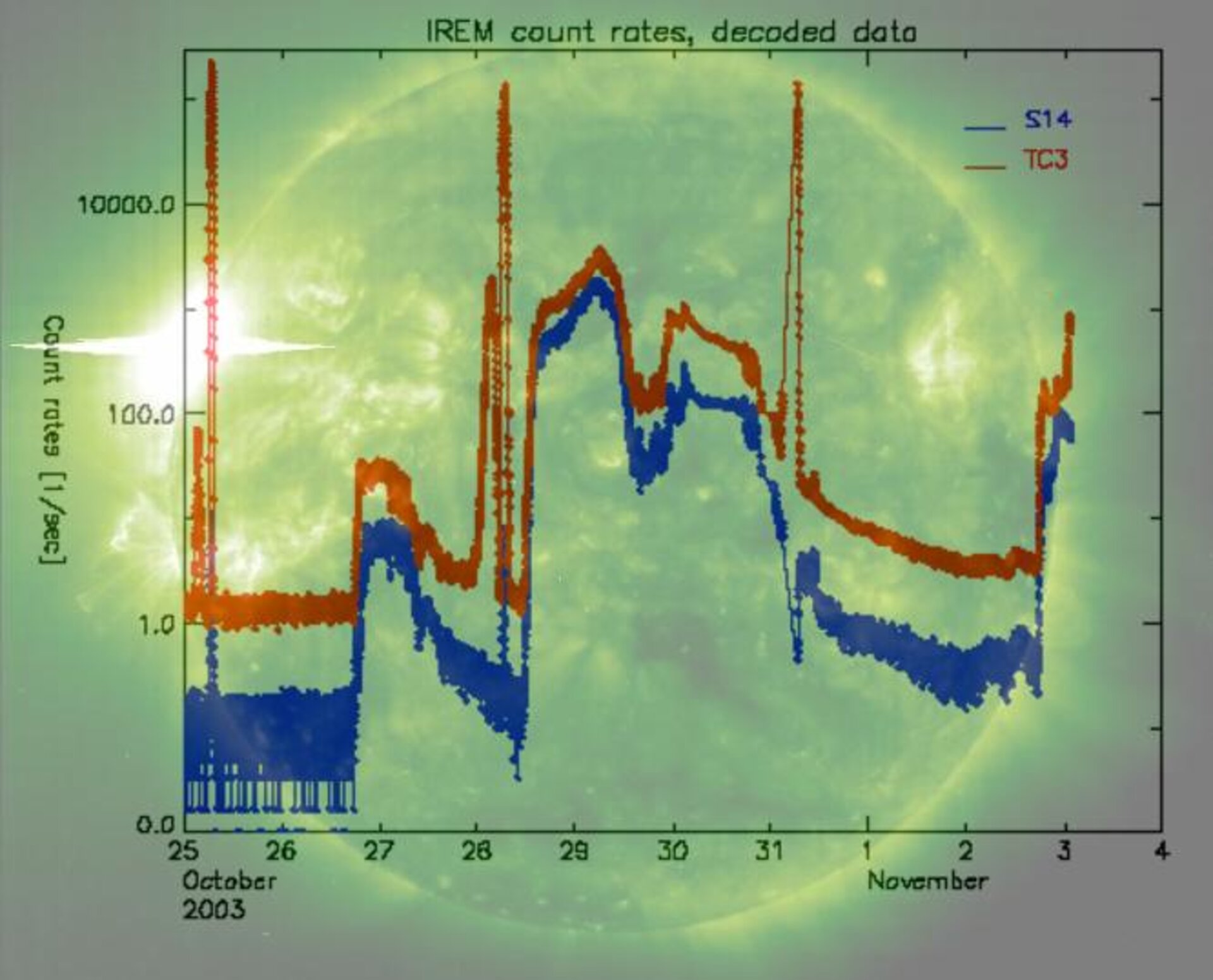
Solar activity influences the entire solar system in several ways, including generating streams of fast-moving energetic particles and sudden bursts of damaging X-rays during solar flares.
Energetic cosmic rays from elsewhere in the galaxy also penetrate into our solar system. These phenomena are some of the major sources of abnormal behaviour and aging for spacecraft and their sensitive scientific instruments.
Space Weather affects spacecraft in many ways
SEISOP can potentially provide warning services to space agencies worldwide, since space weather can affect any spacecraft.
Developed in collaboration with the ESA Space Weather Applications Pilot Project with funding from the Portuguese Task Force at ESA, SEISOP comprises a database of spacecraft health records and worldwide space weather observations, combined with sophisticated software applications that provide reporting, warning, forecasting and history tracking for the Integral Flight Control Team.
"Space weather affects spacecraft in many ways. There can be random lost data, changes in orbit dynamics and reduced quality of science data. Therefore, real-time updates are essential when deciding how long to shut down instruments during hazardous periods," says Alessandro Donati, Head of ESOC's Advanced Mission Concepts and Technologies office.
ESA, NASA, NOAA, other sources feed data to SEISOP
Some of the space weather data is gathered by ESA, NASA and NOAA (US National Oceanic & Atmospheric Administration) spacecraft, while other observations come from numerous ground-based institutes and facilities. SEISOP is a member of SWENET, the Space Weather European Network.
SEISOP enables mission controllers to predict when they should shut down instruments such as star trackers, place systems into 'safe mode' or take other action to protect sensitive on-board electronics and scientific sensors.
While some instruments are equipped to automatically shut down during adverse periods, not all are and bringing an instrument back into service after an automated shut down is time consuming. Further, it has until now been difficult to know when radiation had fallen to safe levels, once an event like a solar flare had taken place.
SEISOP to enter operational development
In 2007, SEISOP will enter operational development aimed at providing all ESA missions with the same vital space weather updates. "We expect to start work this year to create the final operational version. SEISOP can potentially provide warning services not only within ESA but also to space agencies worldwide, since space weather can affect any spacecraft," says Donati.