• → European Space Agency

      • Space for Europe
      • Space News
      • Space in Images
      • Space in Videos
    • About Us

      • Welcome to ESA
      • DG's News and Views
      • For Member State Delegations
      • Business with ESA
      • ESA Exhibitions
      • ESA Publications
      • Careers at ESA
    • Our Activities

      • Space News
      • Observing the Earth
      • Human Spaceflight
      • Launchers
      • Navigation
      • Space Science
      • Space Engineering
      • Operations
      • Technology
      • Telecommunications & Integrated Applications
    • For Public

    • For Media

    • For Educators

    • For Kids

    • ESA

    • Space Science

    • Our Universe
    • About Space Science
    • ESA's 'Cosmic Vision'
    • Science missions
    • Mission navigator
    • Target groups
    • For Media
    • For Scientists
    • For Kids
    • Multimedia
    • Science images
    • Science videos
    • Animations
    • Downloads
    • Sounds from space
    • Resources
    • Reference section
    • Services
    • FAQs
    • Glossary
    • Help
    • Portal terms of use
    • Comments
    • Follow us
    • RSS feeds
    • ESA Sci on Twitter
    • ESA Space Science Images on Flickr
    • ESA 3D on Flickr

    ESA > Our Activities > Space Science

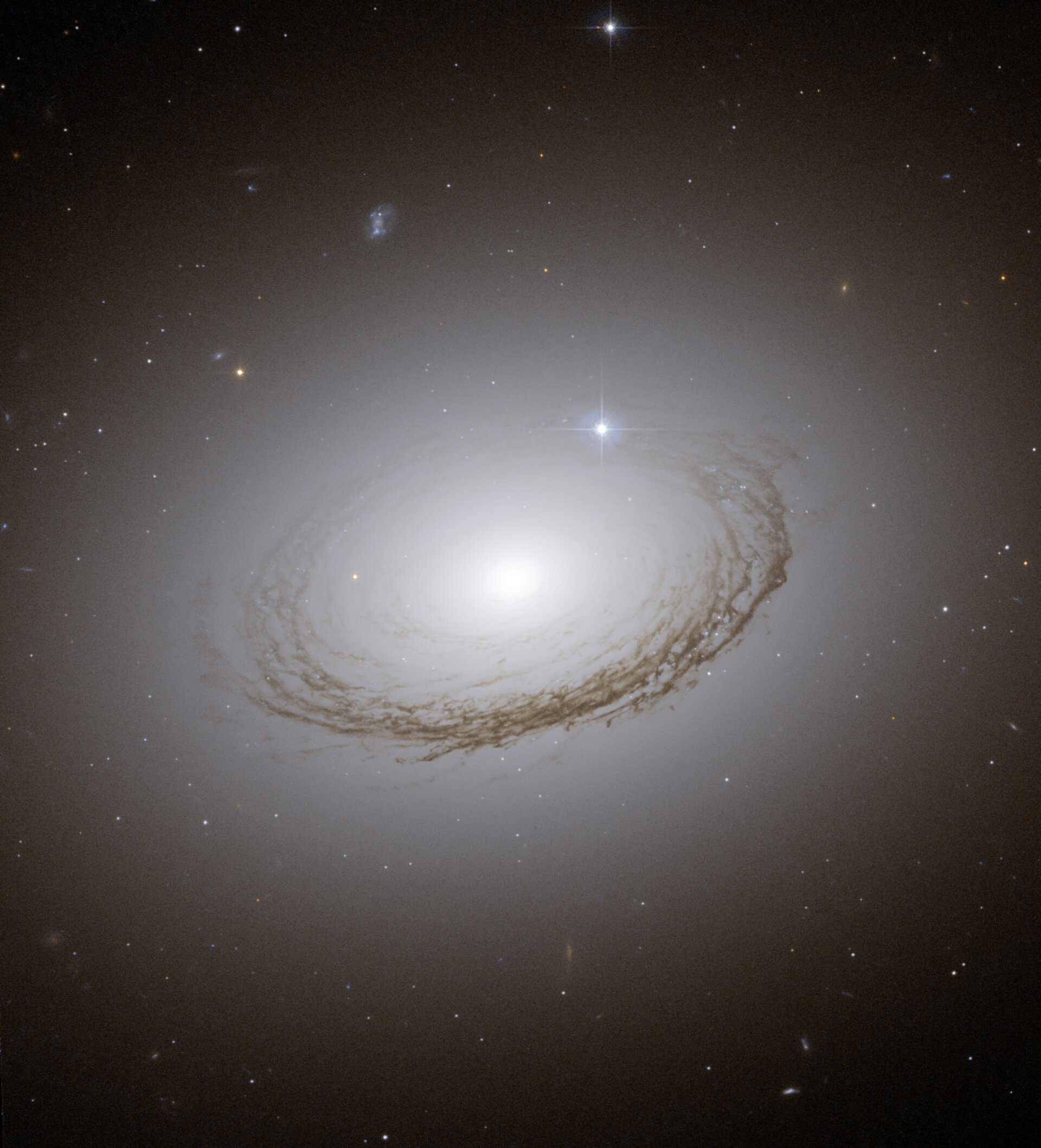
    Dramatically backlit dust in giant galaxy

    Dramatically backlit dust lanes in NGC 7049
    7 April 2009

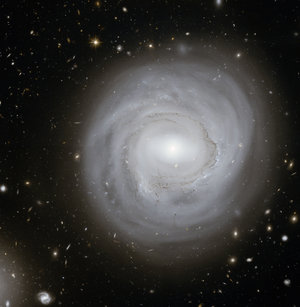
    A new Hubble image highlights striking swirling dust lanes and glittering globular clusters in oddball galaxy NGC 7049.

    The NASA/ESA Hubble Space Telescope has captured this image of NGC 7049, a mysterious looking galaxy on the border between spiral and elliptical galaxies. NGC 7049 is found in the constellation of Indus, and is the brightest of a cluster of galaxies, a so-called Brightest Cluster Galaxy (BCG).

    Typical BCGs are some of the oldest and most massive galaxies. They provide excellent opportunities for astronomers to study the elusive globular clusters lurking within.

    Wide-field view of NGC 7049
    Wide-field view of NGC 7049

    The globular clusters in NGC 7049 are seen as the sprinkling of small faint points of light in the galaxy’s halo. The halo – the ghostly region of diffuse light surrounding the galaxy – is composed of myriads of individual stars and provides a luminous background to the remarkable swirling ring of dust lanes surrounding NGC 7049's core.

    Globular clusters are very dense and compact groupings of a few hundreds of thousands of stars bound together by gravity. They contain some of the first stars to be produced in a galaxy. NGC 7049 has far fewer such clusters than other similar giant galaxies in very big, rich groups. This indicates to astronomers how the surrounding environment influenced the formation of galaxy halos in the early Universe.
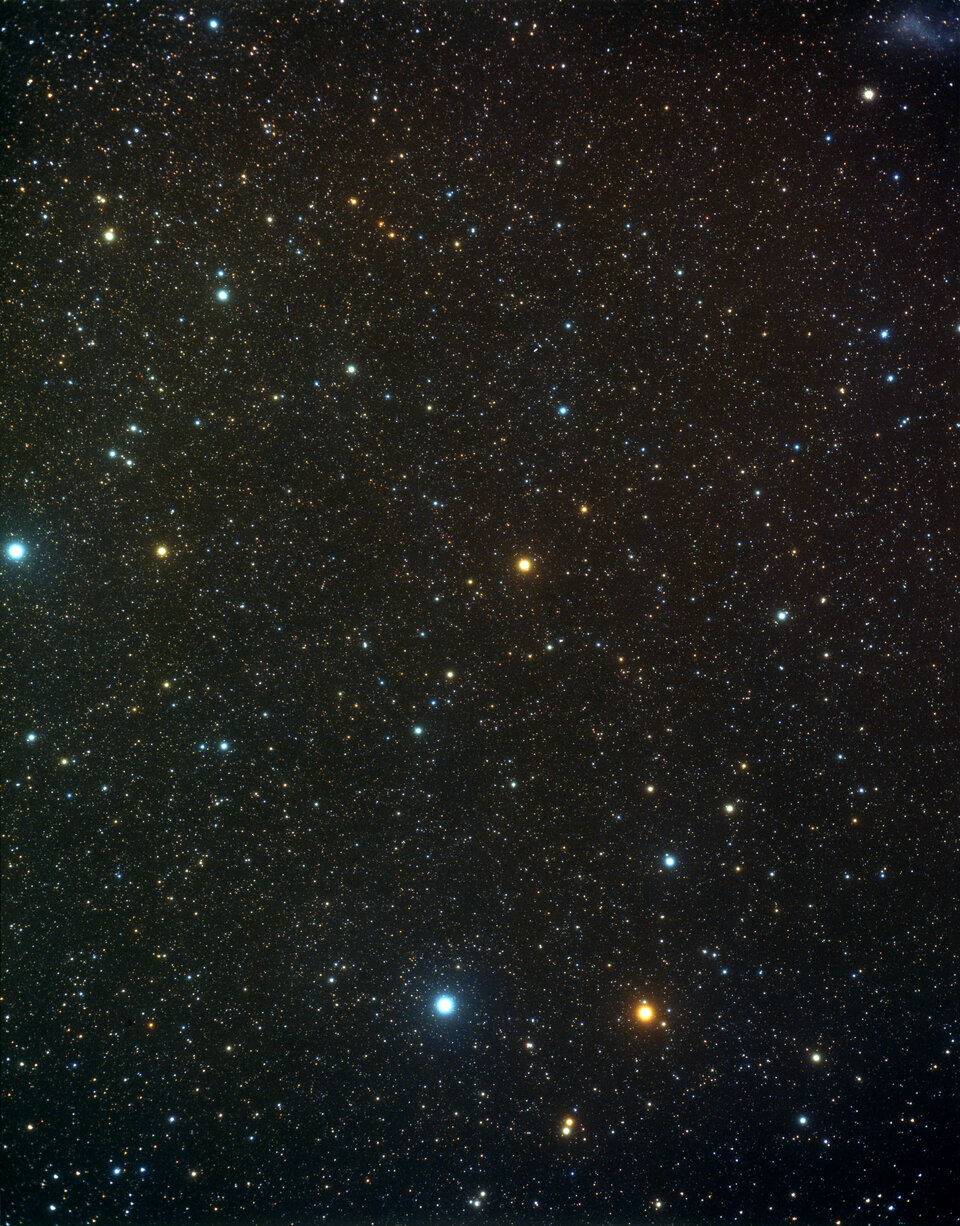

    A wide-field view of the constellation of Indus
    A wide-field view of the constellation of Indus

    The image was taken by the Advanced Camera for Surveys on Hubble, which is optimised to hunt for galaxies and galaxy clusters in the remote and ancient Universe, at a time when our cosmos was very young.

    The constellation of Indus, or the Indian, is one of the least conspicuous in the southern sky. It was named in the 16th century by Dutch astronomer Petrus Plancius from observations made by Dutch navigator Pieter Dirkszoon Keyser and Dutch explorer Frederick de Houtman.

    Notes for editors:

    The Hubble Space Telescope is a project of international cooperation between ESA and NASA.

    For more information:

    Colleen Sharkey, Hubble/ESA, Garching, Germany
    E-mail: Csharkey @ eso.org

    Rate this

    Views

    Share

    • Currently 0 out of 5 Stars.
    • 1
    • 2
    • 3
    • 4
    • 5
    Rating: 0/5 (0 votes cast)

    Thank you for rating!

    You have already rated this page, you can only rate it once!

    Your rating has been changed, thanks for rating!

    39
    Tweet
    • More about
    • Hubble overview
    • Hubblecast
    • Related articles
      • Four of Saturn's moons parade by their parent
        • Hubble provides new evidence for dark matter around small galaxies
          • Stars forced to relocate near the Southern Fish
            • Exceptionally deep view of strange galaxy
              • Hubble finds carbon dioxide on an extrasolar planet
                • Hubble captures views of mammoth stars
                  • Hubble directly observes planet orbiting star Fomalhaut
                  • In depth
                  • Hubble in depth

    Connect with us

    • RSS
    • Youtube
    • Twitter
    • Flickr
    • G+
    • Facebook
    • Livestream
    • Subscribe
    • App Store
    • ESA Science Twitter

    Follow ESA science

    • LATEST ARTICLES
    • · Proba-V opens its eyes
    • · First new Galileo satellite arrive…
    • · Next destination: space
    • · Leak repaired on International Spa…
    • · After Chelyabinsk: European expert…
    • FAQ

    • Jobs at ESA

    • Site Map

    • Contacts

    • Terms and conditions