Getting ready for Herschel
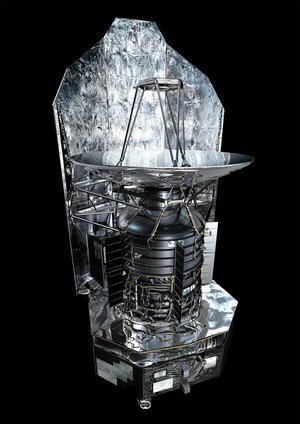
Hundreds of astronomers met at ESA’s European Science and Technology Centre (ESTEC) in the Netherlands on 20-21 February 2007 to make plans for using Herschel, ESA’s large Infrared Space Telescope due for launch in July 2008. With the largest mirror ever to be flown in space, Herschel will change forever the way astronomers see the infrared Universe.
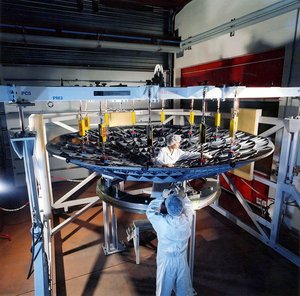
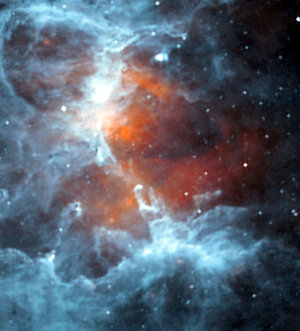
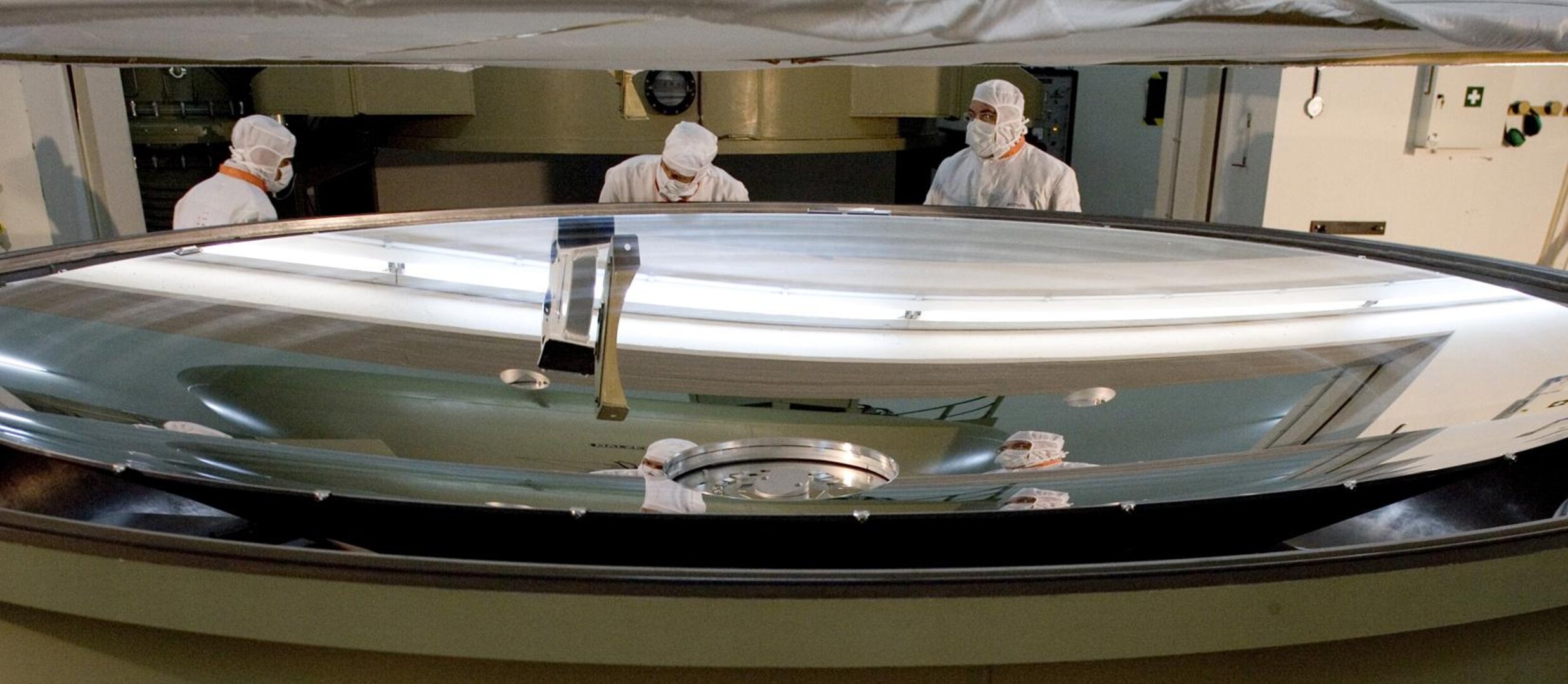
Herschel’s mirror is fully 3.5 metres in diameter: twice the size of any previous infrared telescope. It is even one and a half times larger than the optical Hubble Space Telescope. Its three high-precision instruments will detect far-infrared radiation from cool objects in the Universe. These will often be still-forming stars, surrounded by cool cocoons of dust and gas, either in star forming regions in our own galaxy or as starburst galaxies.
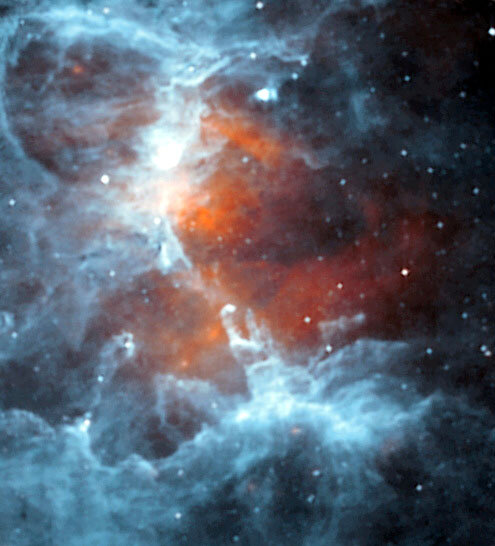
“Star formation is central to everything that Herschel will do,” says Göran Pilbratt, Herschel Project Scientist. The Herschel science programme can be split into three broad strands.
Firstly, Herschel will study the formation and evolution of galaxies when the Universe was roughly half its present age. This is the era when most of the stars in the Universe were forming.
Secondly, Herschel will target star and planet formation, and the subsequent stellar evolution. It will look at the details of how stars form, the environment from which they form and the way they enrich their environment when they die.
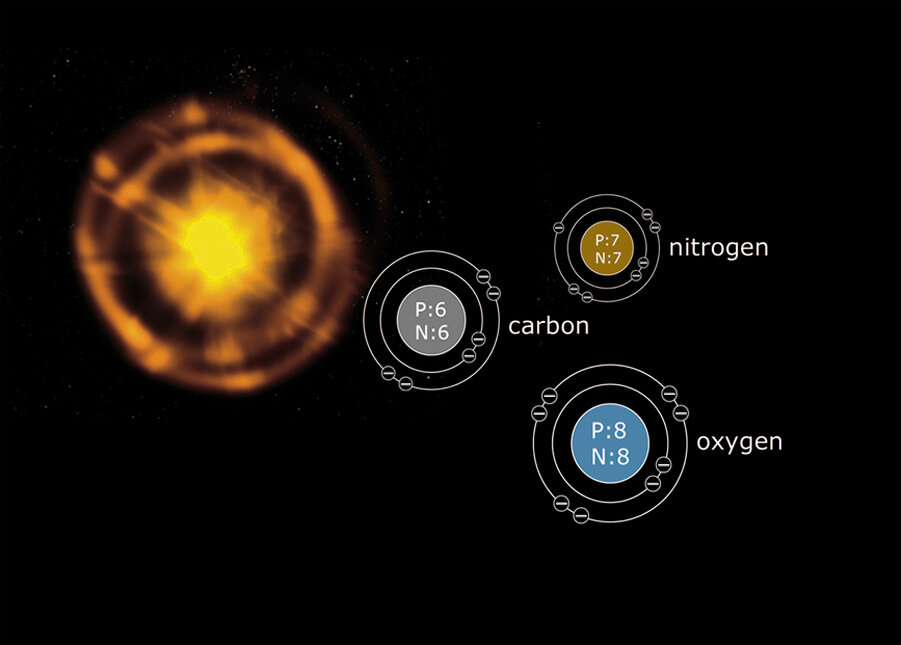
This work will allow Herschel to chart the build-up of heavy elements in the Universe. Called metals by astronomers, these chemical elements are everything heavier than hydrogen and helium. In the present day, they make up just two percent of the atoms in the Universe. Shortly after the big bang, they were non-existent. They are created in the hearts of stars and scattered into space when the stars die. “Without these elements, there would be no planets or life,” says Pilbratt, “We are literally made of stardust.”
Thirdly, Herschel will look at the primitive bodies in our Solar System. These are the comets and outer solar system bodies. Together they represent fragments left over from the formation of the planets and may hold important clues as to how the Solar System formed.
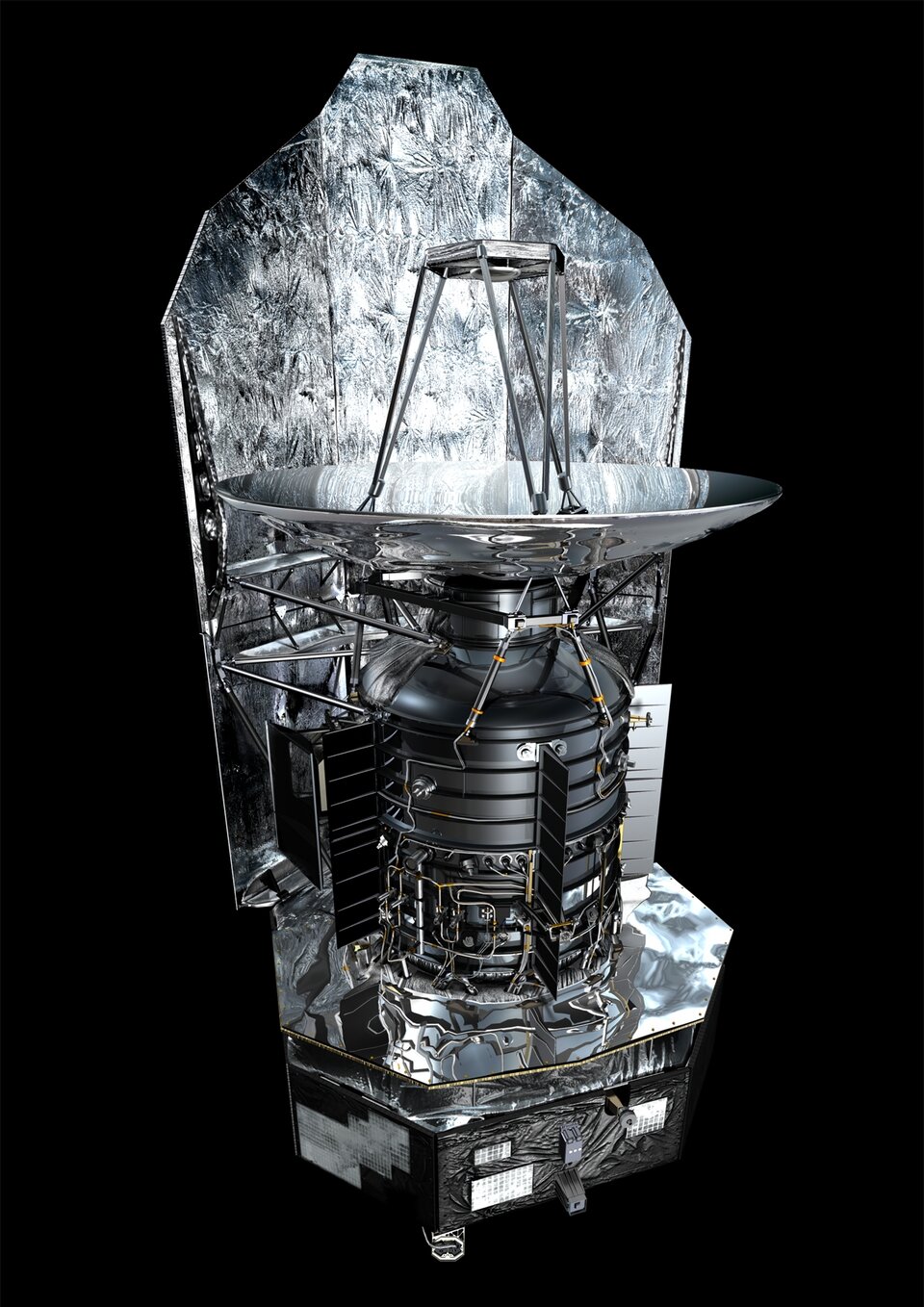
Herschel will have a scientific lifetime of three years. After that, the liquid helium that cools the spacecraft to its working temperature will be depleted and the spacecraft will become too warm. It is therefore essential to achieve the very best use of the spacecraft’s working lifetime.
An Announcement of Opportunity was issued on 1 February asking the scientific community for ‘Key Programmes’ to be proposed. These must satisfy three requirements: they must exploit Herschel’s unique capabilities to address important scientific issues in a comprehensive manner; they must require a large amount of observing time to be used in a uniform and coherent fashion; and they must produce datasets of high archival value.
At the two-day workshop at ESTEC, the scientists in the Herschel Science Centre who are preparing Herschel’s scientific operations met the space telescope’s potential users to help them prepare for the observatory. The workshop contained poster sessions, in which astronomers presented the observations that they would like to make with Herschel. “People were extremely open about what they wanted to do with Herschel. There was a lot of discussion,” says Pilbratt.
The Key Programmes will allow Herschel to build a detailed archive of infrared observations, tailored to the needs of the astronomical community. This means that Herschel will provide a legacy to astronomers that extends for many years after the observational phase of the mission is over.
For more information
Göran Pilbratt, ESA Herschel Project Scientist
Email: gpilbratt @ rssd.esa.int