• → European Space Agency

      • Space for Europe
      • Space News
      • Space in Images
      • Space in Videos
    • About Us

      • Welcome to ESA
      • DG's News and Views
      • For Member State Delegations
      • Business with ESA
      • ESA Exhibitions
      • ESA Publications
      • Careers at ESA
    • Our Activities

      • Space News
      • Observing the Earth
      • Human Spaceflight
      • Launchers
      • Navigation
      • Space Science
      • Space Engineering
      • Operations
      • Technology
      • Telecommunications & Integrated Applications
    • For Public

    • For Media

    • For Educators

    • For Kids

    • ESA

    • ESA Science

    • Mars Express

    • Europe goes to Mars

      • Europe reclaims a stake in Mars exploration
      • Space age transforms our knowledge about Mars
    • About Mars Express

      • Mars Express mission facts
      • Mars Express instruments
      • The mission
      • The spacecraft
      • The launcher
    • About Mars

      • Geography of Mars
      • Water on early Mars?
      • Signatures of life
      • Facts about Mars
    • Meet the team

      • International collaboration
      • Project Manager
      • Project Scientist
      • Mars Lead Scientist
      • Principal Investigators
      • Operations
      • Industry
    • Multimedia
    • VideoTalk
    • Mars Express images
    • Mars Express videos
    • HRSC videos
    • Animation in 11 languages
    • Download wallpapers
    • Download screensavers
    • 3D Flash 'model'
    • Make a model
    • Services
    • Comments

    ESA > Our Activities > Space Science > Mars Express

    Mountains and buried ice on Mars

    Phlegra Montes on Mars
    2 December 2011

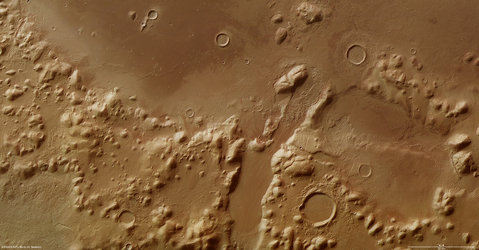
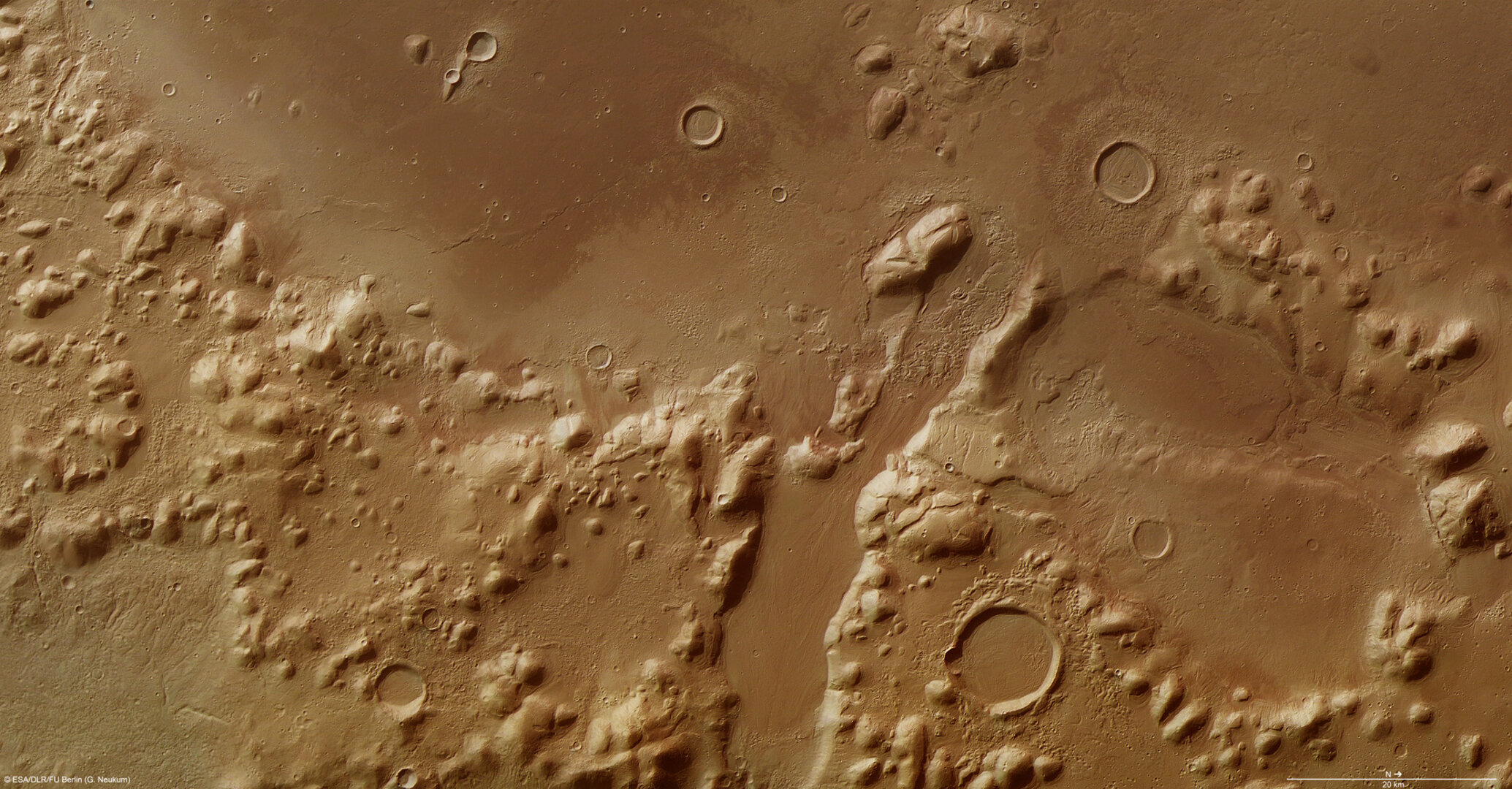
    New images from Mars Express show the Phlegra Montes mountain range, in a region where radar probing indicates large volumes of water ice are hiding below. This could be a source of water for future astronauts.

    Phlegra Montes is a range of gently curving mountains and ridges on Mars. It extends from the northeastern portion of the Elysium volcanic province to the northern lowlands, spanning latitudes from roughly 30°N to 50°N.

    The mountains themselves are probably not volcanic in origin, but have been raised by ancient tectonic forces that squeezed different regions of the surface together.

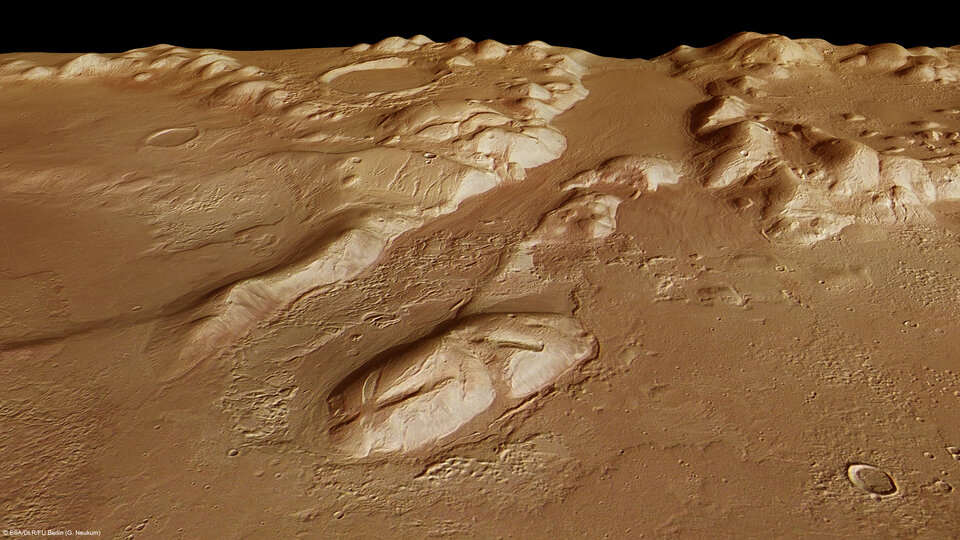
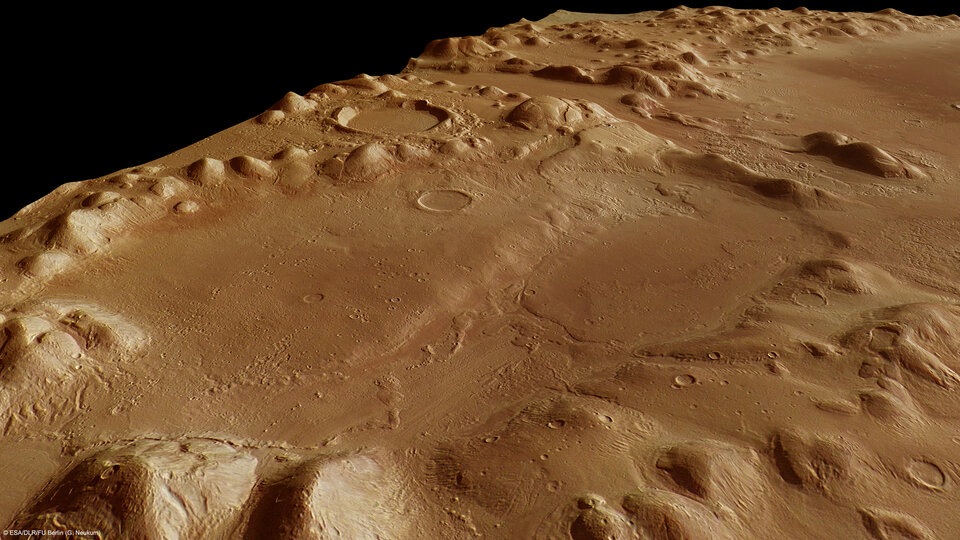
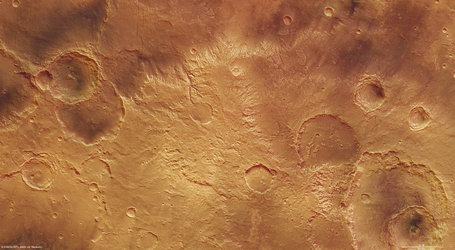
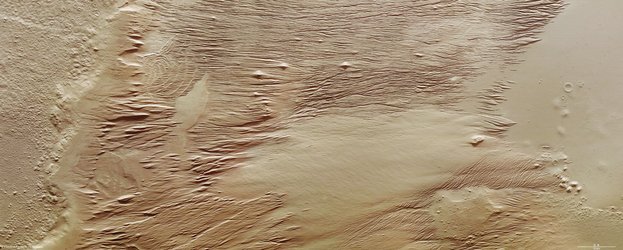
    New images from the high-resolution stereo camera on ESA’s Mars Express orbiter allow a closer inspection and show that almost every mountain is surrounded by ‘lobate debris aprons’ – curved features typically observed around plateaus and mountains at these latitudes.

    Previous studies have shown that this material appears to have moved down the mountain slopes over time, and looks similar to the debris found covering glaciers here on Earth.

    The suggestion then is that there may be glaciers buried just below the surface in this region.

    Phlegra Montes in context

    This interpretation is backed up by the radar on NASA’s Mars Reconnaissance Orbiter looking beneath the martian surface.

    The radar shows that lobate debris aprons are indeed strongly associated with the presence of water ice, perhaps only 20 m down.

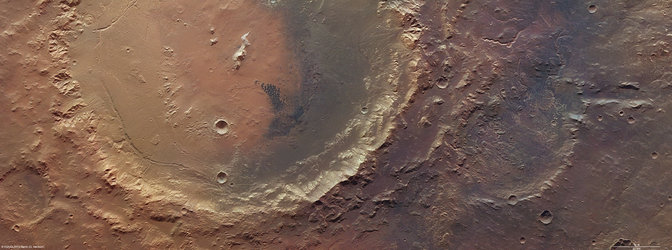
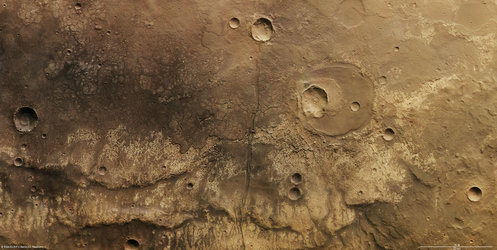
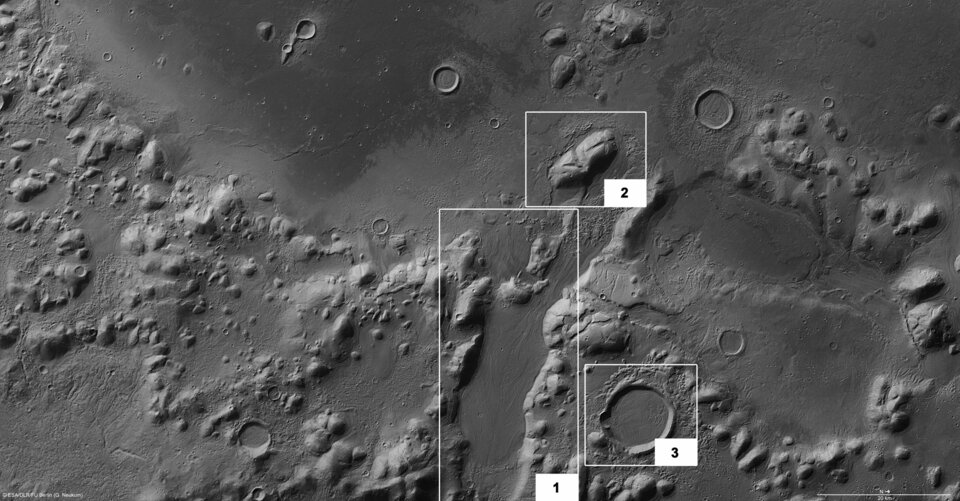
    Further evidence for relatively recent glaciation can be seen inside impact craters in the region. Series of ridges are thought to have developed when the ancient craters filled with snow. Over time, the snow compacted to form glaciers which then sculpted the crater floors.

    There are yet more glacial flow patterns visible in the valley at the centre of the image.

    It is believed that mid-latitude glaciers developed at various times in the last several hundred million years, when the polar axis of Mars was significantly different from today, leading to quite different climatic conditions.

    All of this points to plentiful water ice just below the surface in Phlegra Montes. If this proves to be true, such ice fields could provide future astronauts with a source of water on the Red Planet.

    Phlegra Montes
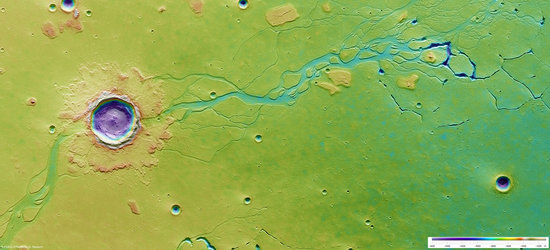
    Phlegra Montes in elevation
    Phlegra Montes in high resolution
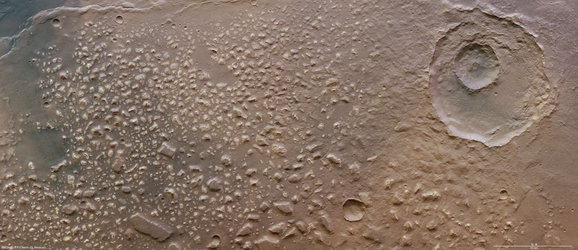
    Phlegra Montes in perspective
    Phlegra Montes in perspective
    Phlegra Montes in 3D

    Rate this

    Views

    Share

    • Currently 0 out of 5 Stars.
    • 1
    • 2
    • 3
    • 4
    • 5
    Rating: 0/5 (0 votes cast)

    Thank you for rating!

    You have already rated this page, you can only rate it once!

    Your rating has been changed, thanks for rating!

    282
    Tweet
    • Mars Express on YouTube
    • Traces of Martian life
    • Related articles
      • The pit-chains of Mars – a possible place for life?
        • ESA's Mars Express radar gives strong evidence for former Mars ocean
          • Mars Express reveals wind-blown deposits on Mars
            • Mountains and buried ice on Mars
              • Battered Tharsis Tholus volcano on Mars
                • Mars Express observes clusters of recent craters in Ares Vallis
                  • Rare martian lake delta spotted by Mars Express
                    • Mars’ northern polar regions in transition
                      • Phobos slips past Jupiter
                        • Springtime at Mars’ south pole
                          • Mars Express sees deep fractures on Mars
                            • Neighbouring volcanoes on Mars
                              • The scars of impacts on Mars
                                • Mars Express puts craters on a pedestal
                                  • Mars Express close flybys of martian moon Phobos
                                    • Wind and water have shaped Schiaparelli on Mars
                                      • Light and dark in the Phoenix Lake
                                        • Mars: how low can you go?
                                          • Mars’s mysterious elongated crater
                                            • Rocky mounds and a plateau on Mars
                                              • Wet era on early Mars was global
                                                • Volcanic ash in Meridiani Planum
                                                  • Craters young and old in Sirenum Fossae
                                                    • Craters, lava flows and tectonic features near Ma'adim Vallis
                                                      • Craters and channels in Hephaestus Fossae
                                                        • Chaotic terrain in Ariadnes Colles
                                                          • Ice-covered martian North Pole
                                                            • The Euminedes Dorsum mountains on Mars
                                                              • Lava deposits in Mangala Fossae
                                                              • Related links
                                                              • High Resolution Stereo Camera
                                                                • Behind the lens...
                                                                  • Frequently asked questions
                                                                  • For specialists
                                                                  • ESA Planetary Science archive (PSA)
                                                                  • NASA Planetary Data System
                                                                  • HRSC data viewer

    Connect with us

    • RSS
    • Youtube
    • Twitter
    • Flickr
    • G+
    • Facebook
    • Livestream
    • Subscribe
    • App Store
    • LATEST ARTICLES
    • · ESA astronaut Timothy Peake set fo…
    • · Space drives e-mobility
    • · Proba-V opens its eyes
    • · First new Galileo satellite arrive…
    • · Next destination: space
    • FAQ

    • Jobs at ESA

    • Site Map

    • Contacts

    • Terms and conditions