• → European Space Agency

      • Space for Europe
      • Space News
      • Space in Images
      • Space in Videos
    • About Us

      • Welcome to ESA
      • DG's News and Views
      • For Member State Delegations
      • Business with ESA
      • ESA Exhibitions
      • ESA Publications
      • Careers at ESA
    • Our Activities

      • Space News
      • Observing the Earth
      • Human Spaceflight
      • Launchers
      • Navigation
      • Space Science
      • Space Engineering
      • Operations
      • Technology
      • Telecommunications & Integrated Applications
    • For Public

    • For Media

    • For Educators

    • For Kids

    • ESA

    • Rosetta

    • ESA Science

    • About Rosetta

      • Europe's comet chaser
      • Why 'Rosetta'?
    • About the spacecraft

      • The Rosetta orbiter
      • Orbiter: Instruments
      • The Rosetta lander
      • Lander: Instruments
    • About the journey

      • The long trek
      • Debris of the Solar System: Asteroids
      • Asteroid (2867) Steins: a portrait
      • Life and survival in deep space
      • Long-distance communication
      • The Rosetta ground segment
    • About the arrival

      • Comets - an introduction
      • Comet 67P/Churyumov- Gerasimenko
      • Comet rendezvous
      • Giotto - ESA's first comet mission
    • Meet the team
    • Mission Manager
    • Project Scientist
    • Multimedia
    • VideoTalk
    • 3D Flash 'model'
    • Rosetta images
    • Rosetta videos
    • Rosetta Animations
    • Rosetta wallpaper
    • Life of a comet
    • Services
    • Frequently asked questions
    • Comments

    ESA > Our Activities > Space Science > Rosetta

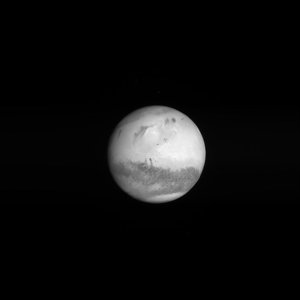
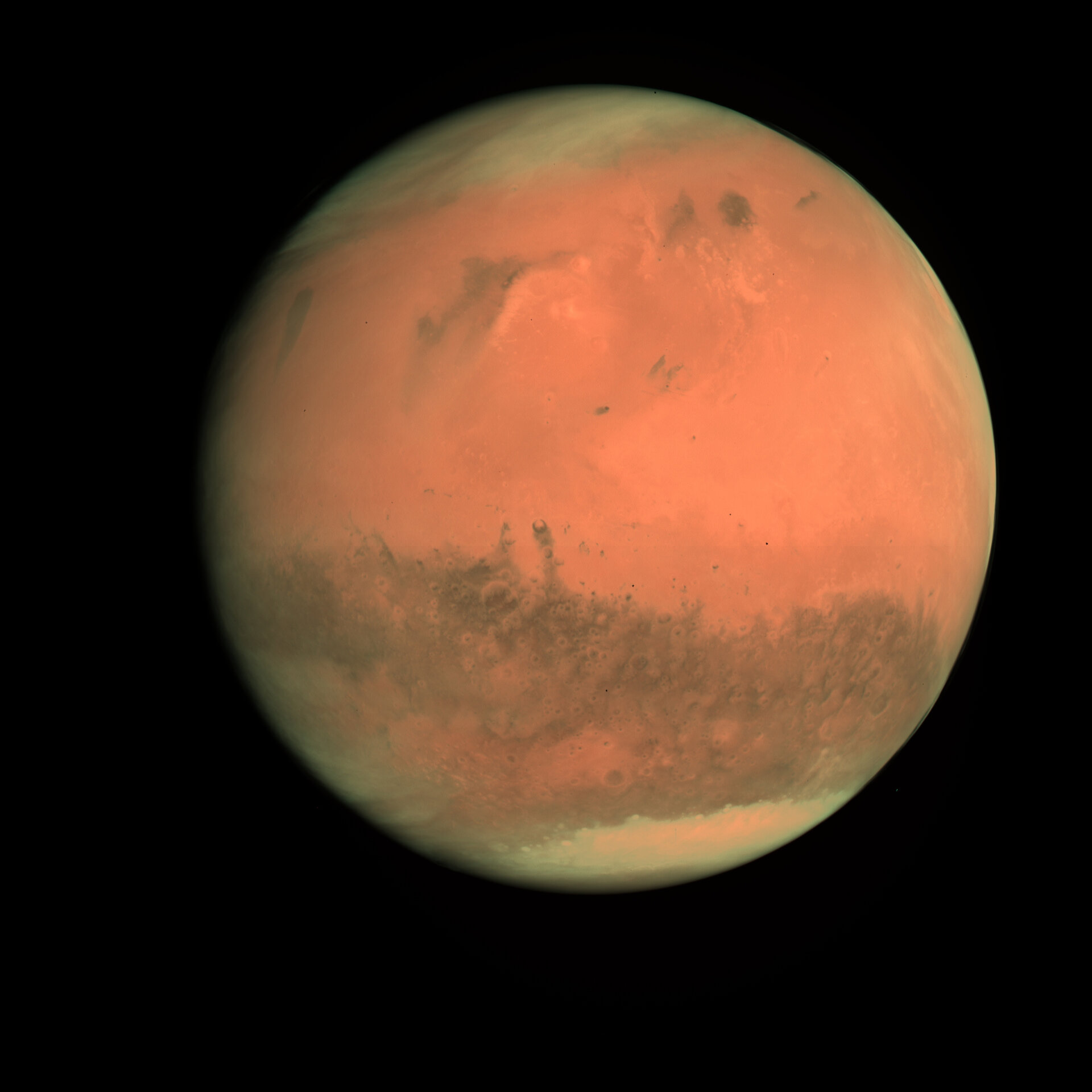
    Image of Mars seen by OSIRIS

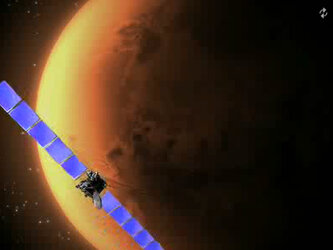
    Rosetta successfully swings-by Mars – next target: Earth

    25 February 2007

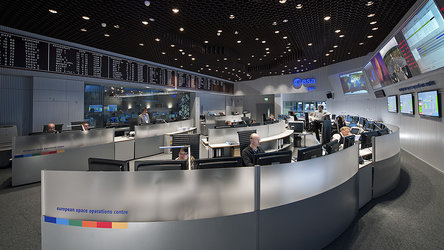
    At 03:57 CET today, mission controllers at ESOC, ESA's Space Operations Centre in Germany, confirmed Rosetta's successful swingby of Mars, a key milestone in the 7.1-thousand-million km journey of this unique spacecraft to its target comet in 2014.

    The gravitational energy of Mars helped Rosetta change direction, while the spacecraft was decelerated with respect to the Sun by an estimated 7887 km/hour. The spacecraft is now on the correct track towards Earth - its next destination planet whose gravitational energy Rosetta will exploit in November this year to gain acceleration and continue on its trek.

    Presented in this article is one two-colour composite image of Mars collected by Rosetta's Optical, Spectroscopic, and Infrared Remote Imaging System (OSIRIS) before closest approach to the planet, and before the orbiter instruments where switched off for the spacecraft's Mars eclipse period.

    The OSIRIS narrow-angle camera took this image at 19:28 CET, 24 February. It shows Mars from a distance of 240 000 kms and at a resolution of about 5 kms per pixel. The greenish regions are clouds above the Red Planet's surface.

    New images are expected to be available online after 13:00 today.

    For more information

    Gerhard Schwehm
    ESA Rosetta Mission Manager
    Email: gerhard.schwehm @ esa.int

    ESA/ESOC Communication Office
    Darmstadt, Germany
    Tel. +49-6151-90-2696
    Rate this

    Views

    Share

    • Currently 0 out of 5 Stars.
    • 1
    • 2
    • 3
    • 4
    • 5
    Rating: 0/5 (0 votes cast)

    Thank you for rating!

    You have already rated this page, you can only rate it once!

    Your rating has been changed, thanks for rating!

    102
    Tweet
    • ESA's comet chaser: Rosetta
    • Operations
    • More news
      • Rosetta swingby update - 03:13 CET 25 February
        • Rosetta swingby update - 22:00 CET 24 February
          • Timeline: Mars swingby at 36 000 km/hr
          • ESApod (video) "Rosetta in critical Mars swingby"
          • ESApod (video) "Rosetta swingby"
            • Rosetta correctly lined up for critical Mars swingby
              • ESOC swings into action for Rosetta swingby
                • ESA's spacecraft managers: the 'Right Stuff'
                • More information
                • ESA Tracking Stations
                • New Norcia location

    Connect with us

    • RSS
    • Youtube
    • Twitter
    • Flickr
    • G+
    • Facebook
    • Livestream
    • Subscribe
    • App Store
    • LATEST ARTICLES
    • · Proba-V opens its eyes
    • · First new Galileo satellite arrive…
    • · Next destination: space
    • · Leak repaired on International Spa…
    • · After Chelyabinsk: European expert…
    • FAQ

    • Jobs at ESA

    • Site Map

    • Contacts

    • Terms and conditions