Technology of LISA Pathfinder: Staying steady in space
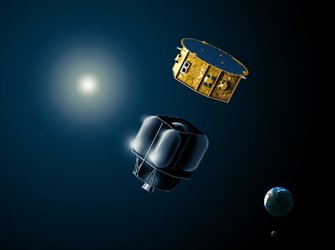
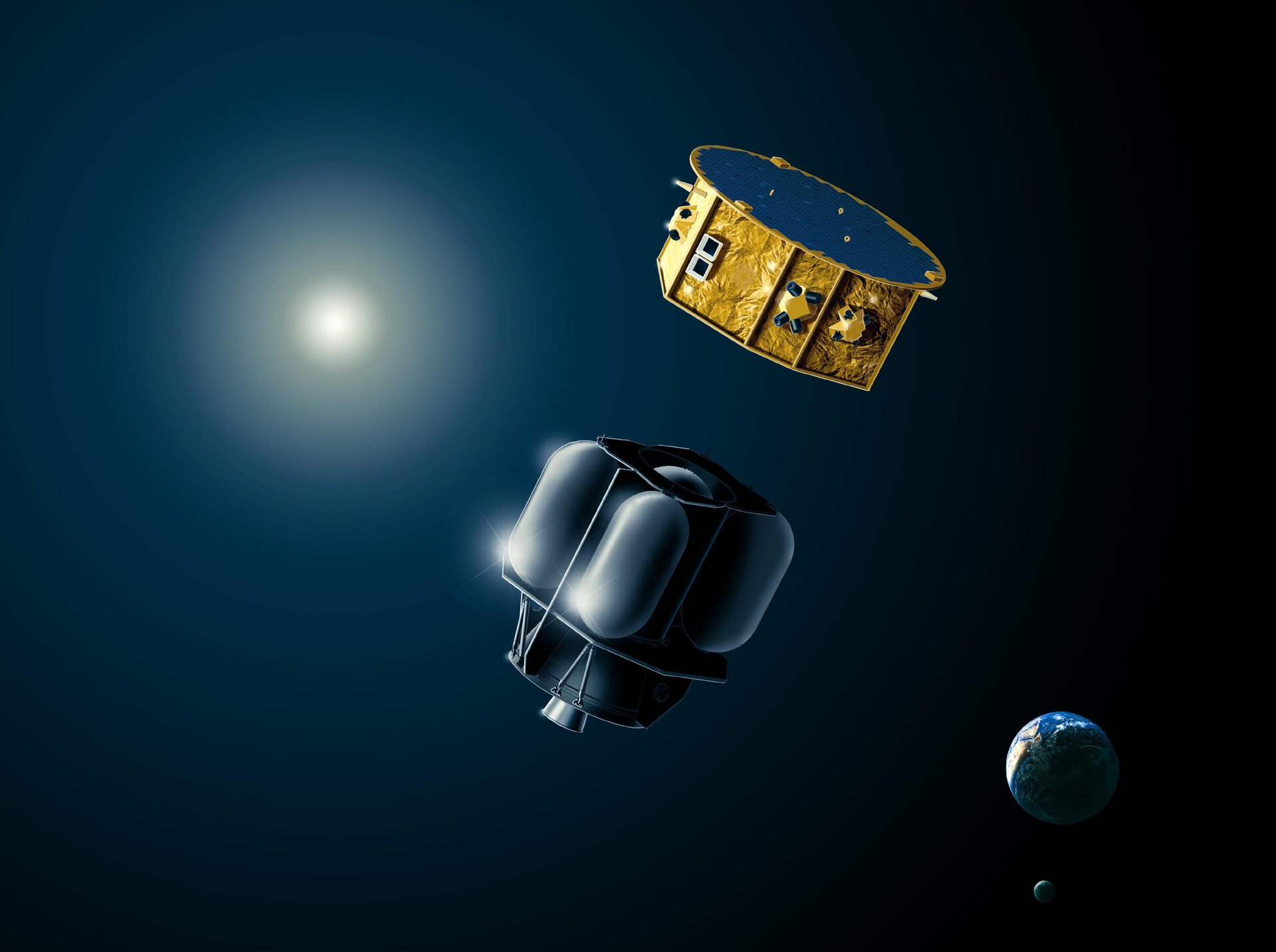
A dedicated propulsion module will deliver LISA Pathfinder's payload, the ‘LISA Technology Package’ (LTP), to L1 before being jettisoned, its job done.
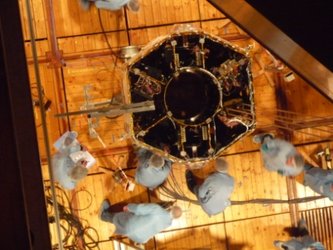
Alone in deep space, housed within an octagonal Science Module, the LTP will operate with minimal moving parts and dedicated control loops to dampen any momentary accelerations. In particular, noise will be minimised around the mission’s key frequency domains of interest, between one to 30 millihertz.
Its structure is designed to have as symmetrical a mass distribution as possible, with the test masses placed at the spacecraft’s very centre, to minimise imbalances in its own gravitational field.
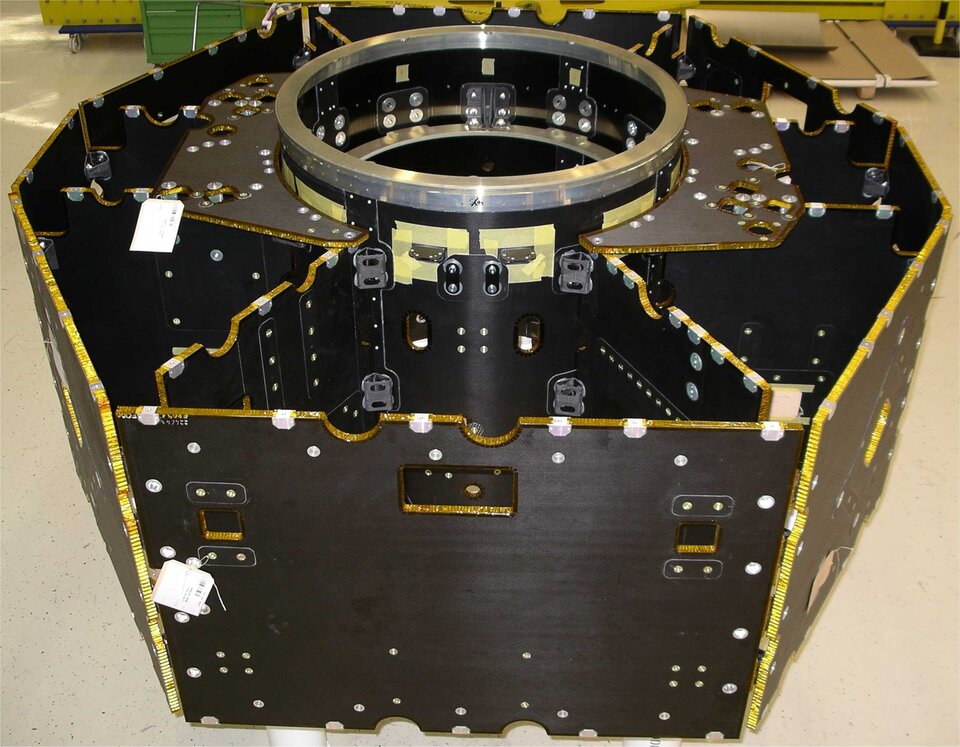
Structural warping due to temperature shifts would be just as undesirable, so the LTP will be carefully shrouded with multi-layer insulation, while its optical measurement bench has been constructed of a special glass ceramic called Zerodur, essentially immune to temperature-driven changes.
To fix these segments together, glue was set aside in favour of direct chemical fusion to avoid any risk that temperature shifts might cause adhesive layers to expand.
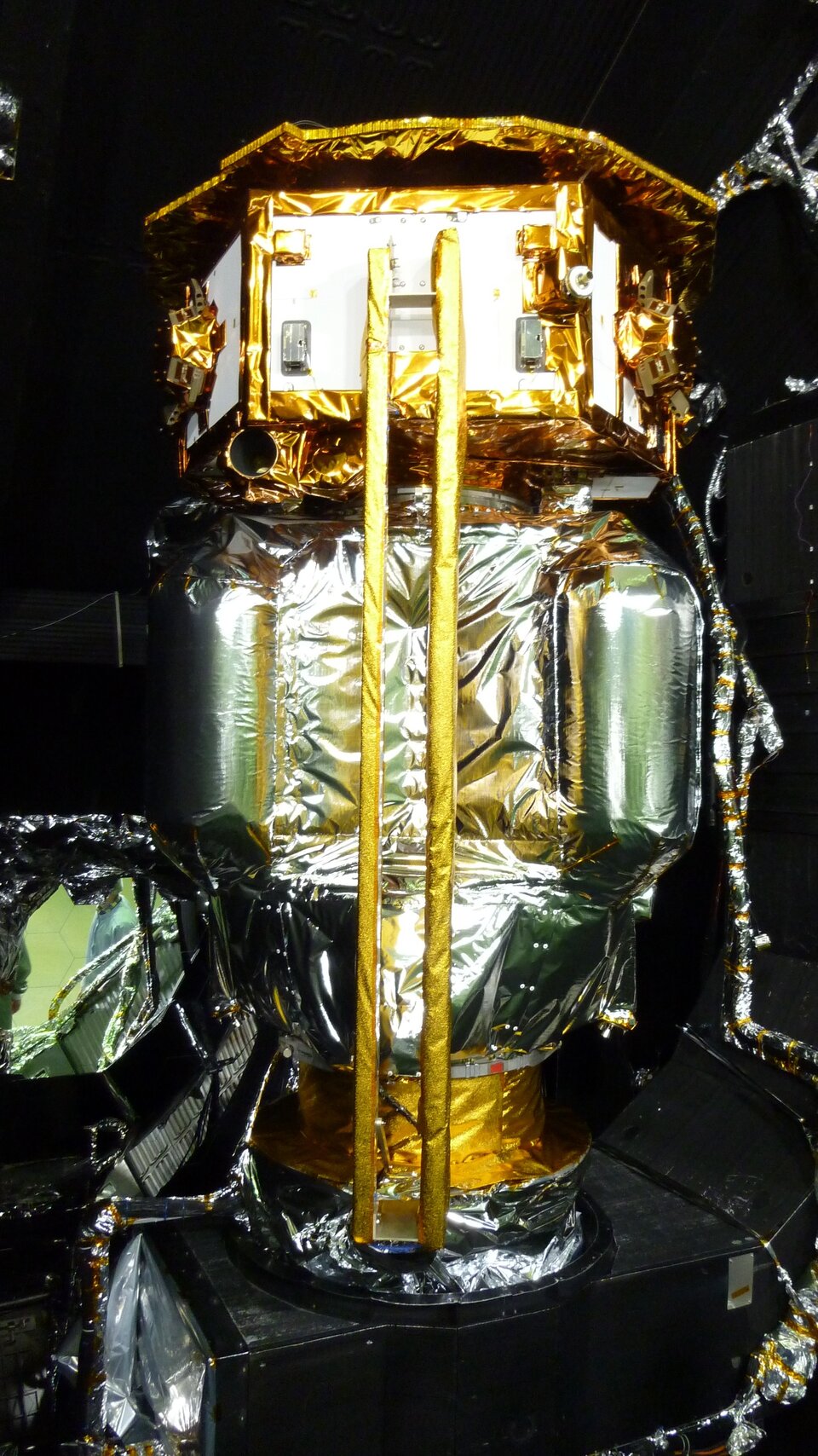
Interplanetary space makes an excellent vacuum, but LISA Pathfinder’s immediate confines could still be contaminated by ‘outgassing’. Just like the distinctive smell of a new car, new spacecraft components give off vapours over time.
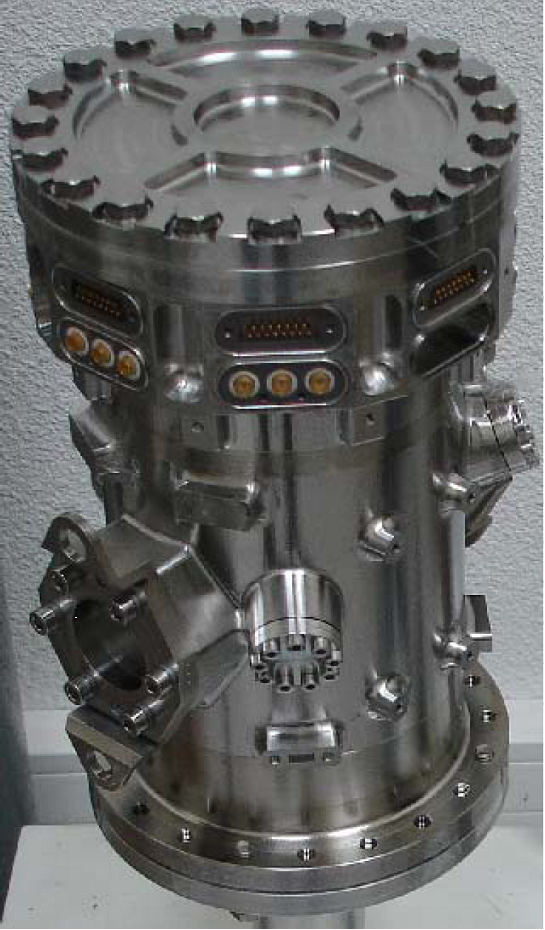
Such a build-up might well affect the way the test masses move, so the LTP’s test mass chambers will be kept in a high state of vacuum within their enclosures by an active pumping system.
Keeping track of the test masses
Of course, maintaining these chambers in such a pristine state will all be for nothing if the test masses cannot survive their initial trip to orbit. Estimated to face transitory forces of around 50 g during launch, each of the masses will be restrained by an eight-fingered Caging Mechanism.
The aim is to avoid any slip which could damage the surface of the test mass, with consequences for the experiment. The fingers and test masses will therefore need to be accurately shaped to just a few micrometres – a size smaller than many bacteria.
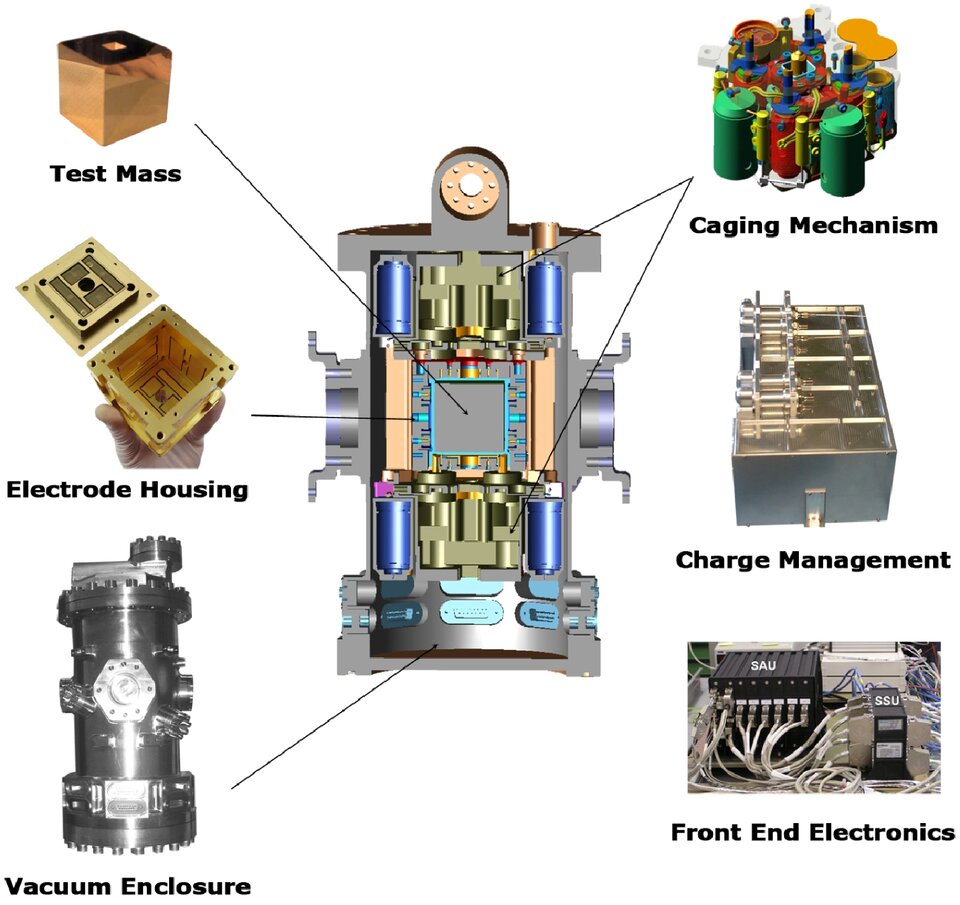
Finally released to float free at L1, the position of the test masses can be manipulated electrostatically to avoid damaging collisions with the test chamber walls.
The pair will be tracked continuously using a laser interferometer, with even the slightest distance change between them measured down to a few picometres (a trillionth of a metre, smaller than a single atom). These measurements will also guide the corresponding motion of the spacecraft around them, keeping the masses centred within their containers.
Precision propulsion to overcome push of sunshine
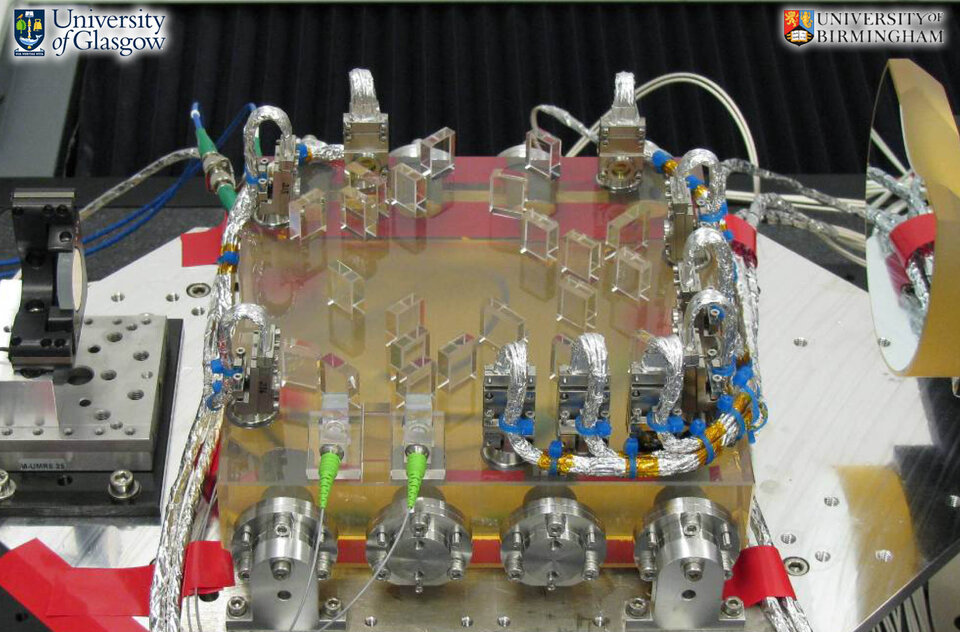
Extraordinary demands will therefore be placed onto LISA Pathfinder’s propulsion system. To prevent any gradual drift in position relative to its internal test masses, the spacecraft must actually be capable of pushing back against the persistent force of sunlight itself.
The concept is not entirely new – ESA’s GOCE gravity-measuring mission includes a drag-free attitude control system to compensate continuously for slight atmospheric drag – but LISA Pathfinder is taking it to the extreme, aiming for directional control down to a billionth of a metre.
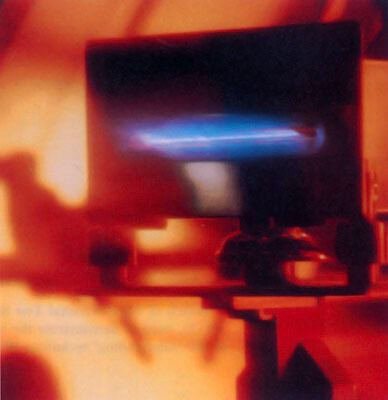
This will be achieved with a combination of ESA and NASA propulsion systems. Europe is contributing the smallest and most precisely controllable engine ever built for space, called the Field Emission Electric Propulsion (FEEP) thruster. Its output is measured in micronewtons, a million times lower than standard spacecraft thrusters, producing an average thrust equivalent to the force of a single falling hair.
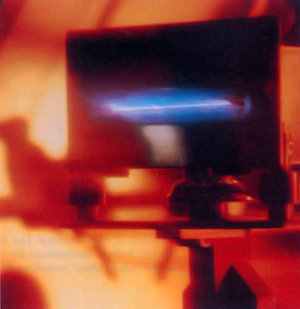
Like other ion engines, the 10-cm FEEP employs an electric field to accelerate its fuel – a small reservoir of liquid caesium, flowing through a razor-sharp slit just a micron thick – 50 times narrower than a human hair.
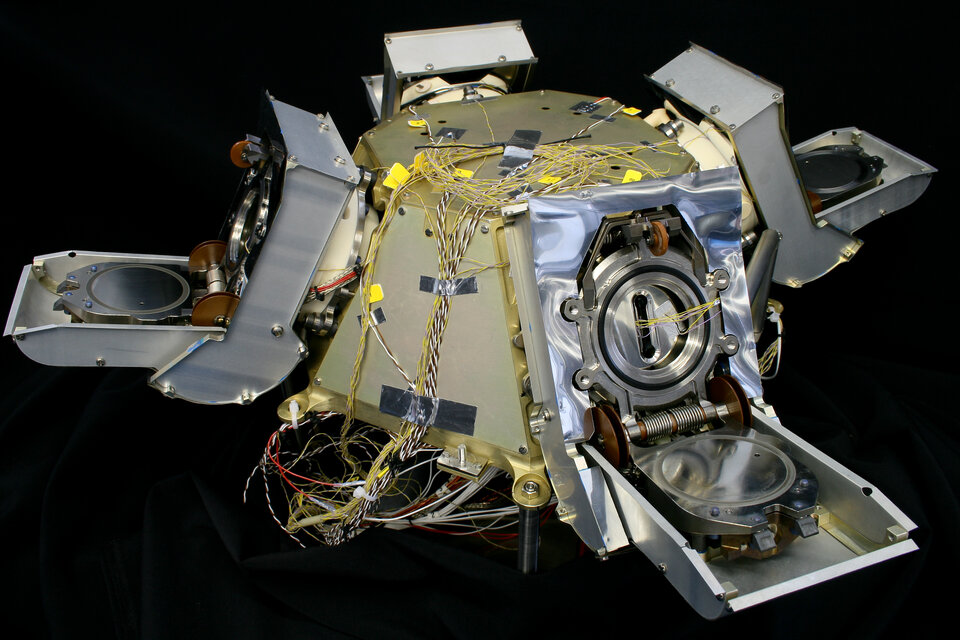
A total of three sets of four FEEP thrusters will be clustered on LISA Pathfinder’s hull, along with NASA’s ‘Disturbance Reduction System’. Used alternately with the FEEP thrusters, the US system relies on ‘colloidal’ thrusters – ejecting voltage-controlled droplets – to deliver close to the same accuracy as the ESA design.
While most of LISA Pathfinder’s technology experiments focus solely on LISA, the successful demonstration of its attitude control design could open up a host of new applications. Precision formation flying could revolutionise space-based astronomy and Earth observation, with multiple satellites working together to yield imagery equivalent to a single giant telescope.
Achieving a perfect fall
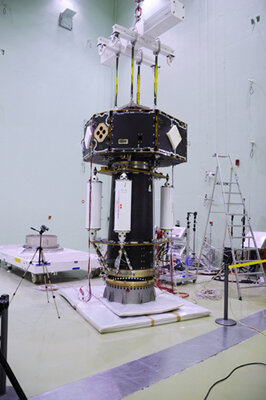
Yet another stringent mission requirement makes the mission similarly ground-breaking. To further minimise external influences on its test masses, LISA Pathfinder will be among the most magnetically ‘clean’ spacecraft ever flown (see dedicated article, right).
This requirement has necessitated a rigorous round of magnetic testing on top of existing system tests. So far LISA Pathfinder has passed all of these with flying colours, but of course all these evaluations have been performed on an individual basis, separately.
Only when the spacecraft reaches the distant expanse of L1 do they get to see whether all systems do indeed work together as planned – and bring Einstein’s daydream of a perfect fall through space to life.