|  |  |  |  |
| |  | |  | |
 |
| Unique insights into a ringed world About Cassini-Huygens About Saturn About Titan Meet the team Multimedia VideoTalkCassini-Huygens imagesCassini-Huygens videosTitan virtual tourHygens probe descent - multilingual CD-romDownload wallpapersDownload screensavers3D Flash 'model'SOI animationWaiting for Titan - the human side of Huygens Watch the event Services Comments
|  |  |  |  | | | | Article Images |  | New images from Titan 15 January 2005
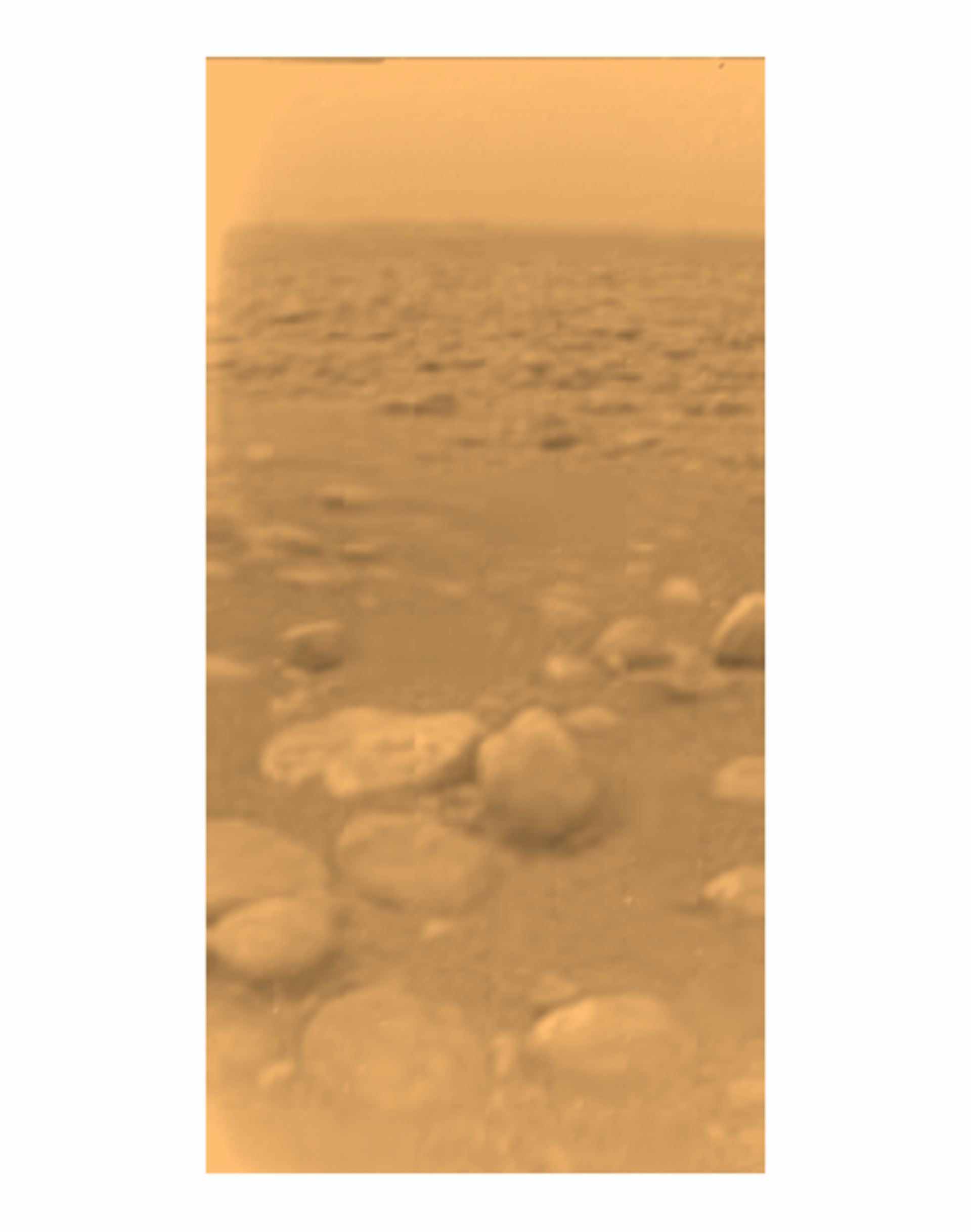
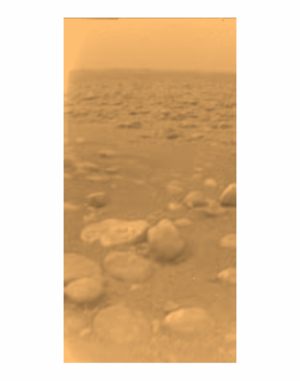
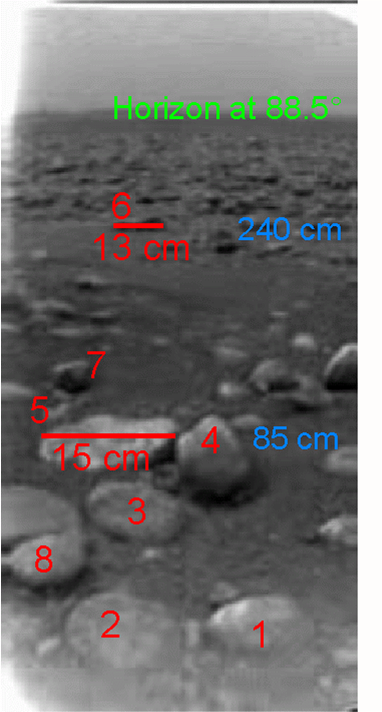
 | This image was returned on 14 January 2005, by ESA's Huygens probe during its successful descent to land on Titan. This is the colour view, following processing to add reflection spectra data, gives a better indication of the actual colour of the surface. Initially thought to be rocks or ice blocks, they are more pebble-sized. The two rock-like objects just below the middle of the image are about 15 centimetres (left) and 4 centimetres (centre) across respectively, at a distance of about 85 centimetres from Huygens. The surface is darker than originally expected, consisting of a mixture of water and hydrocarbon ice. There is also evidence of erosion at the base of these objects, indicating possible fluvial activity.
Credits: ESA/NASA/JPL/University of Arizona |  |  |  |  |
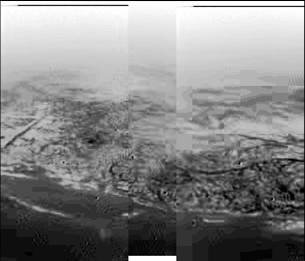
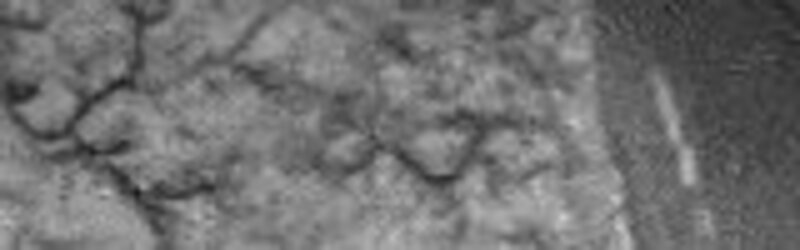
| | | | | | | |  | This composite was produced from images returned on 14 January 2005, by ESA's Huygens probe during its successful descent to land on Titan. It shows the boundary between the lighter-coloured uplifted terrain, marked with what appear to be drainage channels, and darker lower areas. These images were taken from an altitude of about 8 kilometres with a resolution of about 20 metres per pixel.
Credits: ESA/NASA/JPL/University of Arizona |  |  |  |  |
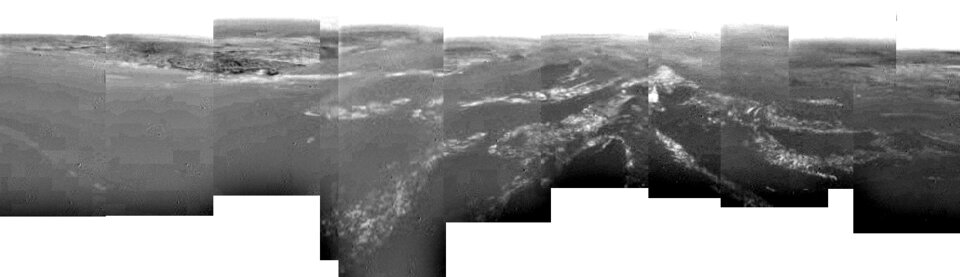
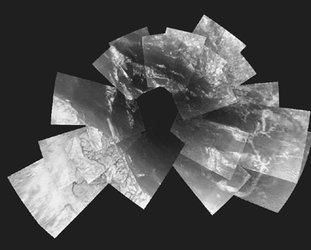
| | | |  | This composite was produced from images returned yesterday, 14 January 2005, by ESA's Huygens probe during its successful descent to land on Titan. It shows a full 360-degree view around Huygens. The left-hand side, behind Huygens, shows a boundary between light and dark areas. The white streaks seen near this boundary could be ground 'fog' of methane or ethane vapour, as they were not immediately visible from higher altitudes. As the probe descended, it drifted over a plateau (centre of image) and was heading towards its landing site in a dark area (right). This dark area is possibly a drainage channel which might still contain liquid material. From the drift of the probe, the wind speed has been estimated at around 6-7 metres per second.
These images were taken from an altitude of about 8 kilometres with a resolution of about 20 metres per pixel.
Credits: ESA/NASA/JPL/University of Arizona |  |  |  |  |
| |
|  | At Saturn and Titan At Saturn and Titan Huygens raw images Sounds of Titan Related articles Huygens lands in Titanian mudView from ten kilometres highFirst images from TitanEurope reaches new frontier – Huygens lands on TitanRadio astronomers confirm Huygens entry in the atmosphere of TitanRelated links NASA JPL Cassini-Huygens siteItalian Space Agency (ASI)
|