ESAESA ScienceCassini-Huygens
   
Unique insights into a ringed world
About Cassini-Huygens
About Saturn
About Titan
Meet the team
Multimedia
VideoTalkCassini-Huygens imagesCassini-Huygens videosTitan virtual tourHygens probe descent - multilingual CD-romDownload wallpapersDownload screensavers3D Flash 'model'SOI animationWaiting for Titan - the human side of Huygens
Watch the event
Services
Comments


printer friendly page
Facts about Titan
 
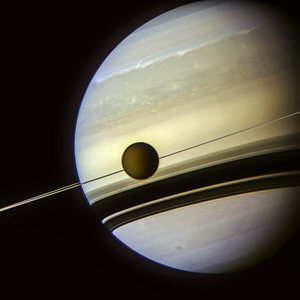
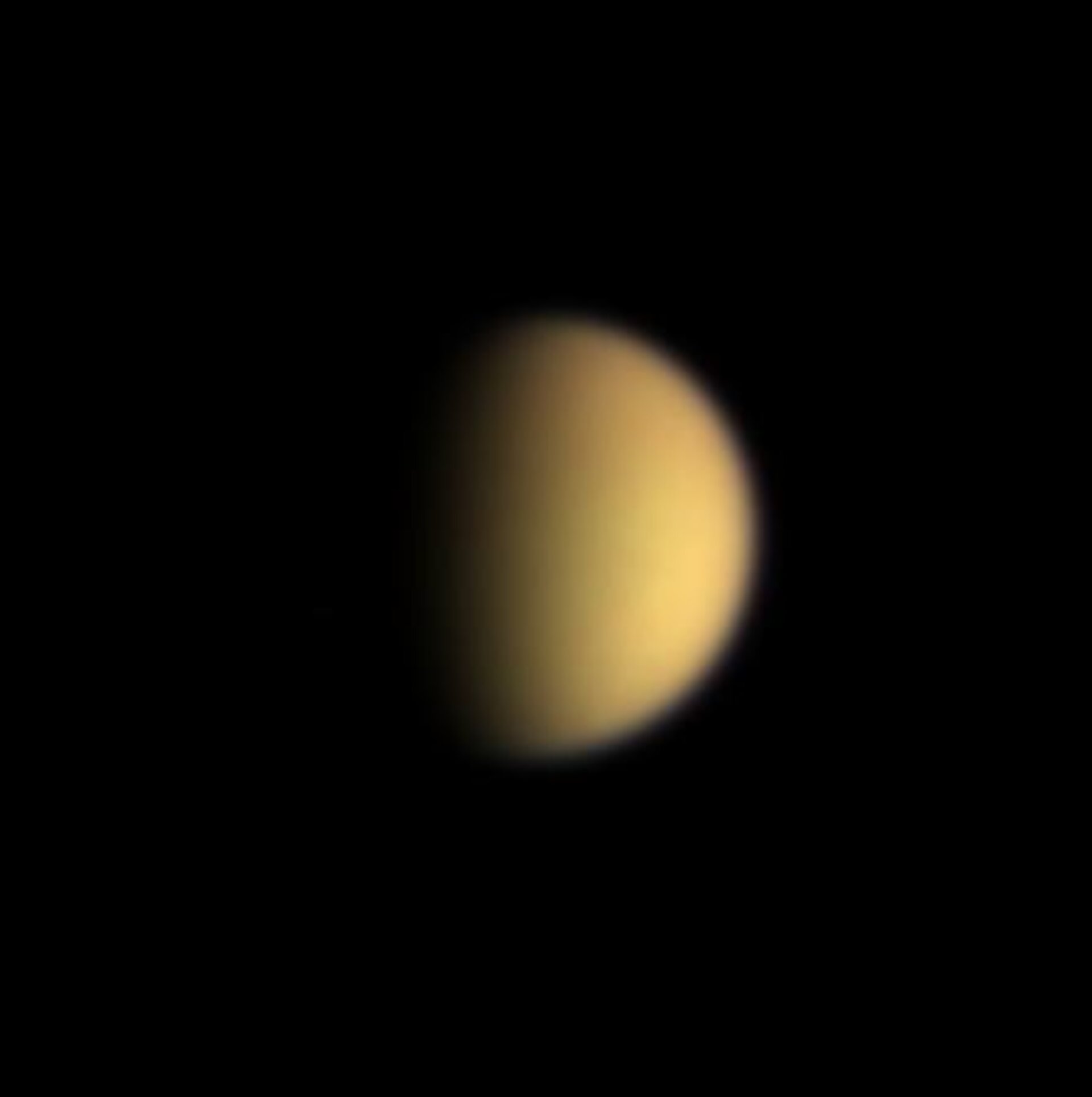
Titan, Saturn's largest moon
 
Titan is the largest moon of Saturn, the second largest in the Solar System (after Ganymede of Jupiter). It was discovered by Christiaan Huygens in 1655.
 
Titan's rotation period of about 16 days is synchronous to Saturn (meaning the same side always faces Saturn). It is the only moon in the Solar System known to have clouds and a thick, planet-like atmosphere.  
 
  
Distance from Saturn1 221 870 km
Distance from Sun1 427 000 000 km (9.54 AU)
Diameter (atmosphere)5550 km
Diameter (surface)5150 km
Mass1/45 that of Earth
Average density1.881 times liquid water
Surface temperature94K (-180 degrees C)
Atmospheric pressure at surface1500 mbar (1.5 times Earth's)
Atmospheric compositionNitrogen, methane, traces of ammonia, argon, ethane
Orbital period (Titanic day)15.95 Earth days


At Saturn and TitanViews on approach to Saturn
More about...
More on Saturn's moons
Related articles
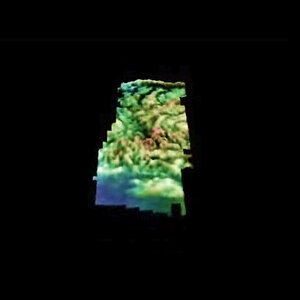
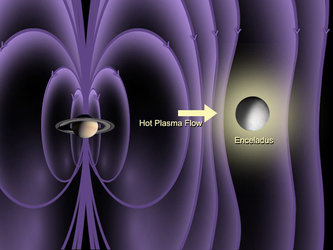
Unusual geology seen during Enceladus fly-byHuygens 3D animation of Titan's surfaceCassini finds atmosphere on EnceladusIcy surface of EnceladusSounds of EnceladusHydrocarbon lake on Titan?Cassini's Hyperion fly-by
Related links
NASA JPL Cassini-Huygens siteItalian Space Agency (ASI)Space Science InstituteCIS team


   Copyright 2000 - 2010 © European Space Agency. All rights reserved.