Artificial intelligence boosts science from Mars
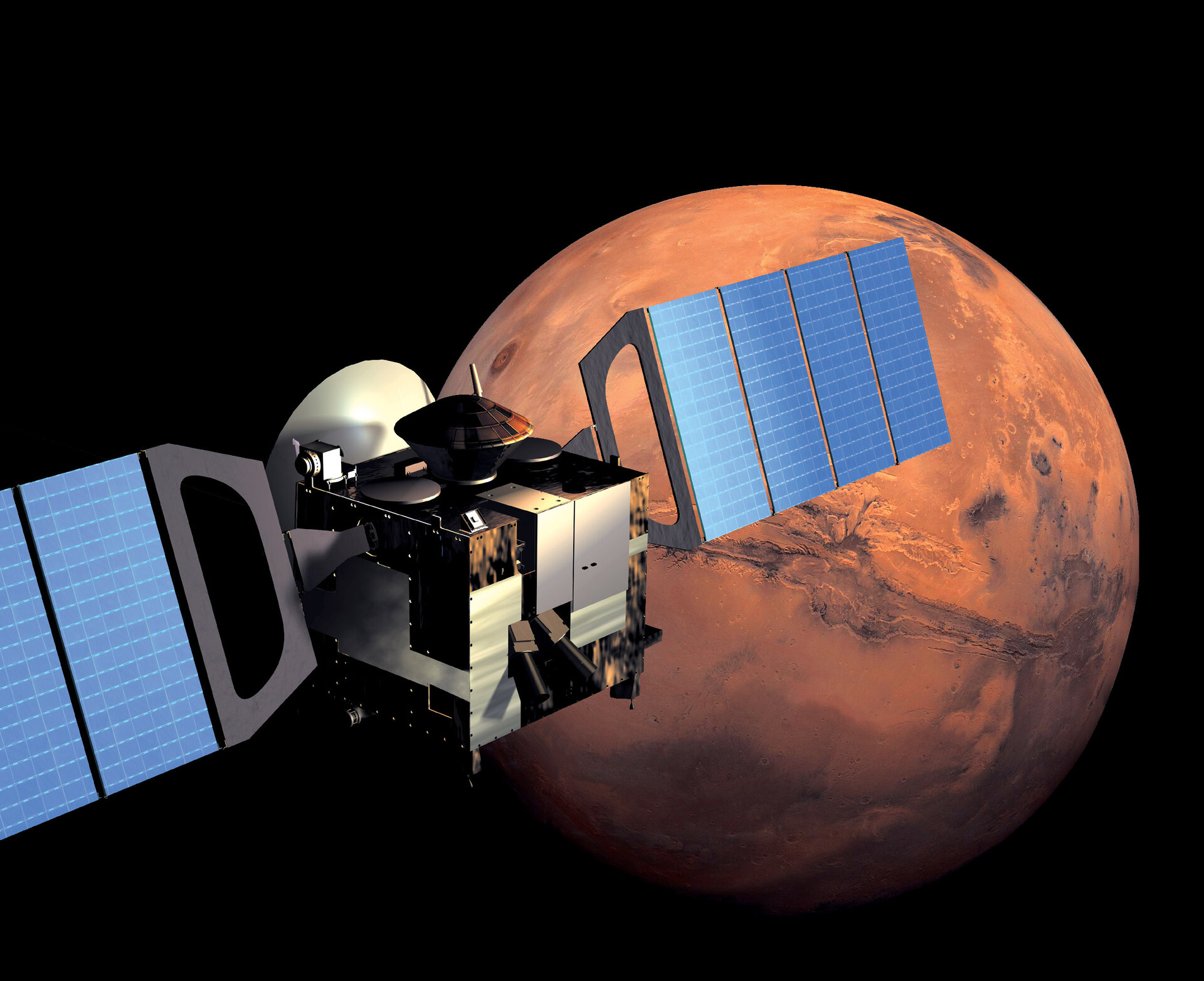
Artificial intelligence (AI) being used at the European Space Operations Centre is giving a powerful boost to ESA's Mars Express as it searches for signs of past or present life on the Red Planet.
Since January 2004, Mars Express has been using its sophisticated instruments to study the atmosphere, surface and subsurface of Mars, confirming the presence of water and looking for other signatures of life on and below the Red Planet's rocky terrain.
The spacecraft generates huge volumes of scientific data, which must be downloaded to Earth at the right time and in the correct sequence, otherwise data packets can be permanently lost when the limited on-board memory is overwritten by newly collected data.
Traditionally, data downloading was managed using human-operated scheduling software to generate command sequences sent to Mars Express, telling it when to dump specific data packets. "This is tedious, time-consuming and never really eliminated the occasional loss - forever - of valuable science data," says Alessandro Donati, Head of the Advanced Mission Concepts and Technologies Office at ESA's Space Operations Centre (ESOC), Darmstadt, Germany.
Complex, dynamic problem
Donati says the downloading problem involves several constantly changing variables, including spacecraft orientation, ground station availability, space-ground communication bandwidth, on-board storage availability and the varying amounts of data generated by each of the seven on-board instruments. All these must be optimised in very short time - often with as little as a few hours between ground station passes.
But since 2005, AI researchers at Italy's Institute for Cognitive Science and Technology (ISTC-CNR) led by Dr Amedeo Cesta and mission planners and computer scientists at ESOC have been developing a solution to the complex Mars Express scheduling problem by applying artificial intelligence (AI) techniques to the problem. These are similar to those used to solve scheduling and optimisation problems faced by airlines, shipping companies and large construction projects.
AI for Mars Express: MEXAR2

The result of this work is a new 'smart' tool, dubbed MEXAR2 ('Mars Express AI Tool'), which has successfully passed initial testing and validation and is now an integral part of the Mars Express mission planning system.
MEXAR2 works by considering the variables that affect data downloading - including the overall science observation schedule for all Mars Express instruments - and then intelligently projecting which on-board data packets might be later lost due to memory conflicts. It then optimises the data download schedule and generates the commands needed to implement the download. "With MEXAR2, any loss of stored data packets has been largely eliminated," says Fred Jansen, ESA's mission manager for Mars Express.
Europe's first deep-space mission to fly with AI
MEXAR2 has reduced the mission planning team's workload considerably - by 50 percent compared to the old manual method - for generating workable downlink plans. "And because it optimises bandwidth used to receive data on Earth, we have been able to free expensive ground station time for other missions," says Michel Denis, Mars Express Spacecraft Operations Manager at ESOC.

MEXAR2 recently won the 'best application' award at ICAPS 2007, a benchmark international conference for AI planning & scheduling technology.
"During MEXAR2's development, the flexibility of AI-based technology let us capture many specific requirements that would otherwise have needed costly software specification redesign" says Nicola Policella, AI research fellow at ESOC. "The use of a model-based approach enabled us to rapidly improve the software prototype to produce an effective mission planning application in a short time."
MEXAR2 on the global stage
MEXAR2 is a trailblazer in bringing AI technology to spacecraft operations.
MEXAR2 was also recently mentioned as one of three outstanding AI applications for mission operations by Dr Ari Kristinn Jónsson, formerly a research scientist at NASA's Ames Research Center, in a keynote speech given at iSAIRAS 2008, the 9th International Symposium on Artificial Intelligence, Robotics and Automation for Space.
"It should be noted, that - like the very few other AI tools in spacecraft operations - MEXAR2 is a trailblazer in bringing AI technology to spacecraft operations. The effectiveness of the tool and the benefits it has provided are therefore significant accomplishments in themselves," says Dr Jónsson, who is now Dean of the School of Computer Science at Reykjavik University, Iceland.
Artificial intelligence provides solutions for complex problems, and has now entered the space mission operations field as a value-adding technology. "Mars Express is the first European deep-space exploration mission to fly using an AI tool on the ground, and the technology is boosting science return while reducing time and resource costs," adds Donati.
AI can help solve other mission operations problems

With MEXAR2's proven success, scientists at both ESOC and ISTC-CNR are working to apply the current AI technology to other problems.
Successful recent work includes the reverse problem of how to optimise the upload of commands to Mars Express, in a project dubbed - somewhat tongue-in-cheek - as 'RAXEM' - for the 'Reverse of MEXAR'.
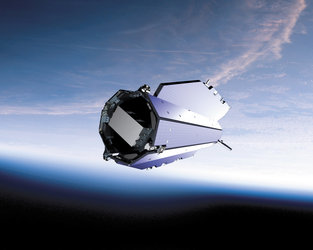
ESA-developed AI technology will also be applied to the 'Advanced Planning & Scheduling Initiative', which is designed to provide AI benefits to other areas and missions, including long term observation for ESA's Integral, an orbiting space observatory mission.
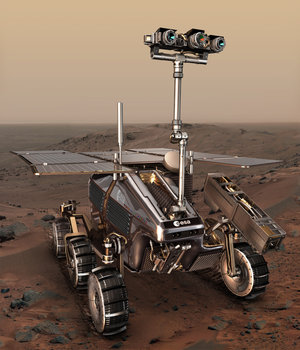
"It's possible to apply the same AI concepts to future missions, like ExoMars, Europe's first planetary rover mission to the Red Planet," says Donati, adding, "Today's achievement is the starting point for implementing new on-board autonomy concepts for ESA's challenging missions of the future."
Editor's note
See related article "Artificial intelligence for robotic exploration: Q&A with Ari Kristinn Jónsson" via link at top right.