Mare Serenitatis: crater statistics and lunar chronology
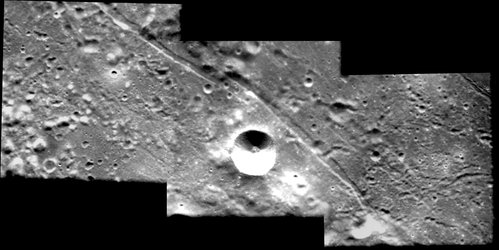
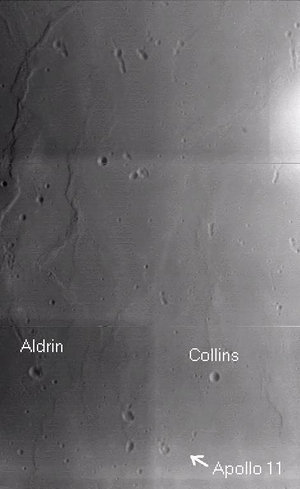
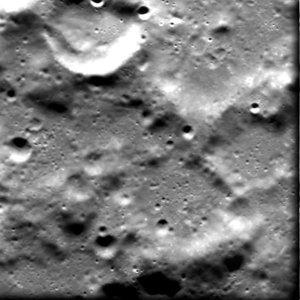
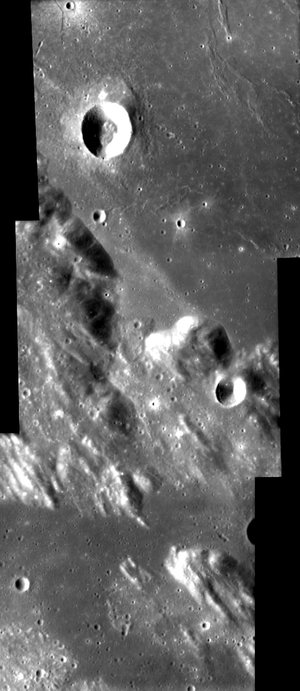
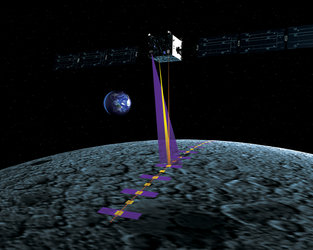
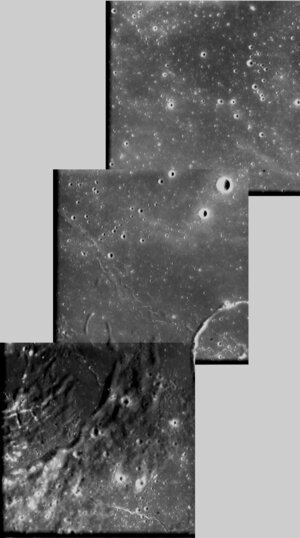
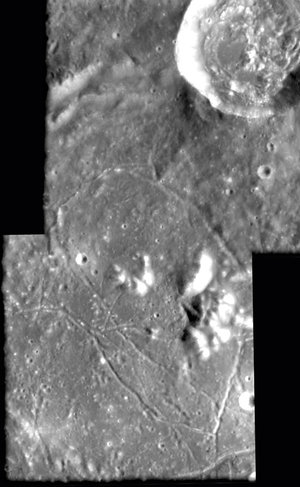
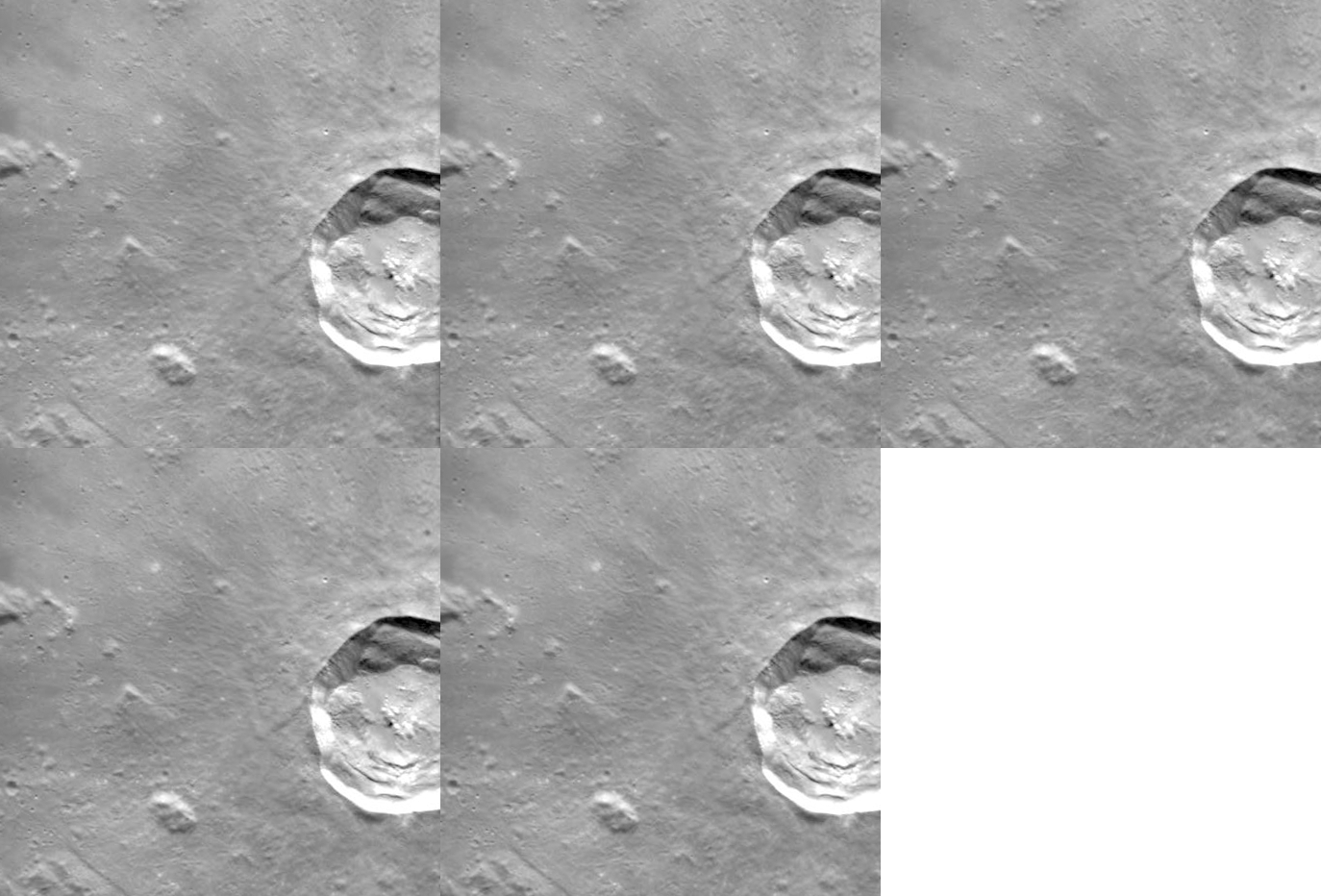
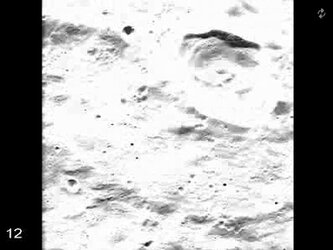
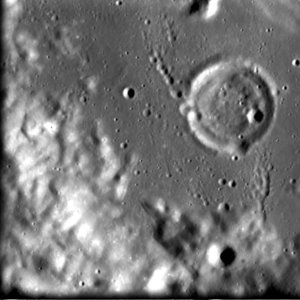
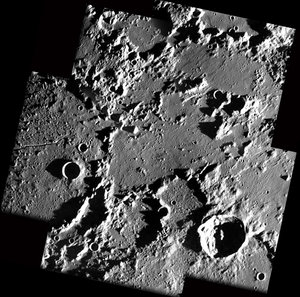
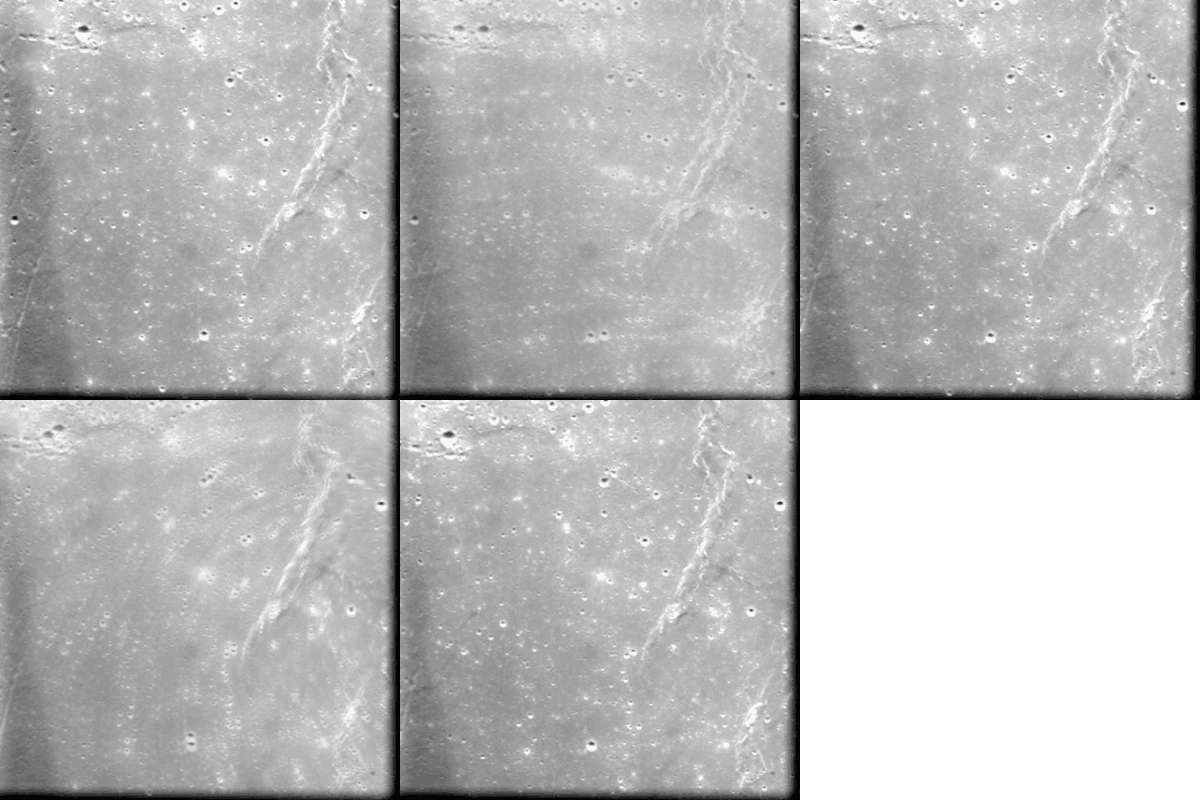
This animated sequence, composed of three images taken by the advanced Moon Imaging Experiment (AMIE) on board ESA’s SMART-1 spacecraft, shows a portion of Mare Serenitatis on the Moon.
AMIE obtained the images on 18 March 2006 from distances between 1257 and 1213 kilometres from the surface, with a ground resolution ranging between 114 and 110 metres per pixel. The imaged area is centred at about 21º East longitude and 18º North latitude, with a lunar field of view of 57 km. The Sun was on the West direction (top of this image) at about 50 degrees elevation.
Mare Serenitatis is one of the lunar maria, that are vast lava plains on the lunar surface. It formed between 3.9 and 3.8 thousand million years ago, a period in which the Moon was heavily bombarded by asteroids and the major impact basins on the Moon were formed. This was followed by an episode of lunar volcanism that flooded the basin with basalt creating a fresh and flat surface.
To its southeast border, Mare Serenitatis lies close to Mare Tranquillitatis. Both maria were visited by previous lunar landers. In particular, Luna 21 and Apollo 17 (the last manned lunar mission to land on the Moon so far), landed on Mare Serenitatis in January 1973 and December 1972, respectively.
"Thanks to the solar elevation and SMART-1 camera resolution, the statistics of the sizes of the craters can be well determined in different units," says SMART-1 Project scientist Bernard Foing. "This permits us to establish a chronology, calibrated on absolute ages from isotopic measurements on returned lunar samples."
For more information
Bernard H. Foing, ESA SMART-1 Project Scientist
Email: bernard.foing @ esa.int
Jean-Luc Josset
AMIE Principal Investigator
SPACE-X Space Exploration Institute
Email: jean-luc.josset @ space-x.ch