ESA    Life in Space    Expanding Frontiers    Improving Daily Life    Protecting the Environment    Benefits for Europe  
   
Media Centre
Press ReleasesESA TelevisionLaunch Media CornerExhibitions
Services
CalendarPublicationsFrequently asked questionsESA-sponsored ConferencesHelpSite CreditsPortal terms of useCommentsSubscribe Bookmark and Share


Rosetta sees a living planet
 
13 November 2009

Rosetta closes in on home for the last Earth swingby
Download:
 HI-RES GIF (Size: 156 kb)
As Rosetta approached Earth, OSIRIS periodically imaged the Earth once every hour for 24 hours. The images from the green optical colour filter have been combined into a movie sequence. The images were taken beginning when Rosetta was 1.1 million km from Earth, until it came 320 000 km close.

Credits: ESA ©2009 MPS for OSIRIS Team MPS/UPD/LAM/IAA/RSSD/INTA/UPM/DASP/IDA
 
 
illuminated crescent of Earth showing part of South America and
Download:
 HI-RES PNG (Size: 623 kb)
The illuminated crescent of Earth showing part of South America and Antarctica. This OSIRIS image was acquired with the the narrow-angle camera from a distance of 350 000 km at 22:28 UTC last night. The resolution is 6.5 km/pixel.

Credits: ESA ©2009 MPS for OSIRIS Team MPS/UPD/LAM/IAA/RSSD/INTA/UPM/DASP/IDA
 
 
ESA's Rosetta sees North America at night
Download:
 HI-RES PNG (Size: 490 kb)
The lights of North American cities. Rosetta OSIRIS Imaging System's Narrow-Angle Camera image. The image was taken with a 10-s deep exposure at 05:44 CET. Some of the cities are clearly visible. Others like New York are covered by clouds, making the light diffuse.

Credits: ESA ©2009 MPS for OSIRIS Team MPS/UPD/LAM/IAA/RSSD/INTA/UPM/DASP/IDA
 
 
Rosetta navigation camera image of Earth
Download:
 HI-RES JPEG (Size: 214 kb)
A cloud-covered North America was captured at 14:03 UTC (15:03 CET), when Rosetta was at a distance of approximately 224 000 km from Earth's centre by Rosetta's navigation camera (navcam).

The navcam is used for precise determination of the orbit and optical visualisation. The output of the camera tells you where the centre of the object that is in the centre of the field of view is - it also gives physical parameters of the object.

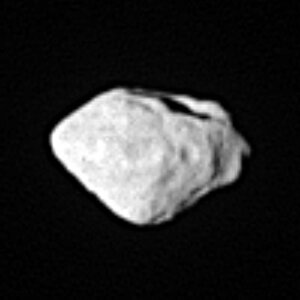
The photos were taken to test the camera's operation with a large physical obejct. Previously, Steins was also imaged, but it is rather small (about 5 km across). Next year, the camera will be used to view Lutetia, which is much larger (about 95 km across). In the camera field of view, Lutetia shoudl appear about as large as the Earth looks in these images.
Credits: ESA
 
 
Rosetta BlogESA's ATV blog direct from ATV mission control
ESA's comet chaser
Spacecraft OperationsSpacecraft Operations
ESOCA virtual tour of ESOC, ESA's Space Operations Centre
For the media
Rosetta Earth swingby media presentationMedia Press KitRosetta factsheet (pdf)
Rosetta on YouTube
ESA's comet chaser revisits Earth
Related articles
Rosetta bound for outer Solar System after final Earth swingbyRosetta darting across the nightFirst view of Earth as Rosetta approaches homeESA spacecraft may help unravel cosmic mysteryRosetta approach on scheduleFollow Rosetta’s final Earth boostRosetta lined up nicely for Earth approachLast visit home for ESA’s comet chaserRosetta Blog live for final Earth swingbySteins: A diamond in the skyRosetta Steins fly-by confirmed
More information
Will probe's upcoming fly-by unlock exotic physics? (New Scientist)
In depth
Rosetta in depth


   Copyright 2000 - 2010 © European Space Agency. All rights reserved.