Una pareja de volcanes en Marte
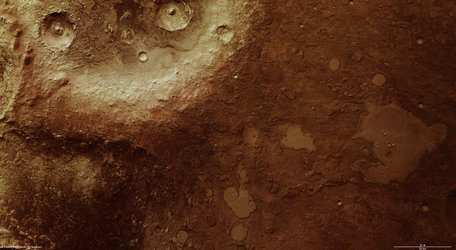
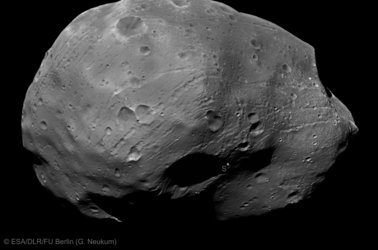
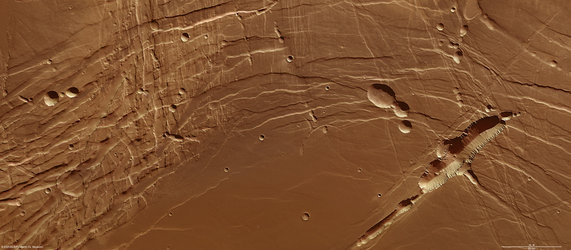
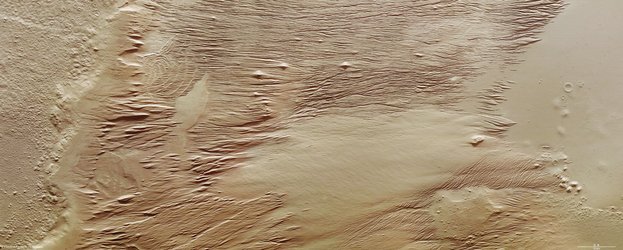
La sonda Mars Express de la ESA nos envía nuevas imágenes de una pareja de volcanes en el hemisferio norte del Planeta Rojo. Sus cumbres, inactivas desde hace tiempo, han sufrido el impacto de múltiples meteoritos que han ido depositando escombros en sus laderas.
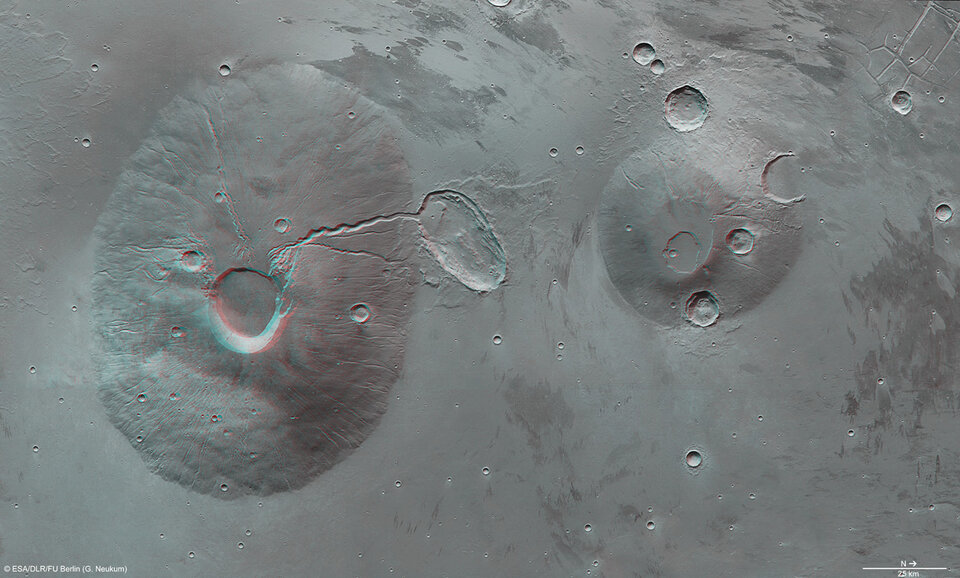
Esta nueva fotografía permite observar características permanentes de la región, pero también algún fenómeno estacional. La imagen ha sido confeccionada con los datos recogidos durante tres órbitas de la sonda europea, entre el 25 de noviembre de 2004 y el 22 de junio de 2006. En ese periodo, las cumbres volcánicas han permanecido inmutables pero, en la segunda órbita, Mars Express pudo capturar la formación de nubes en la cumbre de Ceraunius Tholus.

Cuando Mars Express visitó de nuevo la zona y tomó la última imagen necesaria para finalizar el mosaico, hacía tiempo que las nubes se habían disipado, lo que explica porqué aparecen cortadas siguiendo una línea recta.
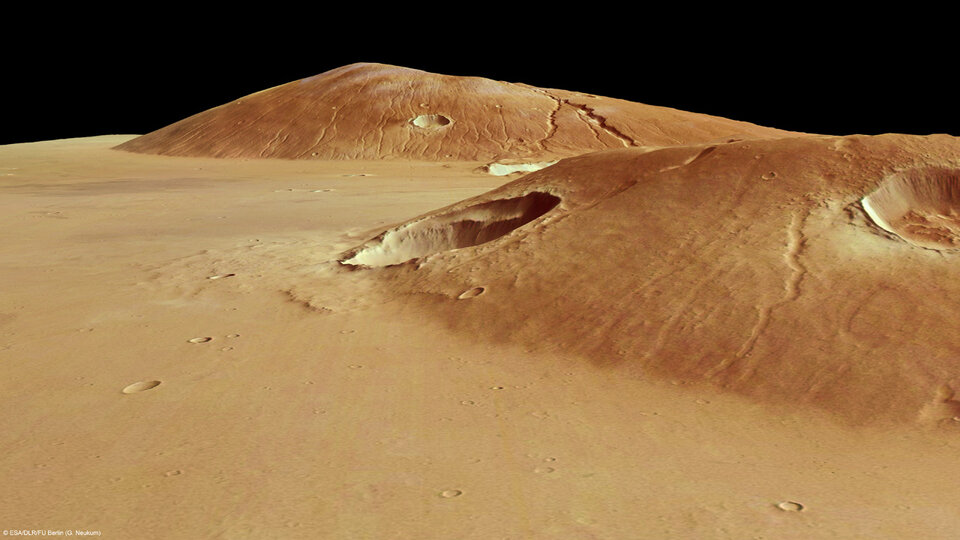
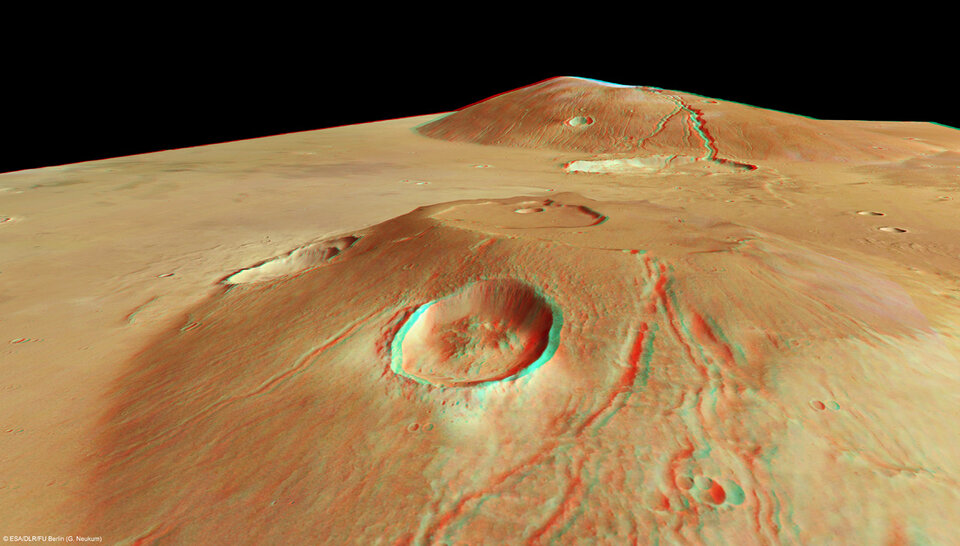
La palabra latina ‘tholus’ hace referencia a la silueta cónica de los volcanes. La base de Ceraunius Tholus tiene 130 km de diámetro y su cima se eleva a 5.5 km sobre las llanuras adyacentes. En su cumbre se encuentra la gran caldera volcánica, de 25 km de diámetro. Con una morfología similar y situado 60 km al norte, Uranius Tholus es un volcán de menor tamaño, de 62 km de diámetro y 4.5 km de altura.

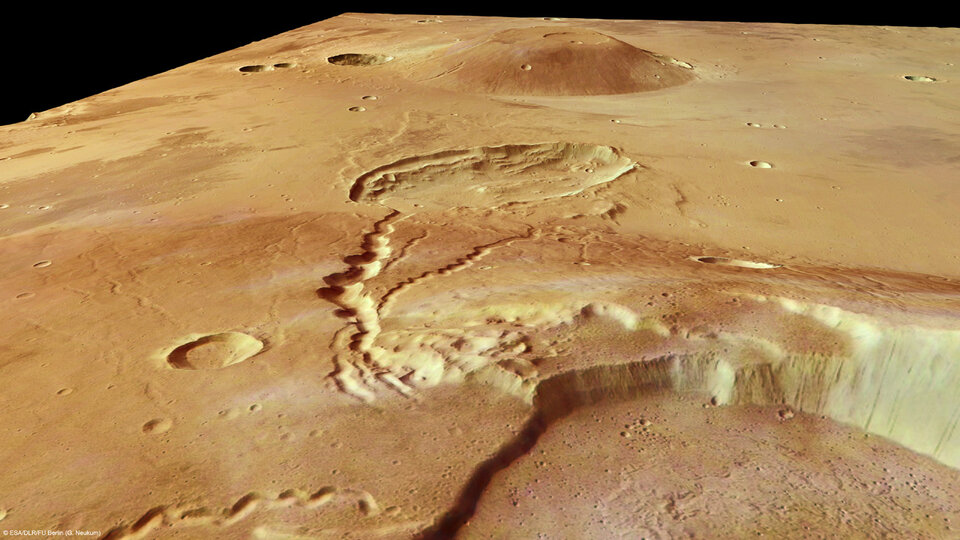
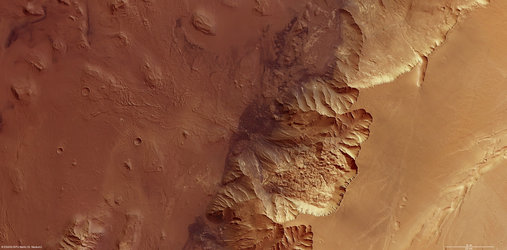
La ladera de Ceraunius Tholus no es demasiado escarpada, con unos 8° de inclinación, y aparece surcada de valles. Algunos de éstos son especialmente profundos, lo que sugiere que las erupciones volcánicas depositaron sobre la ladera materiales blandos y fáciles de erosionar, como cenizas.
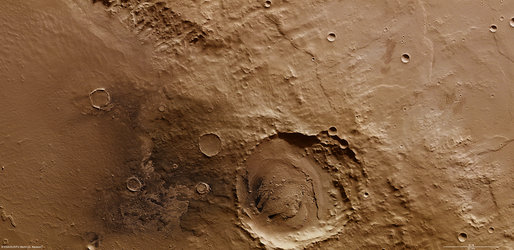
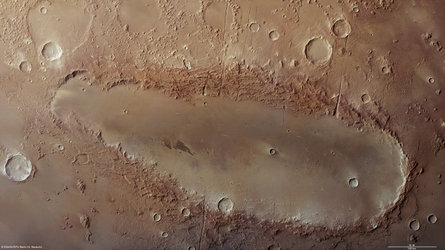
El valle más largo y profundo tiene unos 3.5 km de ancho y 300 m de profundidad, y termina en un gran cráter de impacto de forma alargada, situado entre los dos volcanes, en el que se puede apreciar un cúmulo de sedimentos con forma de abanico.

Aunque la comunidad científica todavía discute el posible origen de este abanico de sedimentos, la hipótesis más plausible sugiere que se formó cuando el material depositado en un tubo de lava fue arrastrado por el deshielo de la cumbre del volcán.
Por otra parte, la caldera en la cima de este volcán presenta un fondo plano y bordes suavizados, lo que sugiere que pudo haber sido el lecho de un gran lago cuando Marte presentaba una atmósfera más densa. También es posible que el agua proceda del deshielo de estructuras conocidas como ‘lentes de hielo’, debido al calor generado por la actividad volcánica. Las lentes de hielo se originan cuando la humedad que se infiltra en el terreno se congela, creando una capa de hielo entre la base rocosa y la superficie porosa.

El cráter alargado situado entre los dos volcanes se conoce como Rahe. Mide 35 km de longitud por 18 km de ancho y es el resultado del impacto oblicuo de un meteorito.
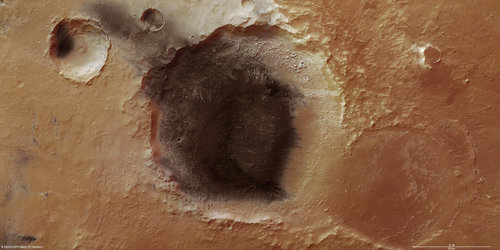
Al oeste de Uranius Tholus se puede observar otro cráter de impacto más pequeño, de 13 km de diámetro. El meteorito llegó a Marte cuando la actividad volcánica ya había cesado, y el material proyectado tras el impacto cubrió parcialmente la parte inferior de la ladera del volcán.